Indole → 6-(Tetrahydrofuran-3-yloxy)-1H-indole
Reaction equation

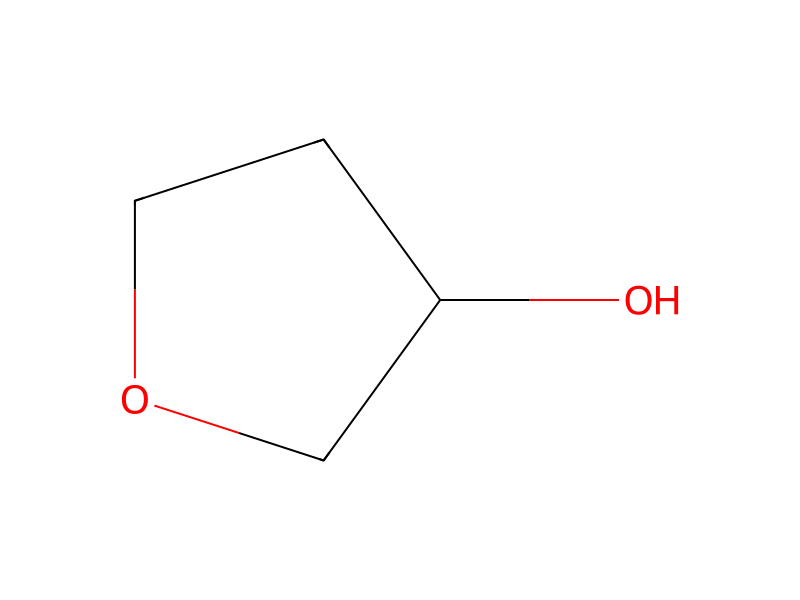
[NH:1]1[C:9]2[C:4](=[CH:5][CH:6]=[C:7]([OH:10])[CH:8]=2)[CH:3]=[CH:2]1.[O:11]1[CH2:15][CH2:14][CH:13](O)[CH2:12]1.C1(P(C2C=CC=CC=2)C2C=CC=CC=2)C=CC=CC=1.N(C(OC(C)C)=O)=NC(OC(C)C)=O.N1C2C(=CC=CC=2)C=C1>ClCCl>[O:11]1[CH2:15][CH2:14][CH:13]([O:10][C:7]2[CH:8]=[C:9]3[C:4]([CH:3]=[CH:2][NH:1]3)=[CH:5][CH:6]=2)[CH2:12]1Participants
7






Procedure
To a mixture of 1H-indol-6-ol (2.00 g, 15.02 mmol), tetrahydrofuran-3-ol (1.46 mL, 18.0 mmol), and triphenylphosphine (4.33 g, 16.52 mmol) in dichloromethane (80 mL) at 0° C. was added diisopropyl diazene-1,2-dicarboxylate (3.49 mL, 18.03 mmol) over 10 min. The mixture was stirred at room temperature for 16 hr. The starting indole and desired product were detected in a ratio of 3:2. The dark mixture was diluted with CH2Cl2 (80 mL), washed with 1N NaOH (50 mL), water (50 mL), and brine (50 mL). The organic solution was dried over anhydrous MgSO4. The desired product (0.642 g, 3.16 mmol, 21.03% yield) was isolated as viscous oil by ISCO (300 g silica gel, solid loading, 10-50% ethyl acetate/hexane).
Sources & evidence
- ORD record
- ord-cbdb16503d674b48af0bbf26dac393a0
- Source dataset
- uspto-grants-2014_04
- Patent number
- US08685969B2
Reaction notes
Loading…