Triethylamine → 1350378-37-8
Reaction equation

[F:1][C:2]1[CH:3]=[C:4]2[C:8](=[CH:9][CH:10]=1)[N:7]([CH3:11])[CH:6]=[C:5]2I.C(N(CC)CC)C.[CH3:20][C:21]1([CH3:28])[C:25]([CH3:27])([CH3:26])[O:24][BH:23][O:22]1>O1CCOCC1.C(OCC)(=O)C.C1C=CC(P(C2C=CC=CC=2)[C-]2C=CC=C2)=CC=1.C1C=CC(P(C2C=CC=CC=2)[C-]2C=CC=C2)=CC=1.Cl[Pd]Cl.[Fe+2].ClCCl>[F:1][C:2]1[CH:3]=[C:4]2[C:8](=[CH:9][CH:10]=1)[N:7]([CH3:11])[CH:6]=[C:5]2[B:23]1[O:24][C:25]([CH3:27])([CH3:26])[C:21]([CH3:28])([CH3:20])[O:22]1Participants
7





Conditions
- Temperature
- 100 °C
Procedure
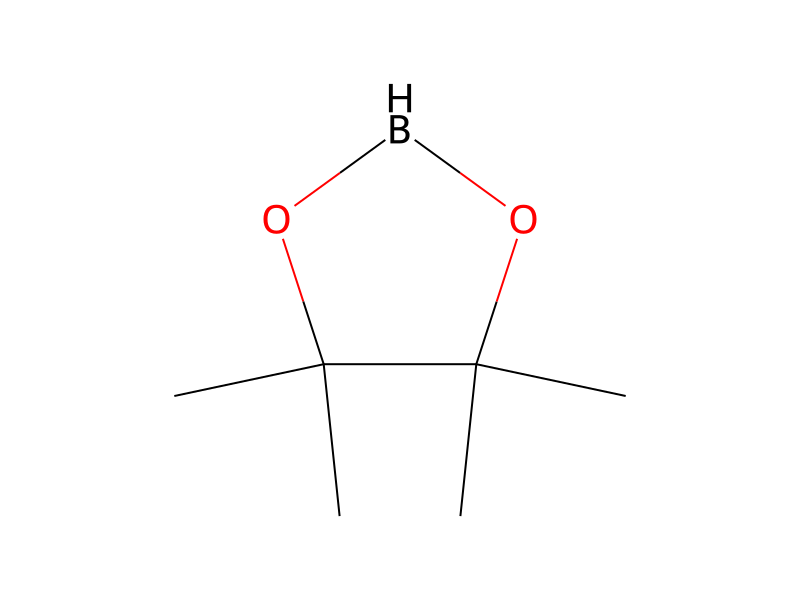
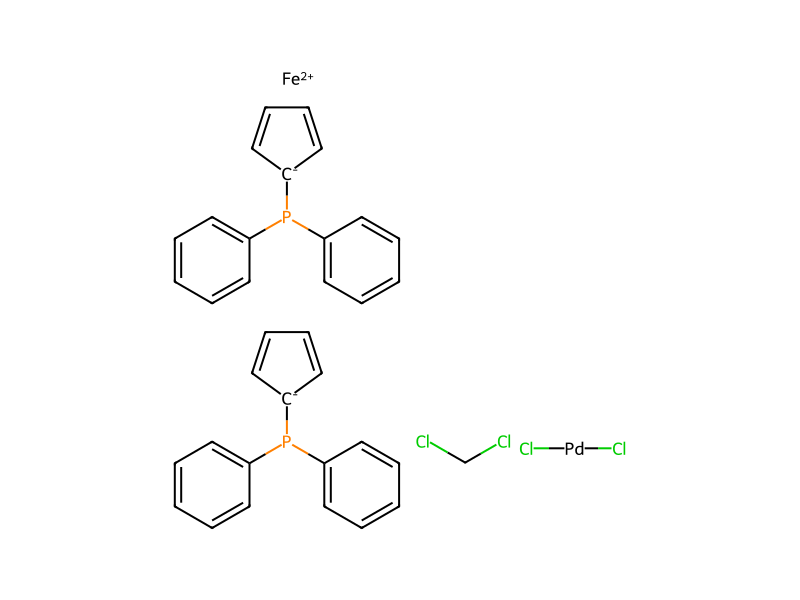
A solution of 5-fluoro-3-iodo-1-methyl-1H-indole (11.5 g, 41.8 mmol) in dioxane (200 mL) was treated with triethyl amine (27 mL, 194 mmol) and [1,1′-bis(diphenylphosphino)ferrocene]dichloropalladium(II) dichloromethane (1.707 g, 2.090 mmol). 4,4,5,5-Tetramethyl-1,3,2-dioxaborolane (39.4 mL, 272 mmol) was added carefully to the reaction (gas evolution was observed). The mixture was heated to 100° C. for 30 minutes, cooled, and diluted with about 250 mL ethyl acetate. The precipitate was filtered and washed with ethyl acetate (100 mL). The filtrate was concentrated under reduced pressure. The residue was purifed on silica gel, eluting with 8:2 heptane:ethyl acetate, to give the title compound. MS ESI(+) m/z 276.0 (M+H)+.
Workup
- temperaturecooled
- filtrationThe precipitate was filtered
- washwashed with ethyl acetate (100 mL)
- concentrationThe filtrate was concentrated under reduced pressure
- washeluting with 8:2 heptane
Sources & evidence
- ORD record
- ord-b21849c451914a7aac59fac3bad305a2
- Source dataset
- uspto-grants-2014_04
- Patent number
- US08691810B2
Reaction notes
Loading…