Dimethylformamide → 2-Bromo-5-[(4-fluorophenyl)methyl]-3-nitropyridine
Reaction equation

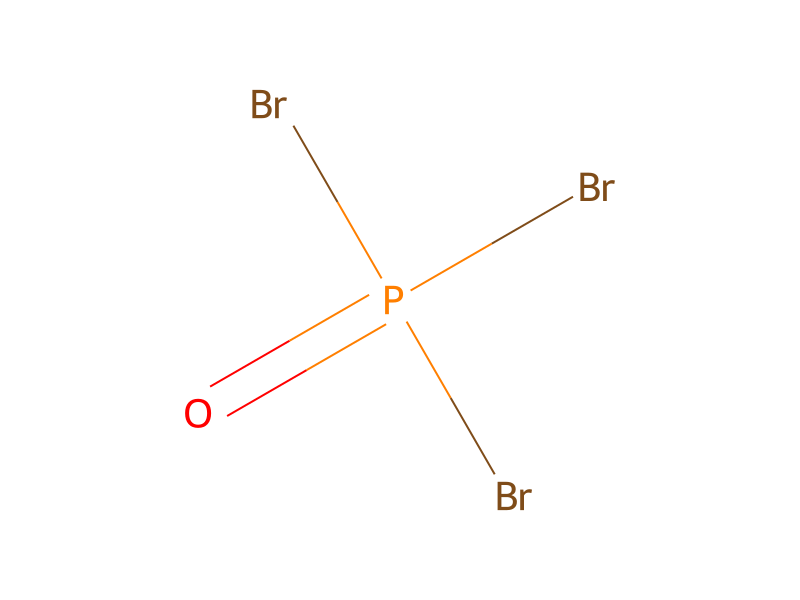
P(Br)(Br)([Br:3])=O.[F:6][C:7]1[CH:12]=[CH:11][C:10]([CH2:13][C:14]2[CH:15]=[C:16]([N+:21]([O-:23])=[O:22])[C:17](=O)[NH:18][CH:19]=2)=[CH:9][CH:8]=1.CN(C=O)C.[OH-].[Na+]>C1(C)C=CC=CC=1.O>[Br:3][C:17]1[C:16]([N+:21]([O-:23])=[O:22])=[CH:15][C:14]([CH2:13][C:10]2[CH:11]=[CH:12][C:7]([F:6])=[CH:8][CH:9]=2)=[CH:19][N:18]=1Participants
Reactant 4



Product 1

Reagents, catalysts & solvents 2


Procedure
A solution of POBr3 (227 g, 0.79 mol) in toluene (900 mL) was added slowly to a stirred suspension of 5-[(4-fluorophenyl)methyl]-3-nitro-2(1H)-pyridinone (179 g, 0.72 mol) in toluene (900 mL). The mixture was heated to reflux; then cooled to rt and DMF (56 mL, 0.72 mol) was added slowly; the mixture was again heated to reflux and then allowed to cool to rt overnight. After cooling the mixture in an ice-bath, water (500 mL) was added slowly followed by dropwise addition 4 N NaOH (450 mL, 1.76 mol). All insoluble material was removed by filtration and the two liquid phases were separated. The organic layer was concentrated at reduced pressure to afford the product as a beige solid: 1H NMR (d6-DMSO) δ 8.62 (1H, d, J=2 Hz), 8.37 (1H, d, J=2 Hz), 7.33 (2H, m), 7.12 (2H, m), 4.05 (2H, s); ES+ MS: 313 (M+H+, 100), 311 (M+H+, 100).
Workup
- temperatureThe mixture was heated to reflux
- temperaturethe mixture was again heated
- temperatureto reflux
- temperatureto cool to rt overnight
- temperatureAfter cooling the mixture in an ice-bath
- customAll insoluble material was removed by filtration
- customthe two liquid phases were separated
- concentrationThe organic layer was concentrated at reduced pressure
Sources & evidence
- ORD record
- ord-c77111b56244465f8cd6eca5133eca83
- Source dataset
- uspto-grants-2014_04
- Patent number
- US08691991B2
Reaction notes
Loading…