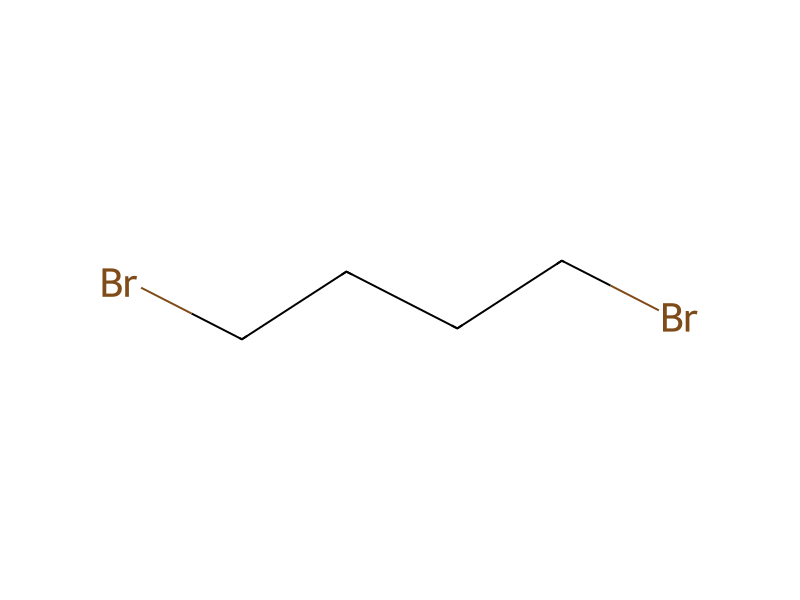
1,4-Dibromobutane → 1-(4-BROMOPHENYL)CYCLOPENTANECARBONITRILE
Reaction equation

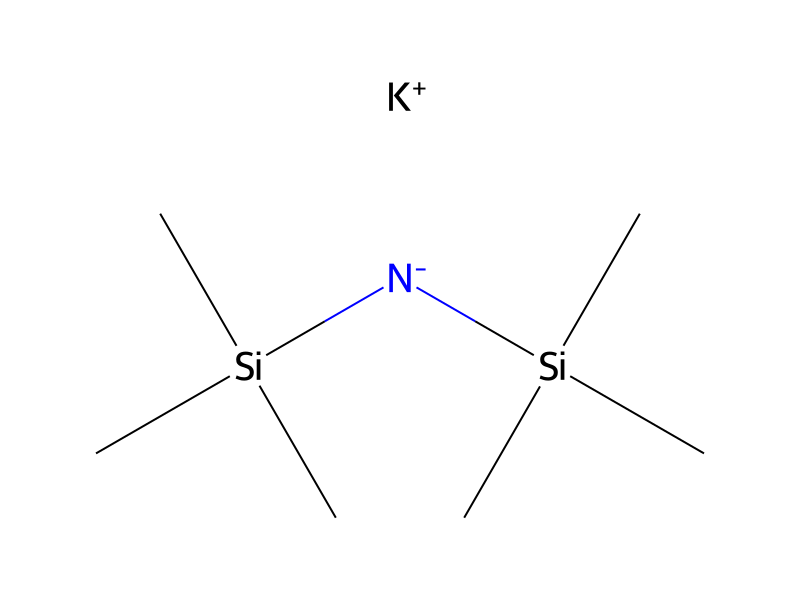
[Br:1][C:2]1[CH:7]=[CH:6][C:5]([CH2:8][C:9]#[N:10])=[CH:4][CH:3]=1.Br[CH2:12][CH2:13][CH2:14][CH2:15]Br.C[Si]([N-][Si](C)(C)C)(C)C.[K+]>C1COCC1.[Br-].C([N+](CCCC)(CCCC)CCCC)CCC>[Br:1][C:2]1[CH:7]=[CH:6][C:5]([C:8]2([C:9]#[N:10])[CH2:15][CH2:14][CH2:13][CH2:12]2)=[CH:4][CH:3]=1Participants
6




Procedure
To a solution of 2-(4-bromophenyl)acetonitrile (1.0 g, 5.10 tntnol) and 1,4-dibromobutane (0.67 ml, 5.6 mmol) in THF (10 ml) was added potassium bis(trimethylsilyl) amide (2.23 g, 11.2 mmol) and tetra-n-butylammonium bromide (164 mg, 0.51 mmol). The mixture was stirred for 2 h and then quenched with 1N HCl. Ethyl acetate was added, the layers separated and the organic layer was washed with water and brine. Drying, solvent evaporation and flash chromatography (silica gel, 20% EtOAc/hexanes) gave 1-(4-bromophenyl)cyclopentanecarbonitrile.
Workup
- customquenched with 1N HCl
- additionEthyl acetate was added
- customthe layers separated
- washthe organic layer was washed with water and brine
- customDrying
- customsolvent evaporation and flash chromatography (silica gel, 20% EtOAc/hexanes)
Sources & evidence
- ORD record
- ord-903a9014c1bb4be8a7eabac0fc306023
- Source dataset
- uspto-grants-2014_04
- Patent number
- US08697863B2
Reaction notes
Loading…