Dibromomethane → Piperonal
Reaction equation

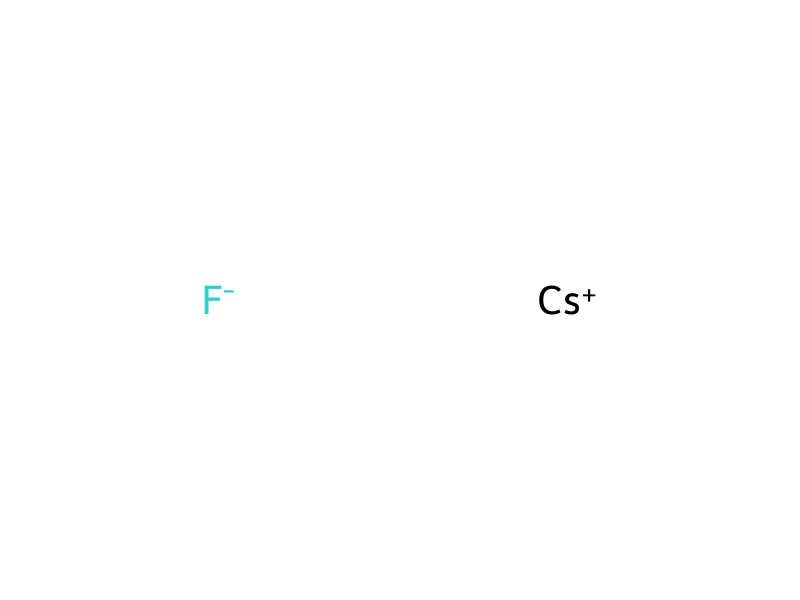
[OH:1][C:2]1[CH:3]=[C:4]([CH:7]=[CH:8][C:9]=1[OH:10])[CH:5]=[O:6].Br[CH2:12]Br.[F-].[K+].[F-].[Cs+]>CN(C)C=O>[CH:7]1[C:4]([CH:5]=[O:6])=[CH:3][C:2]2[O:1][CH2:12][O:10][C:9]=2[CH:8]=1Participants
Reactant 4



Product 1

Reagents, catalysts & solvents 1

Procedure
One process for preparing piperonal from 3,4-dihydroxybenzaldehyde comprises reacting 3,4-dihydroxybenzaldehyde with methylene chloride and alkali in a non-protic polar solvent such as dimethyl sulfoxide, and gives a 61% yield of piperonal (British Pat. No. 1,097,270). Another process comprises reacting 3,4-dihydroxybenzaldehyde with methylene chloride in aqueous alkali under the influence of an interphasic moving catalyst such as quaternary ammonium compound, and gives a 70-73% yield of piperonal. However, the catalyst used in this process is expensive and, by nature, easily soluble in both aqueous and organic phases. Accordingly, the recovery of the catalyst is too low to make this process practicable (Japanese Patent Application Disclosure Nos. 23,265/'76 and 113,967/'77). In any event, neither of these process can provide satisfactory yields based on the amount of the starting material. In addition, James H. Clark et al. have described still another process in which 3,4-dihydroxybenzaldehyde is reacted with dibromomethane in N,N-dimethylformamide under the influence of an excess of potassium fluoride or cesium fluoride to give a 90% yield of piperonal [Tetrahedron Letters, No. 38, pp. 3361-3364 (1976)]. This process is of advantage in that no strong base is used, the reaction time is relatively short, and a high yield can be obtained. However, an expensive fluoride must be used in large excess as a halogen trapping agent and cannot be recycled because its fluorine component is stoichiometrically replaced by the halogen atoms in the dihalomethane used. Accordingly, this process is not satisfactory for industrial applications. Moreover, when based on the amount of pyrocatechol used, the yield attainable with this process does not reach 70%.
Workup
- customIn any event, neither of these process can provide satisfactory
- customyields
Sources & evidence
- ORD record
- ord-5118471954f64b33a6ad2285d961191e
- Source dataset
- uspto-grants-1979_06
- Patent number
- US04157333
Reaction notes
Loading…