Pyridine → 3-Carbamoylisoxazol-5-ylmethyl 4-nitrophenyl carbonate
Reaction equation

[C:1]([C:4]1[CH:8]=[C:7]([CH2:9][OH:10])[O:6][N:5]=1)(=[O:3])[NH2:2].N1C=CC=CC=1.Cl[C:18]([O:20][C:21]1[CH:26]=[CH:25][C:24]([N+:27]([O-:29])=[O:28])=[CH:23][CH:22]=1)=[O:19]>ClCCl>[C:18](=[O:19])([O:20][C:21]1[CH:22]=[CH:23][C:24]([N+:27]([O-:29])=[O:28])=[CH:25][CH:26]=1)[O:10][CH2:9][C:7]1[O:6][N:5]=[C:4]([C:1](=[O:3])[NH2:2])[CH:8]=1Participants
5

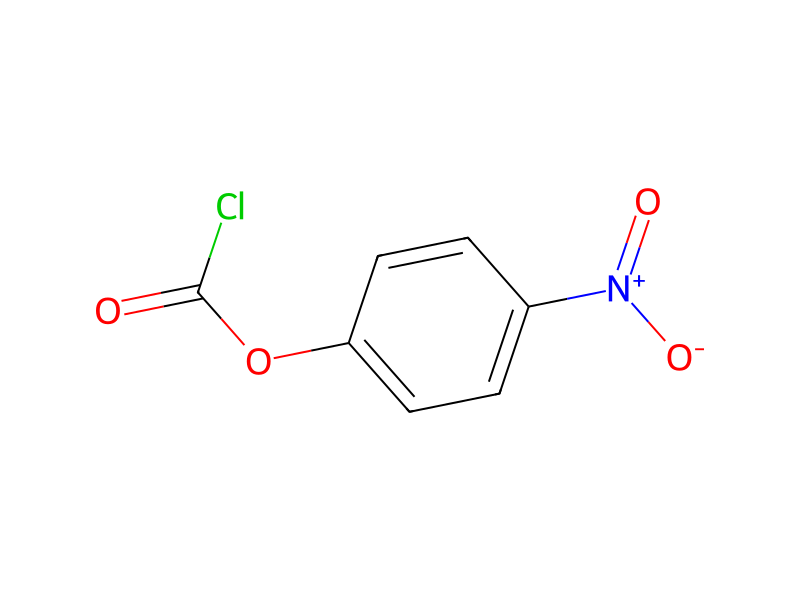



Conditions
- Temperature
- 0 °C
Procedure
To a solution of 2.0 g (14.07 mmol) of 3-carbamoylisoxazol-5-ylmethanol, 1.71 ml (21.11 mmol) of pyridine and 0.17 g (1.41 mmol) of N,N-dimethylaminopyridine in 15 mL of dichloromethane, cooled to about 0° C., are added portionwise 2.84 g (14.07 mmol) of 4-nitrophenyl chloroformate. The medium is kept stirring at 0° C. for 1 hour and then at room temperature for 1 hour.
Workup
- waitat room temperature for 1 hour
Sources & evidence
- ORD record
- ord-093e125487994bdaa00133555a25b402
- Source dataset
- uspto-grants-2014_04
- Patent number
- US08697883B2
Reaction notes
Loading…