4-Bromobiphenyl → HCID 69203692, compound
Reaction equation

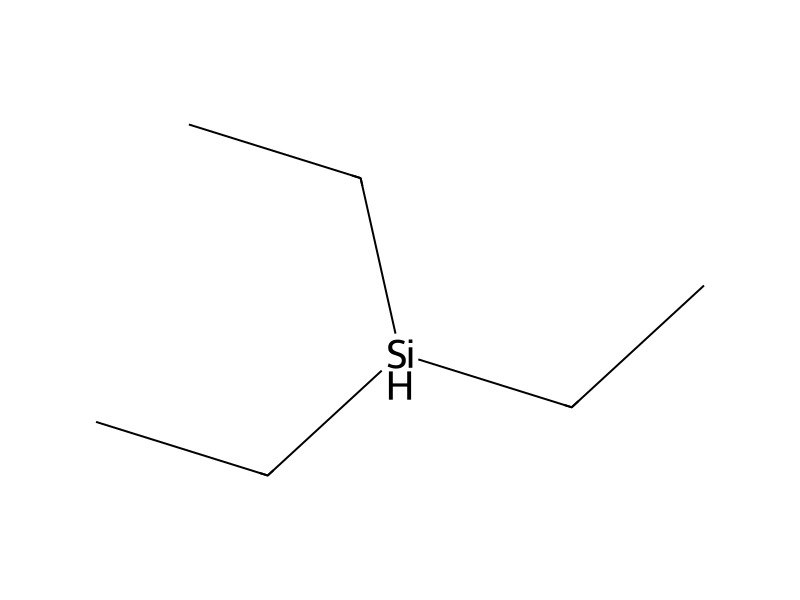
[Br:1][C:2]1[CH:7]=[CH:6][C:5]([C:8]2[CH:13]=[CH:12][CH:11]=[CH:10][CH:9]=2)=[CH:4][CH:3]=1.[Cl-].[Al+3].[Cl-].[Cl-].[CH3:18][CH:19]([CH2:24][CH2:25][CH2:26][CH:27]([CH3:29])[CH3:28])[CH2:20][C:21](Cl)=O.C([SiH](CC)CC)C>C(Cl)Cl>[Br:1][C:2]1[CH:3]=[CH:4][C:5]([C:8]2[CH:13]=[CH:12][C:11]([CH2:21][CH2:20][CH:19]([CH3:18])[CH2:24][CH2:25][CH2:26][CH:27]([CH3:29])[CH3:28])=[CH:10][CH:9]=2)=[CH:6][CH:7]=1Participants
6
Reactant 4



Product 1

Reagents, catalysts & solvents 1

Procedure
A solution of 4-bromo-biphenyl (7.00 g, 0.030 mol), aluminium chloride (4.40 g, 0.033 mol) and 3,7-dimethyloctanoyl chloride (step 2) (6.90 g, 0.036 mol), in dry DCM was prepared at room temperature. The stirring reaction mixture was left to react at room temperature until g.l.c. and t.l.c. analyses revealed a complete reaction, the reaction mixture was then treated with triethylsilane (9.30 g, 0.080 mol) and left stirring overnight. The reaction product was extracted into DCM (2×100 ml) and the combined organic layers were washed with brine, water and dried (MgSO4). The product was adsorbed onto silica gel and purified by column chromatography [DCM] and recrystallised from ethanol to yield a white powder.
Workup
- customThe stirring reaction mixture
- waitwas left
- customto react at room temperature until g.l.c
- customa complete reaction
- waitleft
- extractionThe reaction product was extracted into DCM (2×100 ml)
- washthe combined organic layers were washed with brine, water
- dry with materialdried (MgSO4)
- custompurified by column chromatography [DCM]
- customrecrystallised from ethanol
- customto yield a white powder
Sources & evidence
- ORD record
- ord-1ff4879fe1b14a818d3ca2bc5e0961fe
- Source dataset
- uspto-grants-2008_12
- Patent number
- US07462427B2
Reaction notes
Loading…