Triphenylphosphine → HCID 68993431, compound
Reaction equation

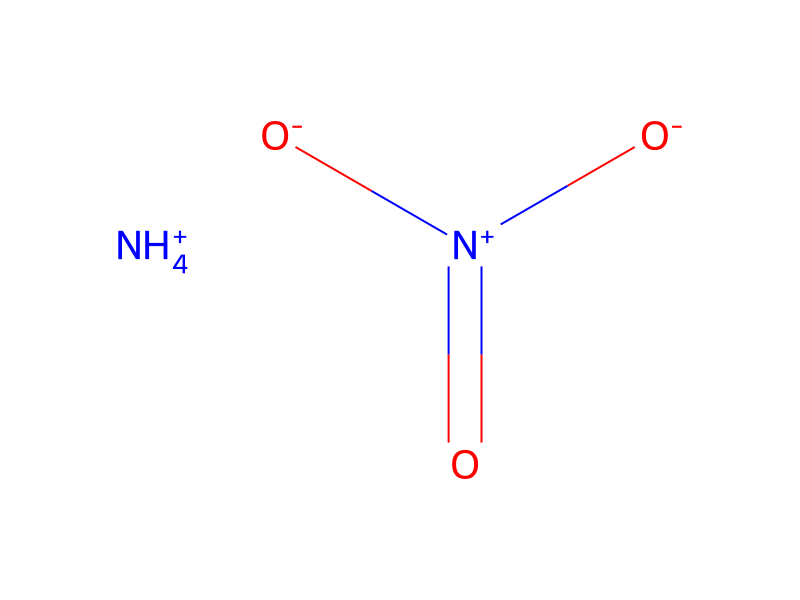
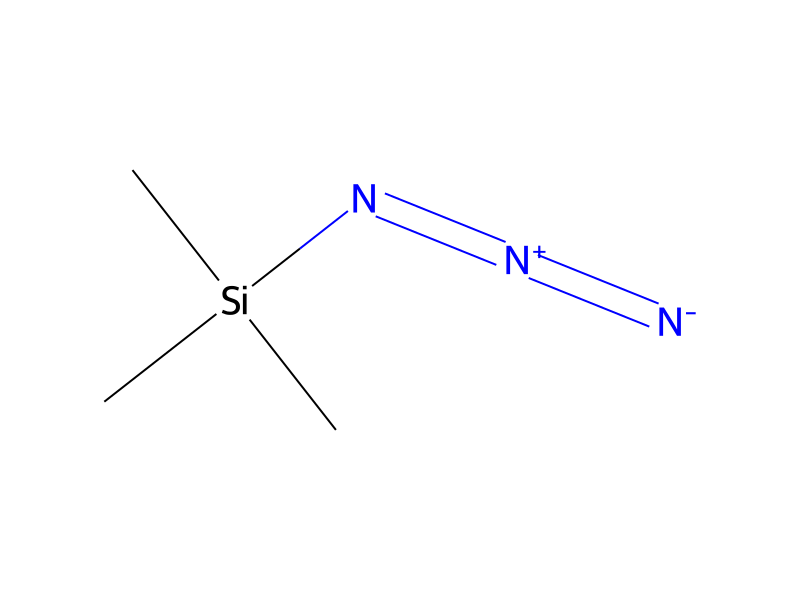
[C:1]([CH2:3][CH2:4][NH:5][C:6](=O)[C@H:7]([C:30]1[CH:31]=[C:32]([CH3:36])[CH:33]=[CH:34][CH:35]=1)[CH2:8][C:9]1[CH:13]=[C:12]([C:14]2[CH:19]=[CH:18][C:17]([Cl:20])=[C:16]([Cl:21])[CH:15]=2)[N:11]([C:22]2[CH:27]=[CH:26][C:25]([O:28][CH3:29])=[CH:24][CH:23]=2)[N:10]=1)#[N:2].C1(P(C2C=CC=CC=2)C2C=CC=CC=2)C=CC=CC=1.N(C(OC(C)C)=O)=NC(OC(C)C)=O.C[Si]([N:75]=[N+:76]=[N-:77])(C)C.N([O-])=O.[Na+].[N+]([O-])([O-])=O.[NH4+]>O.C(#N)C>[Cl:21][C:16]1[CH:15]=[C:14]([C:12]2[N:11]([C:22]3[CH:27]=[CH:26][C:25]([O:28][CH3:29])=[CH:24][CH:23]=3)[N:10]=[C:9]([CH2:8][C@H:7]([C:6]3[N:5]([CH2:4][CH2:3][C:1]#[N:2])[N:77]=[N:76][N:75]=3)[C:30]3[CH:31]=[C:32]([CH3:36])[CH:33]=[CH:34][CH:35]=3)[CH:13]=2)[CH:19]=[CH:18][C:17]=1[Cl:20]Participants
Reactant 6




Product 1

Reagents, catalysts & solvents 2


Procedure
A 3-neck round-bottom flask was charged with (S)-N-(2-cyano-ethyl)-3-[5-(3,4-dichloro-phenyl)-1-(4-methoxy-phenyl)-1H-pyrazol-3-yl]-2-m-tolyl-propionamide (4.0 g, 7.5 mmol, 1.0 equiv) and triphenyl phosphine (4.91 g, 18.8 mmol, 2.5 equiv) under nitrogen. Acetonitrile was added, and the mixture was stirred at room temperature until all of the solids dissolved. The solution was then cooled to 0° C., and diisopropyl azodicarboxylate (3.79 mL, 18.8 mmol, 2.5 equiv) was added slowly via syringe. After the resulting mixture had stirred for 5 min, trimethylsilyl azide (3.0 mL, 22.5 mmol, 3 equiv) was added via syringe over 20 min. The reaction mixture was allowed to warm to room temperature and was stirred for 30 min, and then was stirred at 50° C. for 14 h. The mixture was cooled to room temperature, then to 0° C., and a solution of sodium nitrite (685 mg) in water (3.3 mL) was added. After 20 min a solution of cerric ammonium nitrate (5.5 g) in water (15.5 mL) was added, and the resulting mixture was stirred for 30 min. The mixture was then added to water (200 mL), and the resulting solution was extracted with dichloromethane (2×100 mL). The combined extracts were washed with brine (100 mL), dried (Na2SO4), and concentrated under reduced pressure. The crude residue was purified by flash chromatography (25% ethyl acetate/dichloromethane) yielding the desired protected tetrazole (2.1 g, 50%). HPLC: Rt=8.18 (Method A). MS (ESI): mass calculated for C29H25Cl2N7O, 557.15; m/z found, 558.3 [M+H]+. 1H NMR (500 MHz, CDCl3): 7.30 (d, J=8.2 Hz, 1H), 7.28-7.25 (m, 3H), 7.17-7.15 (m, 3H), 7.06 (d, J=9.0 Hz, 2H), 6.89-6.86 (m, 3H), 6.24 (s, 1H), 4.75 (dd, J=10.2, 5.3 Hz, 1H), 4.45-4.43 (m, 2H), 3.92 (dd, J=15.2, 10.2 Hz, 1H), 3.83 (s, 3H), 3.42 (dd, J=15.2, 5.3 Hz, 1H), 2.85-2.75 (m, 1H), 2.53-2.49 (m, 1H), 2.34 (s, 3H).
Workup
- dissolutiondissolved
- temperatureThe solution was then cooled to 0° C.
- stirringAfter the resulting mixture had stirred for 5 min
- temperatureto warm to room temperature
- stirringwas stirred for 30 min
- stirringwas stirred at 50° C. for 14 h
- temperatureThe mixture was cooled to room temperature
- stirringthe resulting mixture was stirred for 30 min
- extractionthe resulting solution was extracted with dichloromethane (2×100 mL)
- washThe combined extracts were washed with brine (100 mL)
- dry with materialdried (Na2SO4)
- concentrationconcentrated under reduced pressure
- customThe crude residue was purified by flash chromatography (25% ethyl acetate/dichloromethane)
Sources & evidence
- ORD record
- ord-3d69a2416e7e4790903a3664fbb3a00c
- Source dataset
- uspto-grants-2008_12
- Patent number
- US07465808B2
Reaction notes
Loading…