Nitromethane → HCID 10701887, compound
Reaction equation

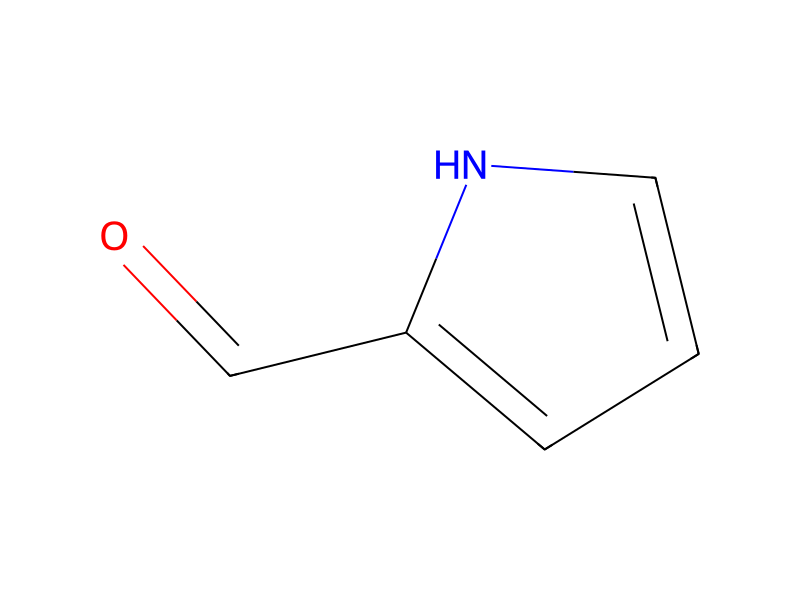
[NH:1]1[CH:5]=[CH:4][CH:3]=[C:2]1[CH:6]=[O:7].[N+:8]([CH3:11])([O-:10])=[O:9]>>[NH:1]1[CH:5]=[CH:4][CH:3]=[CH:2]1.[N+:8]([CH2:11][C:6](=[O:7])[CH2:2][CH2:3][CH2:4][CH3:5])([O-:10])=[O:9].[N+:8](/[CH:11]=[CH:6]/[C:2]1[NH:1][CH:5]=[CH:4][CH:3]=1)([O-:10])=[O:9]Participants



Procedure
The synthesis of the unsubstituted tetrahydrodipyrrin Western half 4 is shown in Scheme 2. The desired nitro-hexanone pyrrole 2 was prepared from pyrrole-2-carboxaldehyde by reaction with nitromethane, affording 2-(2-trans-nitrovinyl)pyrrole, followed by reduction with sodium borohydride and fluoride-mediated Michael addition of mesityl oxide. Reductive cyclization of 2 in the presence of Zn in acetic acid at room temperature as specified by Battersby ((1984) J. Chem. Soc. Perkin Trans. 1 (12):2725-2732) afforded the N-oxide 3 in <40% yield. A byproduct, observable by TLC analysis and estimated by 1H NMR spectroscopy to be present in ˜3:2 ratio (3:byproduct), was isolated and assigned the structure shown for 5 (Scheme 2). Noteworthy features of the 1H NMR spectrum of 5 include the following: (1) the presence of two resonances due to the pyrrole β-protons, in contrast to the three resonances due to the α- and β-protons exhibited by the N-oxide 3, and (2) disappearance of the singlets assigned to the amino and pyrrolic NH protons upon exchange with D2O. The formation of such a cyclic byproduct cannot occur with pyrrole precursors bearing a full complement of alkyl substituents at the α- and β-positions (Battersby, et al. (1984) J. Chem. Soc. Perkin Trans. 1 (12):2725-2732). The same reaction performed in acetic acid diluted 1:1 with ethanol (to lessen the exotherm) and held at 0° C., with portion-wise addition of the Zn, resulted in a >9:1 ratio of 3:5. The residual byproduct 5 was readily removed by chromatography. Under these improved conditions the desired N-oxide 3 was isolated in 86% yield.
Sources & evidence
- ORD record
- ord-c68fa03678944c748c9d05fe63ed90d6
- Source dataset
- uspto-grants-2008_12
- Patent number
- US07470785B2
Reaction notes
Loading…