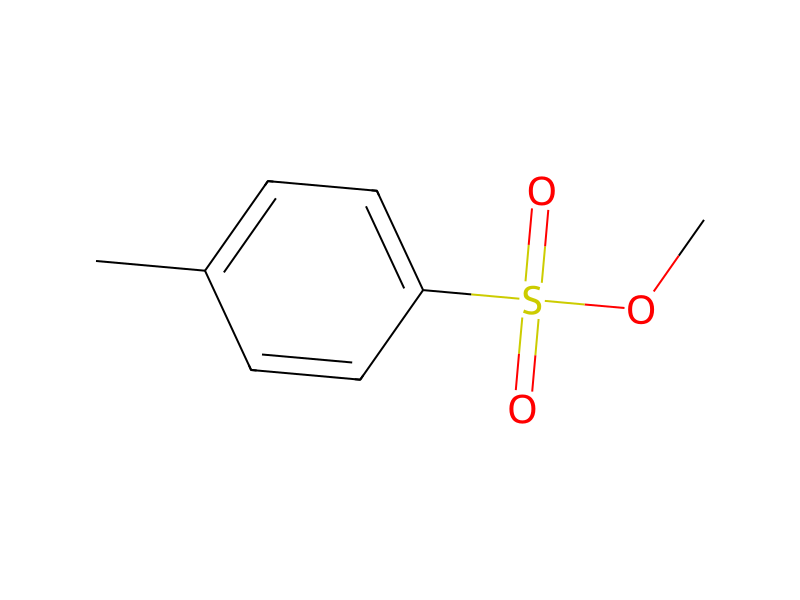
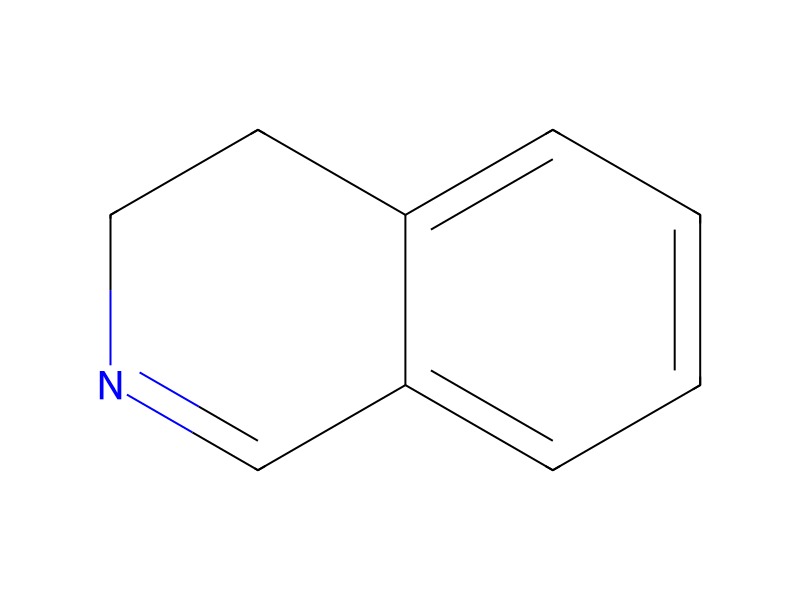
Methyl p-toluenesulfonate → N-Methyl 3,4-dihydroisoquinolinium p-toluene sulfonate
Reaction equation

[CH:1]1[C:10]2[C:5](=[CH:6][CH:7]=[CH:8][CH:9]=2)[CH2:4][CH2:3][N:2]=1.[C:11]1([CH3:22])[CH:16]=[CH:15][C:14]([S:17]([O:20]C)(=[O:19])=[O:18])=[CH:13][CH:12]=1>CO>[C:11]1([CH3:22])[CH:12]=[CH:13][C:14]([S:17]([O-:20])(=[O:18])=[O:19])=[CH:15][CH:16]=1.[CH3:11][N+:2]1[CH2:3][CH2:4][C:5]2[C:10](=[CH:9][CH:8]=[CH:7][CH:6]=2)[CH:1]=1Participants
Reactant 2
Product 1

Reagents, catalysts & solvents 1

Conditions
- Temperature
- 0 °C
Procedure
The title compound was prepared using the procedure described by Koelsch et al in J. Am. Chem. Soc. (1953) 75, 2095. In a 250-ml one-necked round-bottomed flask equipped with a magnetic stir bar and a reflux condenser were placed 3,4-dihydroisoquinoline (8.27 grams, 63 mmol) and 40 ml of methanol. The mixture was stirred and cooled to 0° C. A solution of methyl p-toluenesulfonate (11.73 g, 63 mmol) and 70 ml of methanol was added dropwise. The color of the solution remained clear and yellow. The mixture was heated to reflux for 6 hours. The methanol was then removed in vacuo to provide a quantitative yield (20 g) of an off-white solid (mp 115°-119° C.). The solid was pulverized and washed with 40 ml of acetone at room temperature. Suction filtration provided a white solid in 88% yield: mp 124°-127° C.
Workup
- customIn a 250-ml one-necked round-bottomed flask equipped with a magnetic stir bar and a reflux condenser
- temperatureThe mixture was heated
- temperatureto reflux for 6 hours
- customThe methanol was then removed in vacuo
Sources & evidence
- ORD record
- ord-be878fa92dc440c6837e20987228d77c
- Source dataset
- uspto-grants-1994_11
- Patent number
- US05360568
Reaction notes
Loading…