Phenylmethylsulfonyl Fluoride → Cinnamoylbenzene
Reaction equation

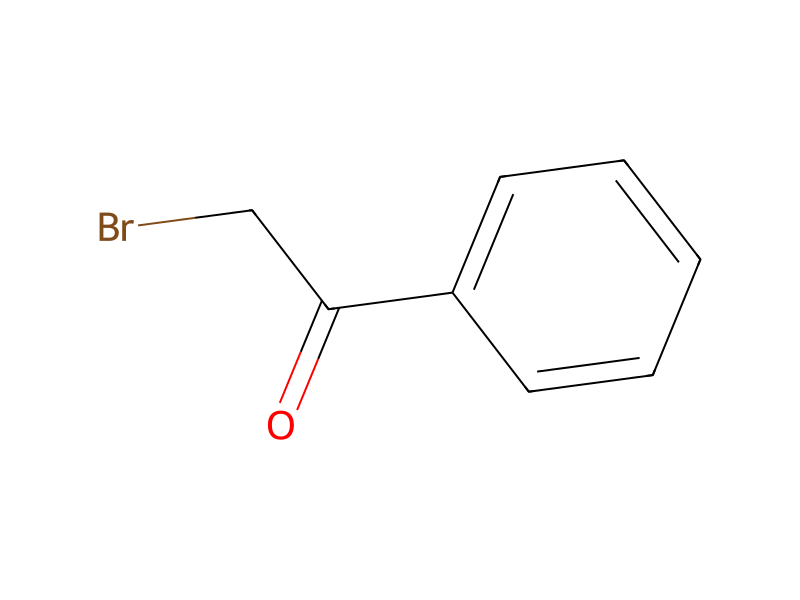
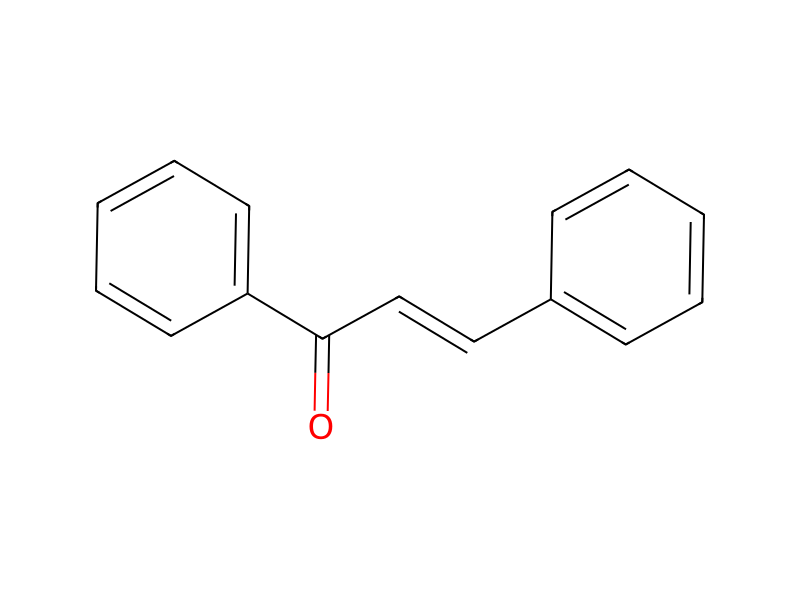
C(=O)([O-])[O-].[K+].[K+].[C:7]1([CH2:13]S(F)(=O)=O)[CH:12]=[CH:11][CH:10]=[CH:9][CH:8]=1.[CH2:18](Br)[C:19]([C:21]1[CH:26]=[CH:25][CH:24]=[CH:23][CH:22]=1)=[O:20]>C(#N)C.C1OCCOC2C(=CC=CC=2)OCCOCCOC2C(=CC=CC=2)OC1>[C:21]1([C:19](=[O:20])[CH:18]=[CH:13][C:7]2[CH:12]=[CH:11][CH:10]=[CH:9][CH:8]=2)[CH:26]=[CH:25][CH:24]=[CH:23][CH:22]=1Participants
6
Reactant 3


Product 1
Reagents, catalysts & solvents 2


Procedure
A catalytic amount (about 500 mg) of dibenzo-18-crown-6-ether and 68 g of anhydrous powdered potassium carbonate were added to a solution of 18.4 g phenylmethane-sulphonyl fluoride and 10.0 g of phenacyl bromide in 100 ml of acetonitrile at room temperature, while stirring. The mixture was then stirred under reflux for 10 hours. The reaction mixture was allowed to cool down to room temperature and was then concentrated by stripping off the solvent under reduced pressure. The residue was chromatographed over a silica gel column using toluene as the eluent. The eluate was evaporated. In this manner, 16.0 g of 1,3-di-phenyl-prop-2-en-1-one were obtained in the form of a solid substance of melting point 56° C.
Workup
- stirringThe mixture was then stirred
- temperatureunder reflux for 10 hours
- concentrationwas then concentrated
- customThe residue was chromatographed over a silica gel column
- customThe eluate was evaporated
Sources & evidence
- ORD record
- ord-79a638eb825e4ec999e90300678d1c91
- Source dataset
- uspto-grants-1994_11
- Patent number
- US05360935
Reaction notes
Loading…