Water → 2-(5-bromo-2-chloro-pyrimidin-4-ylamino)-N-propyl-benzenesulfonamide
Reaction equation

[Br:1][C:2]1[C:3](Cl)=[N:4][C:5]([Cl:8])=[N:6][CH:7]=1.[NH2:10][C:11]1[CH:16]=[CH:15][CH:14]=[CH:13][C:12]=1[S:17]([NH:20][CH2:21][CH2:22][CH3:23])(=[O:19])=[O:18].[H-].[Na+].O>CS(C)=O>[Br:1][C:2]1[C:3]([NH:10][C:11]2[CH:16]=[CH:15][CH:14]=[CH:13][C:12]=2[S:17]([NH:20][CH2:21][CH2:22][CH3:23])(=[O:19])=[O:18])=[N:4][C:5]([Cl:8])=[N:6][CH:7]=1Participants
6


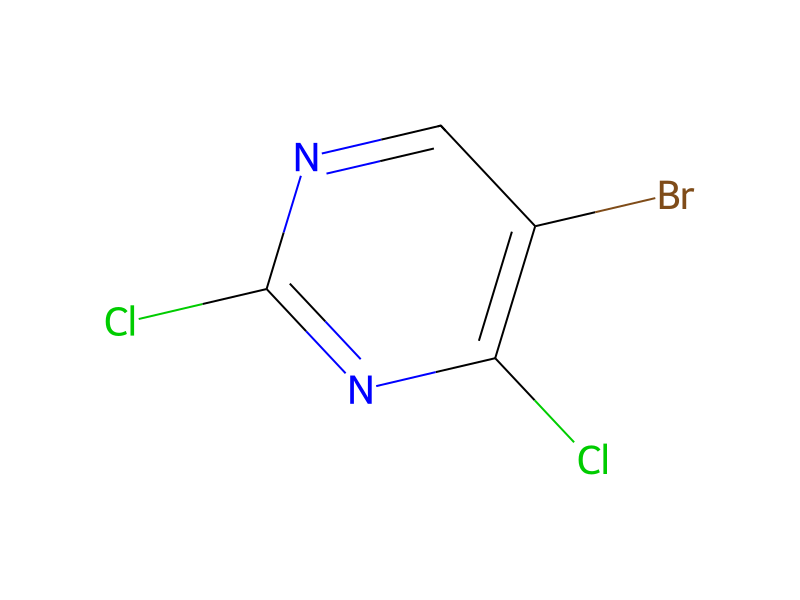



Conditions
- Temperature
- 80 °C
Procedure
To a solution of 5-bromo-2,4-dichloropyrimidine (90 μL, 0.70 mmol) and 2-amino-N-propyl-benzenesulfonamide (100 mg, 0.47 mmol), sodium hydride (54.2 mg, 0.56 mmol) in DMSO (1.0 mL) is added and the resulting solution is stirred at 80° C. for 3.0 h. The mixture is poured into water and extracted with ethyl acetate three times. The organic layer is washed with water and then brine, dried over sodium sulfate, and evaporated in vacuo. The residue is purified with silica gel column chromatography (n-hexane:ethyl acetate=5:1) to afford the title compound as a slightly yellow solid.
Workup
- extractionextracted with ethyl acetate three times
- washThe organic layer is washed with water
- dry with materialbrine, dried over sodium sulfate
- customevaporated in vacuo
- customThe residue is purified with silica gel column chromatography (n-hexane:ethyl acetate=5:1)
Sources & evidence
- ORD record
- ord-f4247d7e0bf543c296f1419ac637443d
- Source dataset
- uspto-grants-2012_09
- Patent number
- US08263590B2
Reaction notes
Loading…