Water → (1S,5R)-1-Phenyl-3-oxabicyclo[3.1.0]hexan-2-one
Reaction equation

[C:1]1([CH2:7][C:8]#N)[CH:6]=[CH:5][CH:4]=[CH:3][CH:2]=1.C[Si]([N-][Si](C)(C)C)(C)C.[Na+].[CH2:20]1[O:22][C@H:21]1[CH2:23]Cl.[OH2:25]>C1COCC1>[C:1]1([C@:7]23[CH2:8][C@H:23]2[CH2:21][O:22][C:20]3=[O:25])[CH:6]=[CH:5][CH:4]=[CH:3][CH:2]=1Participants


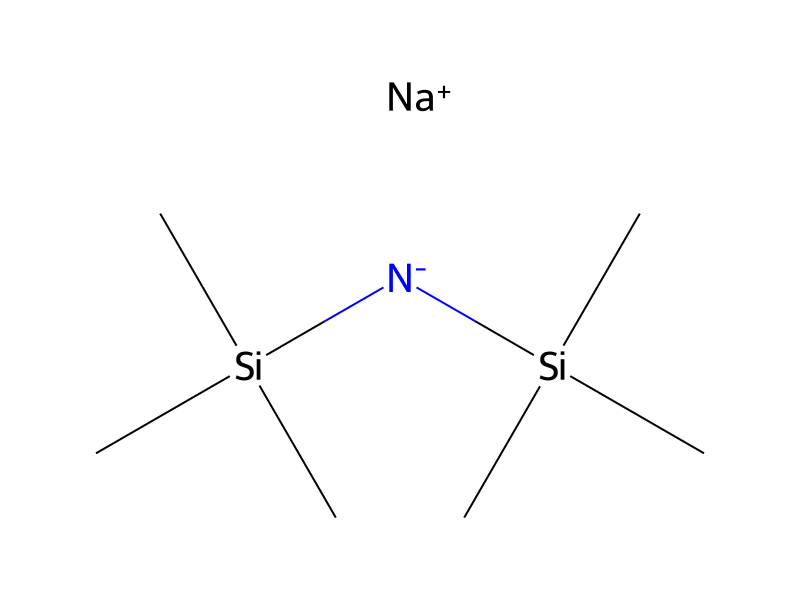



Conditions
- Temperature
- 0 °C
Procedure
Phenylacetonitrile (20 g) was dissolved in THF (500 ml), and NaHMDS (323 ml, 1.06 M) was then added dropwise to the solution under cooling in an ice-salt bath. The obtained mixture was stirred for 2 hours, and R-(−)-epichlorohydrin (15.8 g) was then added dropwise to the reaction solution (3 hours, 0° C.). The obtained mixture was stirred for 2 hours (wherein the internal temperature was maintained around 0° C.), and it was then stirred at room temperature overnight. Thereafter, the reaction solution was cooled on ice, and a small amount of water was added dropwise thereto. The reaction solution was concentrated under reduced pressure, and thereafter, ethanol (200 ml) and a 1 N potassium hydroxide aqueous solution (200 ml) were added to the residue. The obtained mixture was heated to reflux for 8 hours. Thereafter, the temperature of the reaction solution was returned to room temperature, and concentrated hydrochloric acid was then added to the solution, so that the pH value was adjusted to pH<2. Thereafter, the mixture was stirred at 0° C. for 2 hours. Thereafter, the reaction solution was stirred at room temperature for 1 hour. Subsequently, the reaction solution was concentrated under reduced pressure, and ethyl acetate and water were added to the concentrate to carry out liquid separation. The organic layer was successively washed with a saturated sodium bicarbonate aqueous solution and a saturated sodium chloride aqueous solution. The resultant organic layer was dried over magnesium sulfate, and the solvent was then concentrated under reduced pressure. The residue was purified by silica gel column chromatography (n-heptane:ethyl acetate), so as to obtain the title compound (24.7 g).
Workup
- temperatureunder cooling in an ice-salt bath
- stirringThe obtained mixture was stirred for 2 hours (wherein the internal temperature
- stirringwas then stirred at room temperature overnight
- temperatureThereafter, the reaction solution was cooled on ice
- concentrationThe reaction solution was concentrated under reduced pressure
- additionethanol (200 ml) and a 1 N potassium hydroxide aqueous solution (200 ml) were added to the residue
- temperatureThe obtained mixture was heated
- temperatureto reflux for 8 hours
- customwas returned to room temperature
- additionconcentrated hydrochloric acid was then added to the solution, so that the pH value
- stirringThereafter, the mixture was stirred at 0° C. for 2 hours
- stirringThereafter, the reaction solution was stirred at room temperature for 1 hour
- concentrationSubsequently, the reaction solution was concentrated under reduced pressure, and ethyl acetate and water
- additionwere added to the
- concentrationconcentrate
- customliquid separation
- washThe organic layer was successively washed with a saturated sodium bicarbonate aqueous solution
- dry with materialThe resultant organic layer was dried over magnesium sulfate
- concentrationthe solvent was then concentrated under reduced pressure
- customThe residue was purified by silica gel column chromatography (n-heptane:ethyl acetate)
Sources & evidence
- ORD record
- ord-ad50d72f0b7c4b42b52e42c3b4719fe5
- Source dataset
- uspto-grants-2012_09
- Patent number
- US08268848B2
Reaction notes
Loading…