O-Phenylenediamine → N-(4-chloro-3-(quinoxalin-3-yl)phenyl)-3,5-dimethoxybenzamide
Reaction equation

Br[CH2:2][C:3]([C:5]1[CH:6]=[C:7]([NH:12][C:13](=[O:24])[C:14]2[CH:19]=[C:18]([O:20][CH3:21])[CH:17]=[C:16]([O:22][CH3:23])[CH:15]=2)[CH:8]=[CH:9][C:10]=1[Cl:11])=O.[C:25]1([NH2:32])[CH:30]=[CH:29][CH:28]=[CH:27][C:26]=1[NH2:31].CCN(C(C)C)C(C)C>>[Cl:11][C:10]1[CH:9]=[CH:8][C:7]([NH:12][C:13](=[O:24])[C:14]2[CH:19]=[C:18]([O:20][CH3:21])[CH:17]=[C:16]([O:22][CH3:23])[CH:15]=2)=[CH:6][C:5]=1[C:3]1[CH:2]=[N:31][C:26]2[C:25]([N:32]=1)=[CH:30][CH:29]=[CH:28][CH:27]=2Participants
4
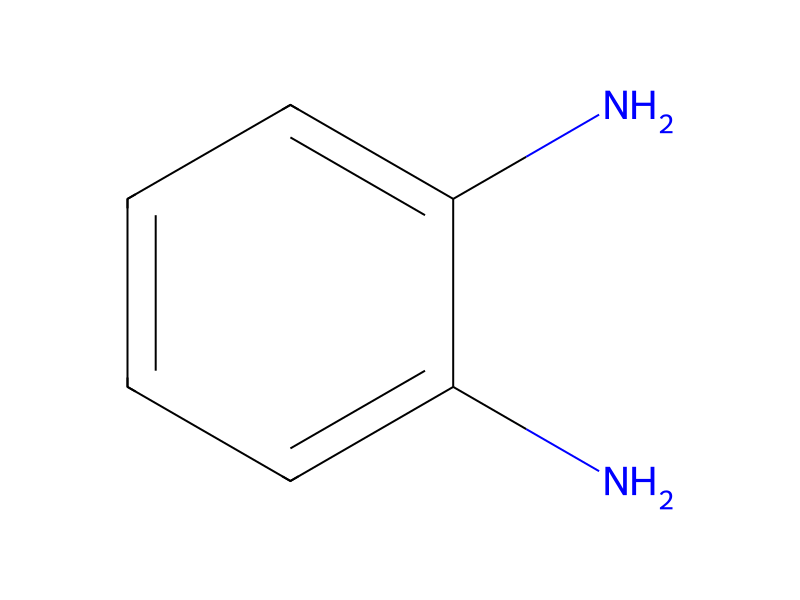



Procedure
Procedure D was performed using N-(3-(2-bromoacetyl)-4-chlorophenyl)-3,5-dimethoxybenzamide (0.029 g, 0.07 mmol), 1,2-phenylenediamine (0.021 g, 0.19 mmol) and DIPEA (0.042 ml, 0.24 mmol) to give N-(4-chloro-3-(quinoxalin-3-yl)phenyl)-3,5-dimethoxybenzamide as a light tan powder.
Sources & evidence
- ORD record
- ord-17c8bca2ef8b46dfaf491f12e37d8883
- Source dataset
- uspto-grants-2012_09
- Patent number
- US08273743B2
Reaction notes
Loading…