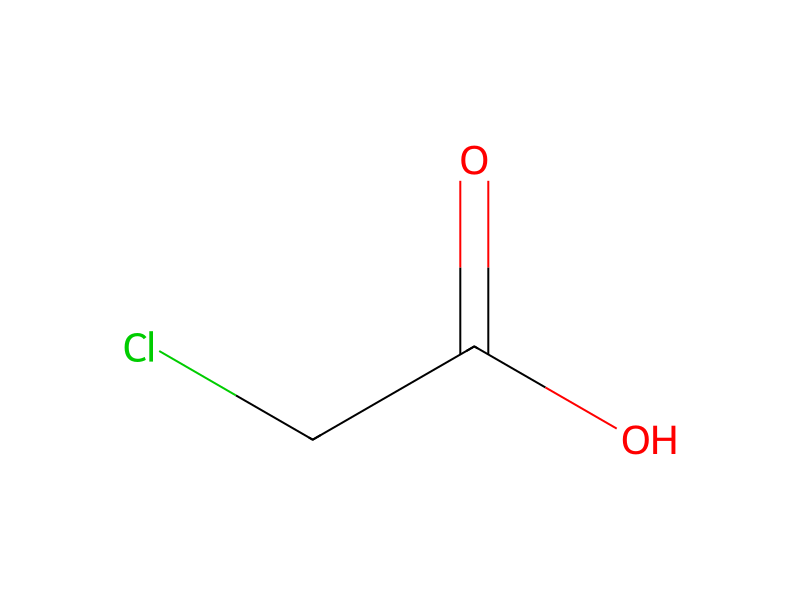
Chloroacetic Acid → N-(4-Cyanophenyl)glycine
Reaction equation

[C:1]([C:3]1[CH:9]=[CH:8][C:6]([NH2:7])=[CH:5][CH:4]=1)#[N:2].O.Cl[CH2:12][C:13]([OH:15])=[O:14]>C(OCC)(=O)C>[C:1]([C:3]1[CH:9]=[CH:8][C:6]([NH:7][CH2:12][C:13]([OH:15])=[O:14])=[CH:5][CH:4]=1)#[N:2]Participants
Reactant 3

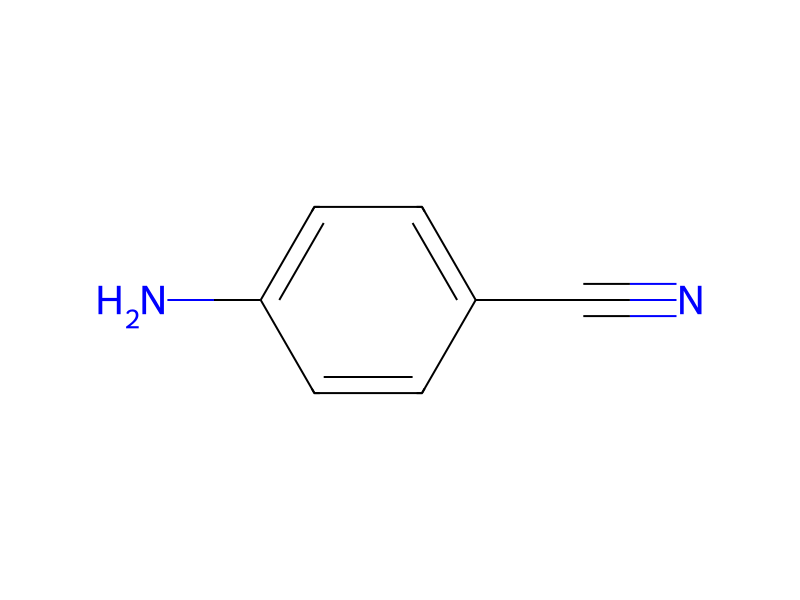
Product 1

Reagents, catalysts & solvents 1

Conditions
- Temperature
- 100 °C
Procedure
In a 500-ml three-necked flask, 4-cyanoaniline (100 g, 847.4 mmoles) was placed, followed by addition of 300 ml of water and attachment of a water cooling pipe, a mechanical stirrer and a dropping funnel. The flask was heated on an oil bath heated at 100° C. To the flask, an aqueous solution (water 150 ml) of monochloroacetic acid (104 g, 1116 mmoles) was added dropwise for about 30 minutes, followed by reflux with heating for 2.5 hours. After cooling naturally, about 100 ml of ethyl acetate was added to the flask to dissolve an insoluble matter. An organic layer was separated by a separatory funnel. The residual water layer and an aqueous layer obtained by extracting the organic layer with 100 ml of 5% (by weight) NaOH solution were combined, followed by acidolysis with 1/10N HCl. A precipitate produced was filtered and washed with water several times. After drying in an oven heated at 60° C. for 3 hours, the dried precipitate was dried in a vacuum desiccator overnight. The resulting product was a beige powder which showed no melting point but decomposed at 233.1° C. The yield was 38.8 g (26%).
Workup
- temperatureThe flask was heated on an oil bath
- temperatureby reflux
- temperaturewith heating for 2.5 hours
- temperatureAfter cooling naturally
- dissolutionto dissolve an insoluble matter
- customAn organic layer was separated by a separatory funnel
- customThe residual water layer and an aqueous layer obtained
- extractionby extracting the organic layer with 100 ml of 5% (by weight) NaOH solution
- customA precipitate produced
- filtrationwas filtered
- washwashed with water several times
- customAfter drying in an oven
- temperatureheated at 60° C. for 3 hours
- customthe dried precipitate was dried in a vacuum desiccator overnight
- customdecomposed at 233.1° C
Sources & evidence
- ORD record
- ord-d254e142905d4b408b8c6ef9b016807b
- Source dataset
- uspto-grants-1998_09
- Patent number
- US05811218
Reaction notes
Loading…