4-Methoxybenzyl alcohol → 4-Methoxybenzyl 2,2,2-Trichloroacetimidate
Reaction equation

[H-].[Na+].[CH3:3][O:4][C:5]1[CH:12]=[CH:11][C:8]([CH2:9][OH:10])=[CH:7][CH:6]=1.[Cl:13][C:14]([Cl:18])([Cl:17])[C:15]#[N:16]>CCOCC.CCCCCC.CO>[Cl:13][C:14]([Cl:18])([Cl:17])[C:15](=[NH:16])[O:10][CH2:9][C:8]1[CH:11]=[CH:12][C:5]([O:4][CH3:3])=[CH:6][CH:7]=1Participants
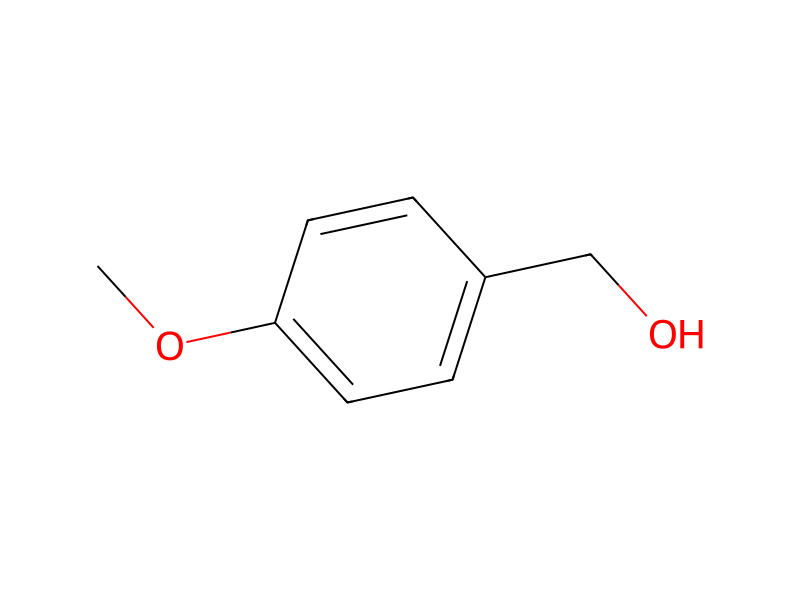






Conditions
- Temperature
- 20 °C
Procedure
5 mg (0.125 mmol) of sodium hydride, at 60% in mineral oil, in suspension in 2.5 cm3 of anhydrous ether are placed, under an argon atmosphere, in a 10 cm3 round-bottomed flask equipped with a magnetic stirrer system. 156 μl (172.8 mg, 1.251 mmol) of pure 4-methoxybenzyl alcohol are then added. The resulting homogeneous solution is stirred (evolution of gas) for 30 minutes at a temperature in the region of 20° C. and it is then cooled to 0° C. 125 μl (180 mg, 1.20 mmol) of trichloroacetonitrile are then added. The reaction mixture is allowed to react for 4 hours while allowing the temperature to slowly rise to the region of 20° C. The reaction mixture is concentrated under reduced pressure until an orange-yellow oil is obtained which is redissolved in 1.7 cm3 of hexane containing 5.5 μl of dry methanol. The suspension is filtered through Celite under reduced pressure. The solids obtained are washed once with 5 cm3 of hexane and the solvents are then removed under reduced pressure. The yellow oil obtained (4-methoxybenzyl trichloroacetimidate) is dissolved in 2 cm3 of cyclohexane. 240 mg (0.81 mmol) of methyl (2R,3S)-3-t-butoxycarbonylamino-3-phenyl-2-hydroxy-propionate, 1.0 cm3 of dry dichloromethane and 4 μl of boron trifluoride etherate are then added. The reaction mixture is allowed to react at a temperature in the region of 20° C. for 13 hours. The reaction mixture is filtered through Celite and the solids are washed 3 times with 10 cm3 of a dichloromethane/cyclohexane (1/2 by volume) mixture. The resulting organic phase is washed twice with 5 cm3 of a saturated aqueous sodium hydrogencarbonate solution, 3 times with 5 cm3 of water and once with 5 cm3 of a saturated aqueous sodium chloride solution. It is dried over anhydrous magnesium sulphate. After filtration and evaporation of the solvents under reduced pressure, the residue obtained (547 mg) is purified by chromatography on a column of silica gel, the eluent being a hexane/ethyl acetate (70/30 by volume) mixture. There are obtained 282 mg of a solid which is recrystallized from the dichloromethane/hexane mixture at 0° C. After separation of the crystals obtained (impurities), the liquid phase ("mother liquors") is evaporated under reduced pressure. There are obtained, with a yield of 68%, 228 mg (0.55 mmol) of methyl (2R,3S)-3-t-butoxy-carbonylamino-3-phenyl-2-[(4-methoxybenzyl)oxy]-propionate, the characteristics of which are the following:
Workup
- customequipped with a magnetic stirrer system
- temperatureis then cooled to 0° C
- customto react for 4 hours
- customto slowly rise to the region of 20° C
- concentrationThe reaction mixture is concentrated under reduced pressure until an orange-yellow oil
- customis obtained which
- filtrationThe suspension is filtered through Celite under reduced pressure
- customThe solids obtained
- washare washed once with 5 cm3 of hexane
- customthe solvents are then removed under reduced pressure
Sources & evidence
- ORD record
- ord-34561ccc1be743fbba3b444e86000cc3
- Source dataset
- uspto-grants-1998_09
- Patent number
- US05811550
Reaction notes
Loading…