19-Hydroxyandrostenedione → 4-Androstene-3beta,17beta,19-triol
Reaction equation

[OH:1][CH2:2][C@@:3]12[C@@H:20]3[C@H:11]([C@H:12]4[C@@:16]([CH2:18][CH2:19]3)([CH3:17])[C:15](=[O:21])[CH2:14][CH2:13]4)[CH2:10][CH2:9][C:8]1=[CH:7][C:6](=[O:22])[CH2:5][CH2:4]2.[H-].C(O[Al](OC(C)(C)C)OC(C)(C)C)(C)(C)C.[Li+]>>[CH3:17][C@:16]12[CH2:18][CH2:19][C@H:20]3[C@@H:11]([CH2:10][CH2:9][C:8]4[C@:3]3([CH2:2][OH:1])[CH2:4][CH2:5][C@H:6]([OH:22])[CH:7]=4)[C@@H:12]1[CH2:13][CH2:14][C@@H:15]2[OH:21]Participants
3
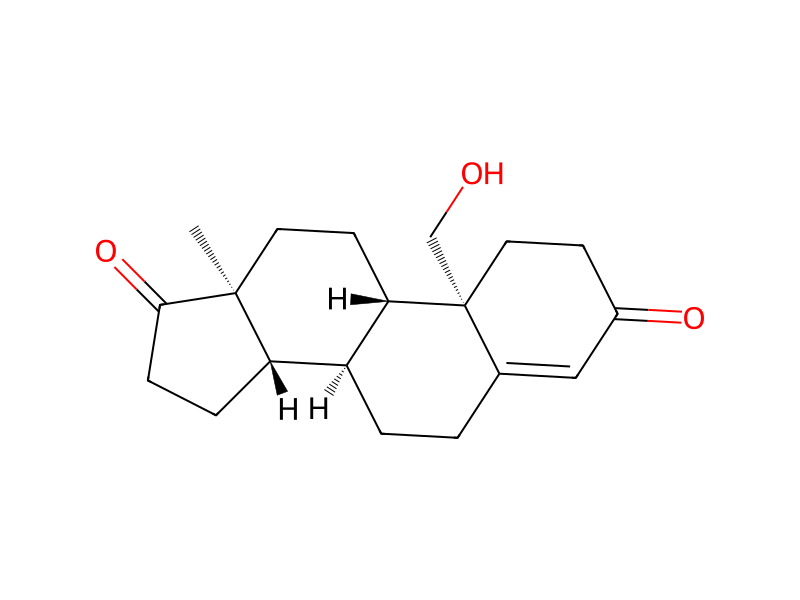


Procedure
The 3,17-dihydroxy-4-androsten-19-ones and the diether derivatives are available from the corresponding 19-hydroxy-4-androstene-3,17-dione acylates. Reduction of these compounds with lithium tri-t-butoxyaluminum hydride reduces the 3 and 17-ketones to the β-alcohols without loss of the 19-acylate to furnish 4-androstene-3β,17β,19-triol 19-acylate.
Sources & evidence
- ORD record
- ord-e1bd61b31b4b45caaf50db0155b3c765
- Source dataset
- uspto-grants-1977_05
- Patent number
- US04022769
Reaction notes
Loading…