2-Bromopropane → HCID 21181229, compound
Reaction equation

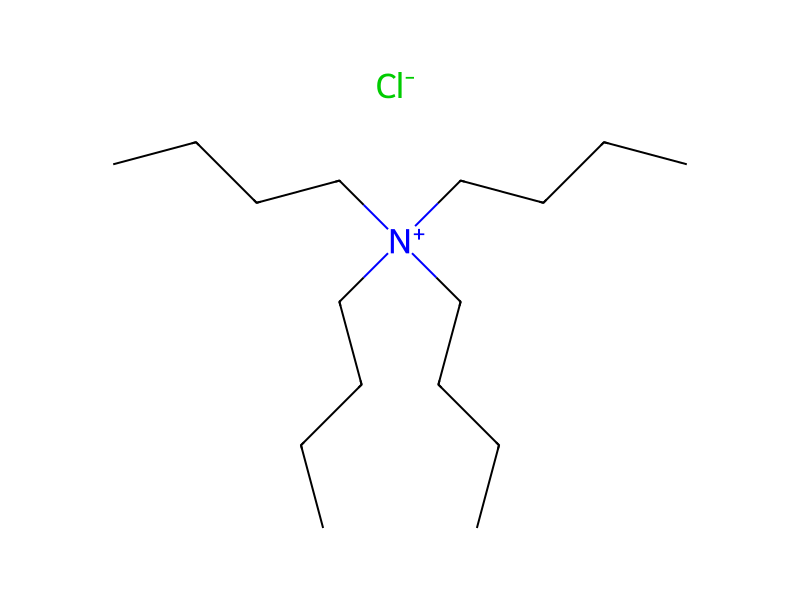
[F:1][C:2]([F:13])([F:12])[C:3]1[CH:8]=[CH:7][C:6]([CH2:9][C:10]#[N:11])=[CH:5][CH:4]=1.[OH-].[Na+].Br[CH:17]([CH3:19])[CH3:18]>[Cl-].C([N+](CCCC)(CCCC)CCCC)CCC>[F:1][C:2]([F:12])([F:13])[C:3]1[CH:4]=[CH:5][C:6]([CH:9]([CH:17]([CH3:19])[CH3:18])[C:10]#[N:11])=[CH:7][CH:8]=1Participants
Reactant 3



Product 1

Reagents, catalysts & solvents 1
Procedure
To a mixture of 4-trifluoromethyl-phenylacetonitrile (5.00 g, 27.0 mmoles), 50% aqueous sodium hydroxide solution (1.9 g), sodium hydroxide (270 mg), and tetra n-butylammonium chloride (1.2 g) stirring in a 60° oil bath was added 2-bromopropane (3.32 g, 27.0 mmoles). The resulting mixture was stirred at 80° for 0.5 hours, and then at 90°-95° for 1.0 hours longer. After cooling, the mixture was partitioned between toluene and water. The organic layer was washed with water, dried over anhydrous sodium sulfate, filtered and then evaporated. Chromatography of the residue over silica gel using 10% ethyl acetate-hexane as eluent gave the title compound (3.95 g) as an orange oil which was characterized by NMR as follows: 1H NMR (CDCl3) d 7.67 (d, 2H), 7.48 (d, 2H), 3.77 (d, 1H), 2.18 (m, 1H), 1.13 (d, 3H), 1.06 (d, 3H).
Workup
- stirringThe resulting mixture was stirred at 80° for 0.5 hours
- temperatureAfter cooling
- customthe mixture was partitioned between toluene and water
- washThe organic layer was washed with water
- dry with materialdried over anhydrous sodium sulfate
- filtrationfiltered
- customevaporated
Sources & evidence
- ORD record
- ord-6cf00b4563ef44a19ba95e0a2bbbcab7
- Source dataset
- uspto-grants-1995_09
- Patent number
- US05451604
Reaction notes
Loading…