Potassium Carbonate → HCID 86670199, compound
Reaction equation

[Cl:1][C:2]1[N:10]=[C:9]2[C:5]([NH:6][C:7]([CH:11]3[CH2:15][CH2:14][CH2:13][CH2:12]3)=[N:8]2)=[C:4]([Cl:16])[N:3]=1.C(=O)([O-])[O-].[K+].[K+].[CH3:23][Si:24]([CH3:31])([CH3:30])[CH2:25][CH2:26][O:27][CH2:28]Cl>CN(C=O)C.O>[Cl:1][C:2]1[N:10]=[C:9]2[C:5]([N:6]([CH2:28][O:27][CH2:26][CH2:25][Si:24]([CH3:31])([CH3:30])[CH3:23])[C:7]([CH:11]3[CH2:15][CH2:14][CH2:13][CH2:12]3)=[N:8]2)=[C:4]([Cl:16])[N:3]=1Participants
6





Procedure
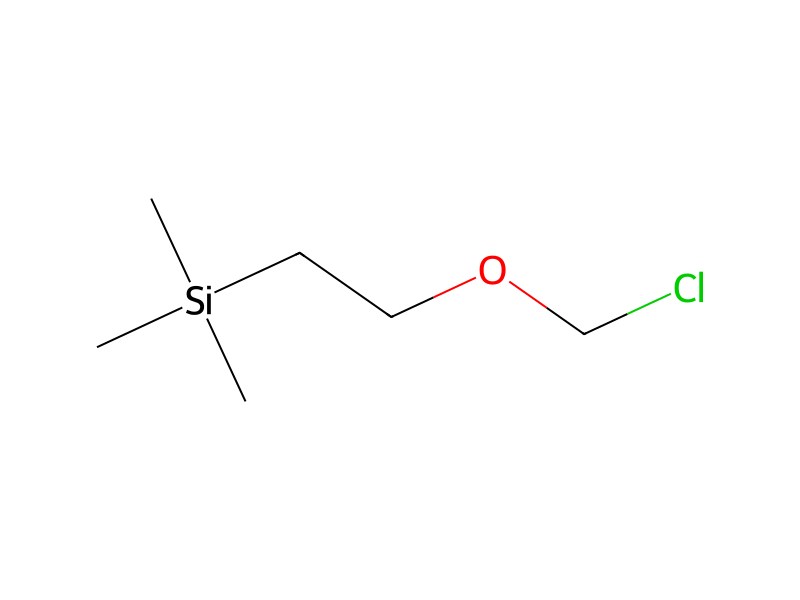
A mixture 2,6-dichloro-8-cyclopentyl-7H-purine (0.2 g, 0.78 mmol) and potassium carbonate (0.32 g, 2.34 mmol) was taken in DMF (2.5 ml) and 2-(trimethylsilyl)ethoxymethyl chloride (0.38 g, 2.34 mmol) was added drop wise. The reaction mixture was stirred at room temperature for 4 hours, diluted with water (10 ml). The aqueous layer was extracted with ethyl acetate. The organic layer was washed with saturated brine solution and dried over Na2SO4 and concentrated. The residue was purified by column chromatography to obtain 2,6-dichloro-8-cyclopentyl-7-(2-trimethylsilanyl-ethoxymethyl)-7H-purine (0.12 g, 40%) as yellow oil.
Workup
- extractionThe aqueous layer was extracted with ethyl acetate
- washThe organic layer was washed with saturated brine solution
- dry with materialdried over Na2SO4
- concentrationconcentrated
- customThe residue was purified by column chromatography
Sources & evidence
- ORD record
- ord-31afe248c2a94f98970db8816a37929f
- Source dataset
- uspto-grants-2014_08
- Patent number
- US08796290B2
Reaction notes
Loading…