3,4-dihydro-2H-pyran → HCID 58467971, compound
Reaction equation

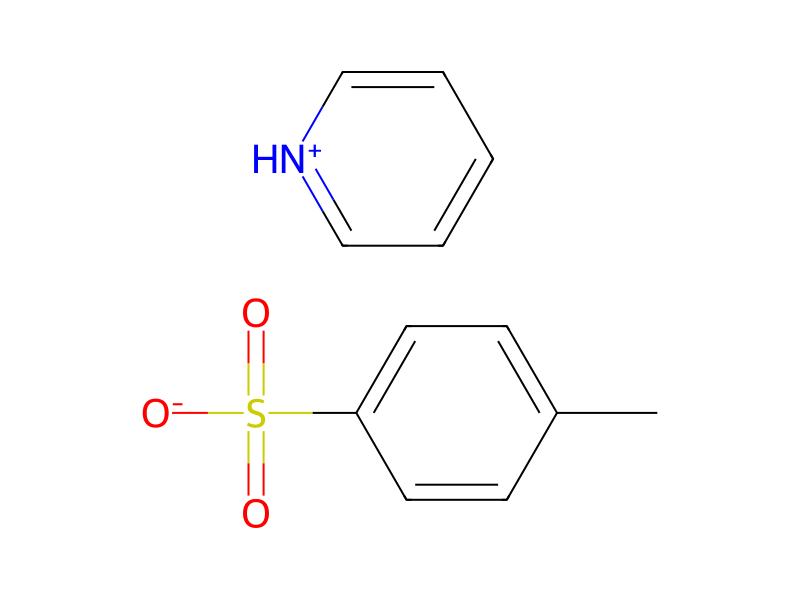
[Cl:1][C:2]1[N:7]=[C:6]([O:8][C@H:9]([CH3:14])[C:10]([CH3:13])([OH:12])[CH3:11])[C:5]([I:15])=[CH:4][N:3]=1.[O:16]1[CH:21]=[CH:20][CH2:19][CH2:18][CH2:17]1.S(C1C=CC(C)=CC=1)([O-])(=O)=O.[NH+]1C=CC=CC=1>C(Cl)Cl>[Cl:1][C:2]1[N:7]=[C:6]([O:8][C@H:9]([CH3:14])[C:10]([CH3:11])([O:12][CH:17]2[CH2:18][CH2:19][CH2:20][CH2:21][O:16]2)[CH3:13])[C:5]([I:15])=[CH:4][N:3]=1Participants
5




Procedure
A solution of 4.96 g (14.5 mmol) of (R)-3-(2-chloro-5-iodopyrimidin-4-yloxy)-2-methylbutan-2-ol in 30 ml of DCM was admixed with 2.64 ml (29.0 mmol) of dihydropyrane and 0.36 g (1.5 mmol) of pyridinium tosylate and stirred for 22 hours at room temperature. The mixture was diluted with DCM and washed with saturated sodium hydrogen carbonate solution. The organic phase was dried (Na2SO4), filtered and concentrated by evaporation. The resulting residue was purified chromatographically (hexane/ethyl acetate 4:1). This gave 5.50 g (12.9 mmol; yield: 89%) of the diastereomer mixture.
Workup
- washwashed with saturated sodium hydrogen carbonate solution
- dry with materialThe organic phase was dried (Na2SO4)
- filtrationfiltered
- concentrationconcentrated by evaporation
- customThe resulting residue was purified chromatographically (hexane/ethyl acetate 4:1)
Sources & evidence
- ORD record
- ord-024267b31d30452e9df1b17365cebd8e
- Source dataset
- uspto-grants-2014_08
- Patent number
- US08802686B2
Reaction notes
Loading…