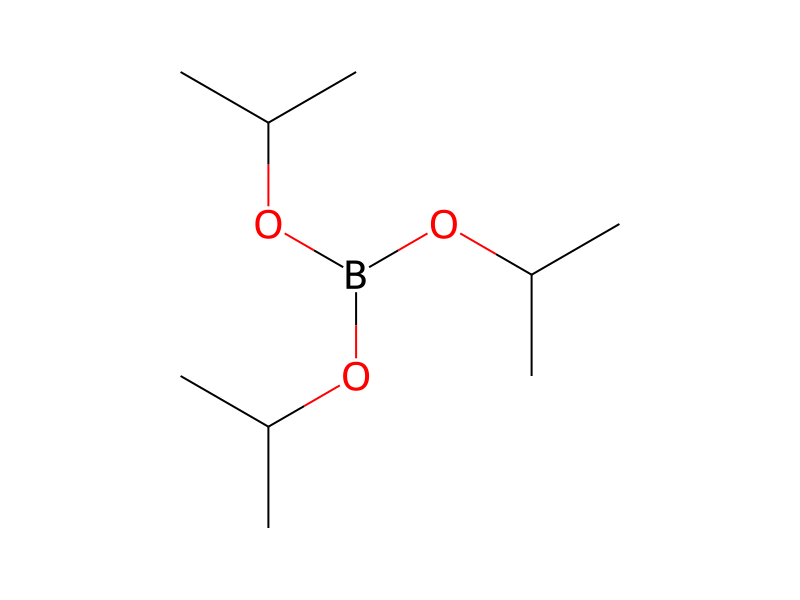
Triisopropyl borate → HCID 68106333, compound
Reaction equation

I[C:2]1[CH:7]=[CH:6][C:5]([N:8]2[CH2:14][CH2:13][CH2:12][CH2:11][CH2:10][CH2:9]2)=[CH:4][CH:3]=1.C([O:18][B:19](OC(C)C)[O:20]C(C)C)(C)C.C([Li])CCC.CCCCCC.[Cl-].[NH4+]>C1COCC1>[N:8]1([C:5]2[CH:6]=[CH:7][C:2]([B:19]([OH:20])[OH:18])=[CH:3][CH:4]=2)[CH2:14][CH2:13][CH2:12][CH2:11][CH2:10][CH2:9]1Participants
6




Conditions
- Temperature
- -78 °C
Procedure
Under an argon atmosphere, 1-(4-iodophenyl)azepane (200 mg) and triisopropylborate (162 mg) were dissolved in THF (2 ml), followed by cooling to −78° C. A 1.59 M butyl lithium/hexane solution (0.5 ml) was added thereto, followed by elevating the temperature to 0° C. over 1 hour, and further stirring at the same temperature for 1 hour. To the reaction mixture was added a saturated aqueous ammonium chloride solution, followed by extraction with EtOAc. The organic layer was dried over Na2SO4 and concentrated under reduced pressure. The obtained residue was purified by silica gel column chromatography (CHCl3/MeOH) to obtain (4-azepan-1-ylphenyl)boronic acid (52 mg).
Workup
- customto 0° C.
- customover 1 hour
- extractionfollowed by extraction with EtOAc
- dry with materialThe organic layer was dried over Na2SO4
- concentrationconcentrated under reduced pressure
- customThe obtained residue was purified by silica gel column chromatography (CHCl3/MeOH)
Sources & evidence
- ORD record
- ord-dd3e42c327ab4e47880525ff27b45d3d
- Source dataset
- uspto-grants-2014_08
- Patent number
- US08802679B2
Reaction notes
Loading…