Hydrochloric Acid → N-Hexanoyltyrosine methyl ester
Reaction equation

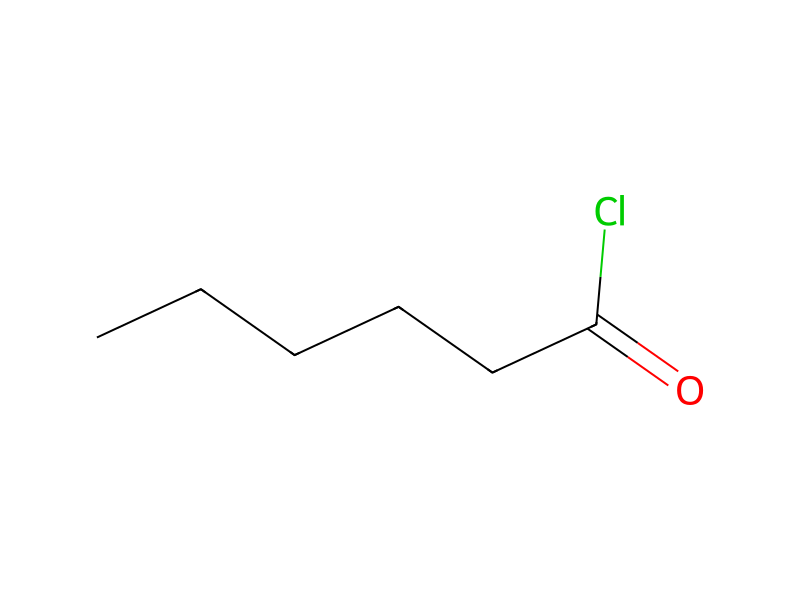
Cl.[CH3:2][O:3][C:4](=[O:15])[C@H:5]([CH2:7][C:8]1[CH:13]=[CH:12][C:11]([OH:14])=[CH:10][CH:9]=1)[NH2:6].C(N(CC)CC)C.Cl.[C:24](Cl)(=[O:30])[CH2:25][CH2:26][CH2:27][CH2:28][CH3:29]>O.ClCCl>[C:24]([NH:6][C@@H:5]([CH2:7][C:8]1[CH:9]=[CH:10][C:11]([OH:14])=[CH:12][CH:13]=1)[C:4]([O:3][CH3:2])=[O:15])(=[O:30])[CH2:25][CH2:26][CH2:27][CH2:28][CH3:29]Participants






Procedure
200 ml of dichloro methane (DCM) was added to (L)-tyrosine methyl ester HCl salt (23.16 g, 0.1 mol), and 28 ml of triethyl amine (TEA, 0.2 mol) was added thereto, thereby dissolving HCl salt. The reactor was temperature-lowered to 0° C. by using an ice bath, and hexanoyl chloride (13.8 ml, 0.1 mol) was slowly added, following by stirring for 3-4 hours. 200 ml of water was added to the reacted material, followed by extraction with 400 ml of ethyl acetate. Drying over sodium sulfate followed by filtering was carried out. The solvent was removed from the filtrate by rotary evaporation, followed by solidification with hexane and ethyl acetate, thereby obtaining a white solid (27.1 g, 92.5% yield) [hereinafter, referred to as Compound 1a].
Workup
- additionwas added
- customto 0° C.
- extractionfollowed by extraction with 400 ml of ethyl acetate
- dry with materialDrying over sodium sulfate
- filtrationby filtering
- customThe solvent was removed from the filtrate by rotary evaporation
Sources & evidence
- ORD record
- ord-39ccf835aa3d4e098241e5f474bf1395
- Source dataset
- uspto-grants-2014_08
- Patent number
- US08809390B2
Reaction notes
Loading…