Acetic Anhydride → 1-(5-Bromo-1H-indazol-1-yl)ethanone
Reaction equation

[Br:1][C:2]1[CH:8]=[CH:7][C:5]([NH2:6])=[C:4]([CH3:9])[CH:3]=1.[C:10]([O:13]C(=O)C)(=O)[CH3:11].C([O-])(=O)C.[K+].C(O[N:28]=O)CC(C)C.C(=O)(O)[O-].[Na+]>C(Cl)(Cl)Cl>[Br:1][C:2]1[CH:3]=[C:4]2[C:5](=[CH:7][CH:8]=1)[N:6]([C:10](=[O:13])[CH3:11])[N:28]=[CH:9]2Participants

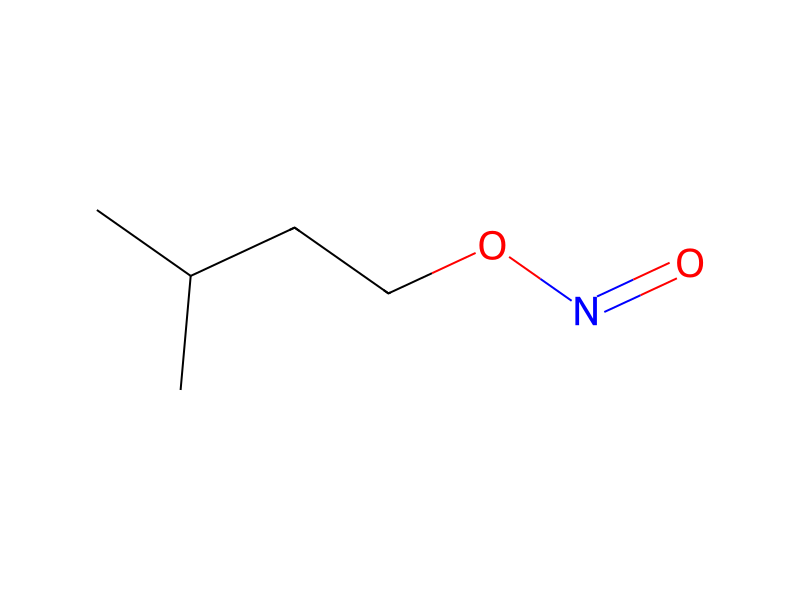





Conditions
- Temperature
- 5 °C
Procedure
4-Bromo-2-methylaniline (25.0 g, 134 mmol) was dissolved in chloroform (250 mL), and the mixture was cooled to 5° C. Acetic anhydride (35 mL, 343 mmol) was added dropwise, and the mixture was allowed to warm to ambient temperature. Potassium acetate (3.97 g, 40.4 mmol) and isoamylnitrite (35 mL, 262 mmol) were added, and the mixture was heated at 70° C. overnight. The mixture was neutralized with saturated sodium bicarbonate and extracted with methylene chloride. The combined organic layers were concentrated under reduced pressure, and the resulting residue was triturated with methanol to afford the title compound. 1H NMR (300 MHz, DMSO-d6) δ ppm 8.45 (s, 1H) 8.26 (d, J=8.82 Hz, 1H) 8.17 (d, J=1.70 Hz, 1H) 7.77 (dd, J=8.82, 2.03 Hz, 1H) 2.72 (s, 3H).
Workup
- temperatureto warm to ambient temperature
- temperaturethe mixture was heated at 70° C. overnight
- extractionextracted with methylene chloride
- concentrationThe combined organic layers were concentrated under reduced pressure
- customthe resulting residue was triturated with methanol
Sources & evidence
- ORD record
- ord-ed25ac60d04748599c43bb8c7720e1b6
- Source dataset
- uspto-grants-2014_02
- Patent number
- US08648069B2
Reaction notes
Loading…