Hydrochloric Acid → 2,3,6-Trimethylphenol
Reaction equation

[ClH:1].[CH3:2][C:3]1[C:4](=[O:11])[CH:5]([CH3:10])[CH:6]([CH3:9])[CH2:7][CH:8]=1>[Cu-]=O.C(O)(C)C>[CH3:10][C:5]1[C:6]([CH3:9])=[CH:7][CH:8]=[C:3]([CH3:2])[C:4]=1[OH:11].[Cl:1][C:7]1[CH:8]=[C:3]([CH3:2])[C:4]([OH:11])=[C:5]([CH3:10])[C:6]=1[CH3:9]Participants



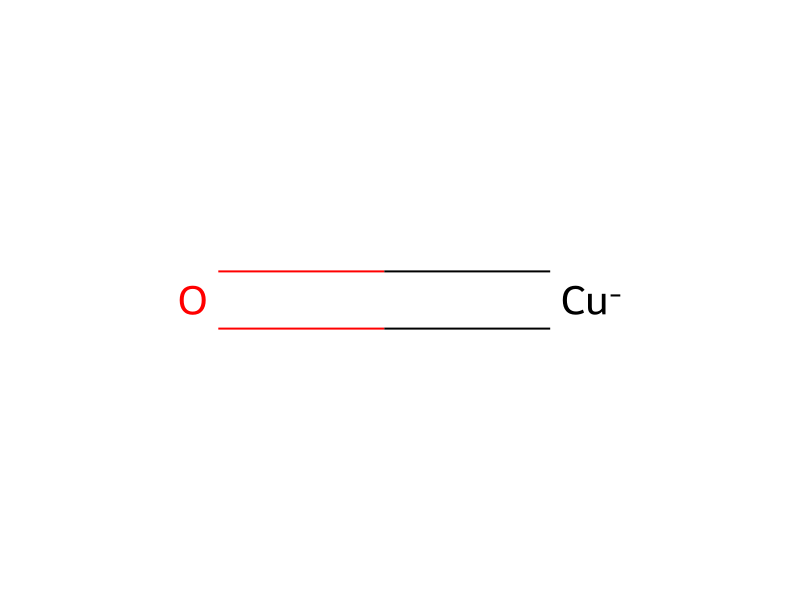

Conditions
- Temperature
- 70 °C
Procedure
55 g of hydrogen chloride were passed into 400 ml of isopropanol at room temperature, and 28 g (0.2 mole) of 2,5,6-trimethylcyclohex-2-en-1-one and 4 g (0.028 mole) of copper(I) oxide were added to the resulting solution. Thereafter, the reaction mixture was heated to 70° C., and 75 liters/hour of air were passed in for 3 hours, while stirring. Gas chromatographic analysis (2 m OV 17, 200° C.) then showed that 2,5,6-trimethylcyclohex-2-en-1-one was no longer present, and that 2,3,6-trimethylphenol as well as a little 4-chloro-2,3,6-trimethylphenol had beed formed. 243 ml of a 30% strength solution of sodium methylate in methanol were then run in at room temperature, and a sample of the reaction mixture, after water had been added to it, had a pH of 4.2. The mixture was then heated at 62° C., and 75 liters/hour of air, which had been fed in uninterrupted throughout the entire process, was passed into the mixture at 62° C. for a further 16 hours.
Workup
- customwere passed in for 3 hours
- customGas chromatographic analysis (2 m OV 17, 200° C.)
Sources & evidence
- ORD record
- ord-aeb3529455fd43408866d9162434fd17
- Source dataset
- uspto-grants-1985_01
- Patent number
- US04491545
Reaction notes
Loading…