Hydrogen Bromide → 1-Bromo-2,3-dichloro-6-nitrobenzene
Reaction equation

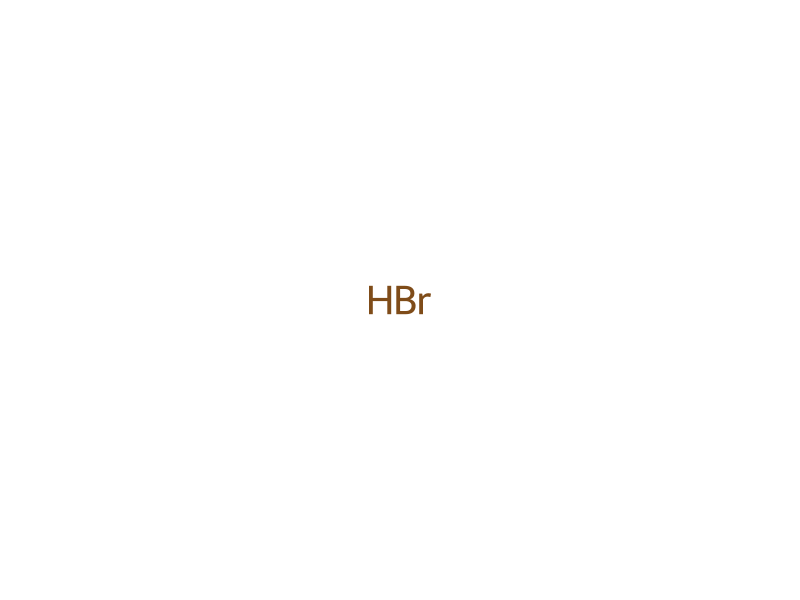
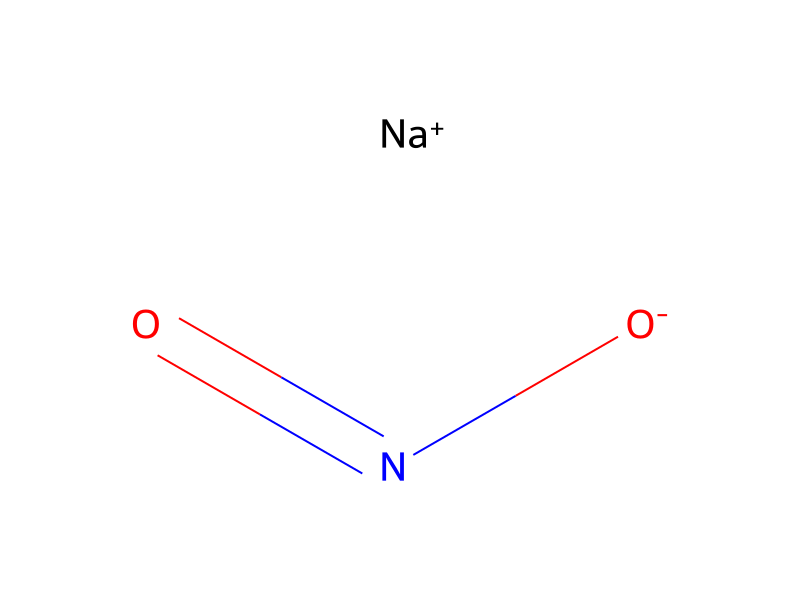
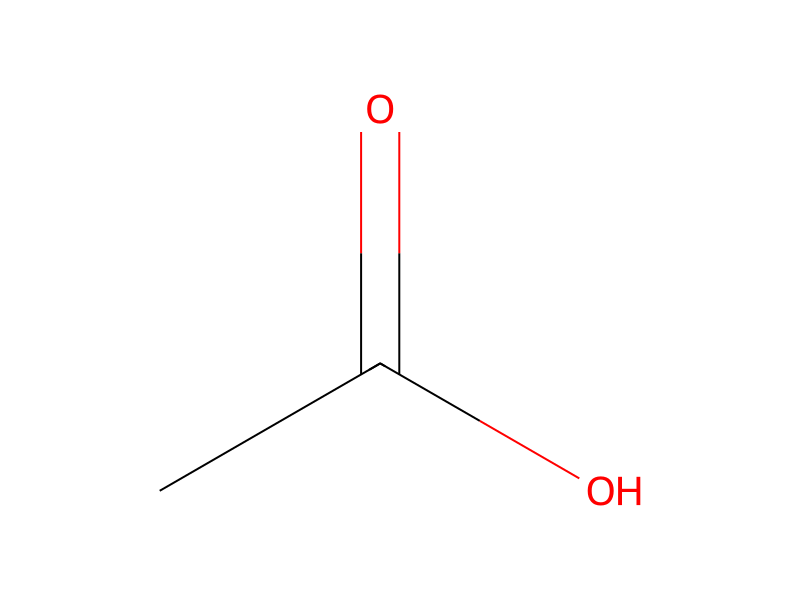
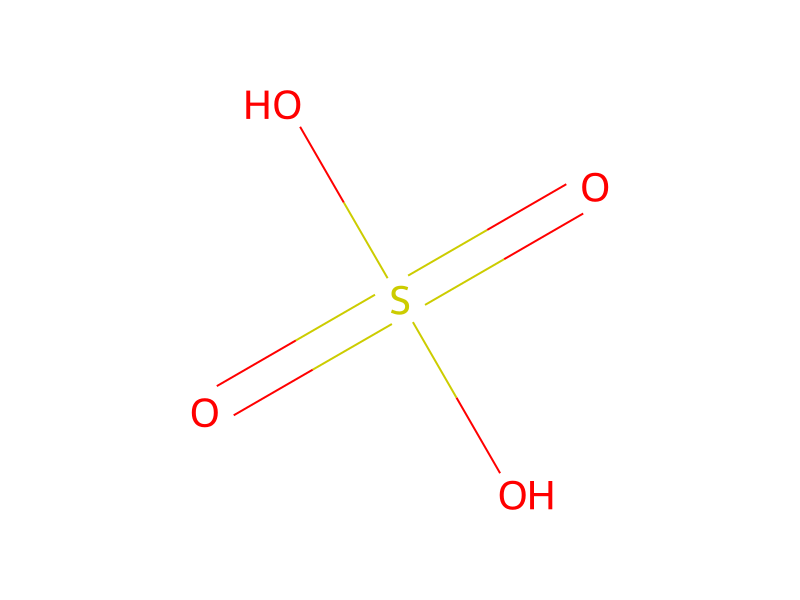
[Cl:1][C:2]1[C:8]([Cl:9])=[CH:7][CH:6]=[C:5]([N+:10]([O-:12])=[O:11])[C:3]=1N.N([O-])=O.[Na+].O.[BrH:18]>C(O)(=O)C.S(=O)(=O)(O)O>[Br:18][C:3]1[C:2]([Cl:1])=[C:8]([Cl:9])[CH:7]=[CH:6][C:5]=1[N+:10]([O-:12])=[O:11]Participants


Conditions
- Temperature
- 15 °C
Procedure
Substituted nitrobenzenes, not hitherto described in the chemical literature, used in the preparation of substituted anilines as hereinbefore described in Reference Example 2, were prepared as follows: (a) 2,3-Dichloro-6-nitroaniline [29 g; prepared by a modification (reaction at 125° C.) of the procedure described by Beilstein and Kurbatow, Ann., 192, 235 (1878)] was dissolved with stirring at 55°-60° C. in glacial acetic acid (350 ml). A solution of sodium nitrite (11 g) in concentrated sulphuric acid (80 ml) was then added to the solution thus obtained with stirring over 15 minutes at a temperature of 55°-60° C. maintained by intermittent cooling with water. The red solution obtained was cooled to 15° C. and poured, with stirring, into a solution of cuprous bromide (20 g) in concentrated hydrobromic acid (200 ml) and ice (500 g). The mixture was allowed to attain laboratory temperature, heated for one hour at 60° C. and then steam-distilled. The distillate obtained was extracted with diethyl ether (6×500 ml). The combined ethereal extracts were washed successively with aqueous sodium hydroxide solution (2N; 3×750 ml and water (2×500 ml), dried over anhydrous sodium sulphate and filtered. The filtrate was evaporated to dryness to give a yellow powder, which was then crystallised from hexane (125 ml) to give 2-bromo-3,4-dichloronitrobenzene (26.7 g), m.p. 73° C., in the form of yellow crystals.
Workup
- customwere prepared
- customprepared by a modification (reaction at 125° C.) of the procedure
- dissolution, 192, 235 (1878)] was dissolved
- customthus obtained
- temperaturemaintained
- customThe red solution obtained
- additionpoured
- temperatureheated for one hour at 60° C.
- distillationsteam-distilled
- customThe distillate obtained
- extractionwas extracted with diethyl ether (6×500 ml)
- washThe combined ethereal extracts were washed successively with aqueous sodium hydroxide solution (2N
- dry with material3×750 ml and water (2×500 ml), dried over anhydrous sodium sulphate
- filtrationfiltered
- customThe filtrate was evaporated to dryness
- customto give a yellow powder, which
- customwas then crystallised from hexane (125 ml)
Sources & evidence
- ORD record
- ord-1dc9a5413ff141e49bd236e57c1882b7
- Source dataset
- uspto-grants-1985_01
- Patent number
- US04496390
Reaction notes
Loading…