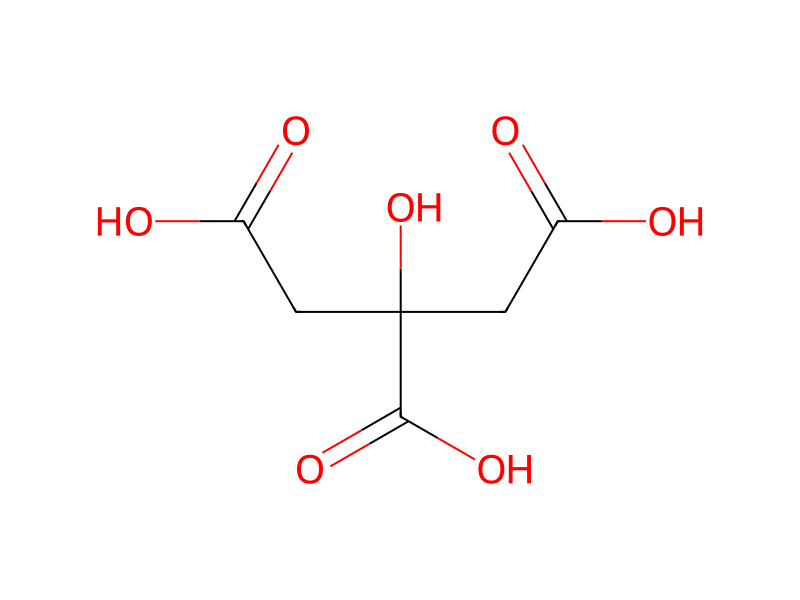
Citric Acid → 2,3-Dihydroxybenzoic Acid
Reaction equation

C(O)(=O)CC(CC(O)=O)(C(O)=O)O.[OH-].[K+].C(N)(=O)C1CC=CNC=1.[CH3:25][O:26]S([O-])(=O)=O.CC1C=CC=C2C=1N=C1C(C=CC=C1)=[NH+]2.[C:46]([OH:55])(=[O:54])[C:47]1[C:48](=C[CH:51]=[CH:52][CH:53]=1)[OH:49]>>[OH:49][C:48]1[C:25]([OH:26])=[CH:51][CH:52]=[CH:53][C:47]=1[C:46]([OH:55])=[O:54]Participants




Procedure
17 l of a 0.006M solution of citric acid are poured into a reactor and pH is brought to 4.5 by means of caustic potash, whereafter 17 g of cellulose modified with 1,4-dihydronicotinamide with the content of 0.2 mmol/g of dihydronicotinamide groups and 0.03 g of 9-methylphenazinium methylsulphate are added thereto and allowed to stand for 3 hours. Then 1.1 g of salicylic acid is added and the mixture is vigorously stirred for additional 3 hours. Cellulose modified 1,4-dihydronicotinamide is filtered off, the solution is evaporated to 100 ml and extracted with chloroform. The resulting extract is evaporated to 50 ml and cooled. The formed precipitate is crystallized with a mixture consisting of water and ethanol in the ratio of 1:1 to give 0.9 g of 2,3-dihydroxybenzoic acid (82% as calculated for the starting compound) having its melting point of 203°-204° C. Composition, in %, is as follows:
Workup
- additionare added
- filtrationis filtered off
- customthe solution is evaporated to 100 ml
- extractionextracted with chloroform
- extractionThe resulting extract
- customis evaporated to 50 ml
- temperaturecooled
- customThe formed precipitate is crystallized with a mixture
Sources & evidence
- ORD record
- ord-2bb416cfdfb147dc81f1cd4adc369c33
- Source dataset
- uspto-grants-1988_01
- Patent number
- US04718994
Reaction notes
Loading…