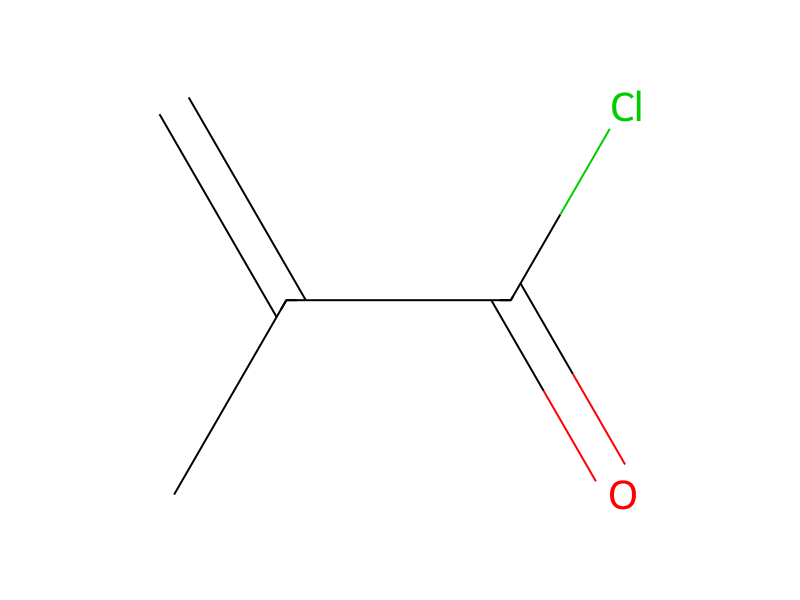
Methacryloyl chloride → HCID 136197544, compound
Reaction equation

[OH:1][C:2]1[CH:7]=[CH:6][C:5]([NH2:8])=[CH:4][C:3]=1[N:9]1[N:13]=[C:12]2[CH:14]=[C:15]3[O:20][CH2:19][O:18][C:16]3=[CH:17][C:11]2=[N:10]1.[C:21](Cl)(=[O:25])[C:22]([CH3:24])=[CH2:23]>C(N(CC)CC)C>[OH:1][C:2]1[CH:7]=[CH:6][C:5]([NH:8][C:21](=[O:25])[C:22]([CH3:24])=[CH2:23])=[CH:4][C:3]=1[N:9]1[N:13]=[C:12]2[CH:14]=[C:15]3[O:20][CH2:19][O:18][C:16]3=[CH:17][C:11]2=[N:10]1Participants
4
Reactant 2

Product 1

Reagents, catalysts & solvents 1

Procedure
According to the procedure of Example 2, a sample of 2-(2-hydroxy-5-aminophenyl)-5,6-methylenedioxybenzotriazole is treated with methacryloyl chloride in the presence of triethylamine to yield 2-(2-hydroxy-5-methacrylamidophenyl)-5,6-methylenedioxybenzotriazole. The corresponding chloro, methoxy and methylenedioxy compounds of the acrylamidophenyl series may be produced according to the general synthetic routes disclosed above for the corresponding methacrylamidophenyl compounds.
Sources & evidence
- ORD record
- ord-6bfe22acd97e4832a6f764e219edbc8c
- Source dataset
- uspto-grants-1988_01
- Patent number
- US04719248
Reaction notes
Loading…