2,6-Dibromopyridine → 4-Boc-1-(6-bromo-2-pyridyl)piperazine
Reaction equation

Br[C:2]1[CH:7]=[CH:6][CH:5]=[C:4]([Br:8])[N:3]=1.[N:9]1([C:15]([O:17][C:18]([CH3:21])([CH3:20])[CH3:19])=[O:16])[CH2:14][CH2:13][NH:12][CH2:11][CH2:10]1.C(N(CC)C(C)C)(C)C>C(O)CCC>[Br:8][C:4]1[N:3]=[C:2]([N:12]2[CH2:11][CH2:10][N:9]([C:15]([O:17][C:18]([CH3:21])([CH3:20])[CH3:19])=[O:16])[CH2:14][CH2:13]2)[CH:7]=[CH:6][CH:5]=1Participants
5
Reactant 3
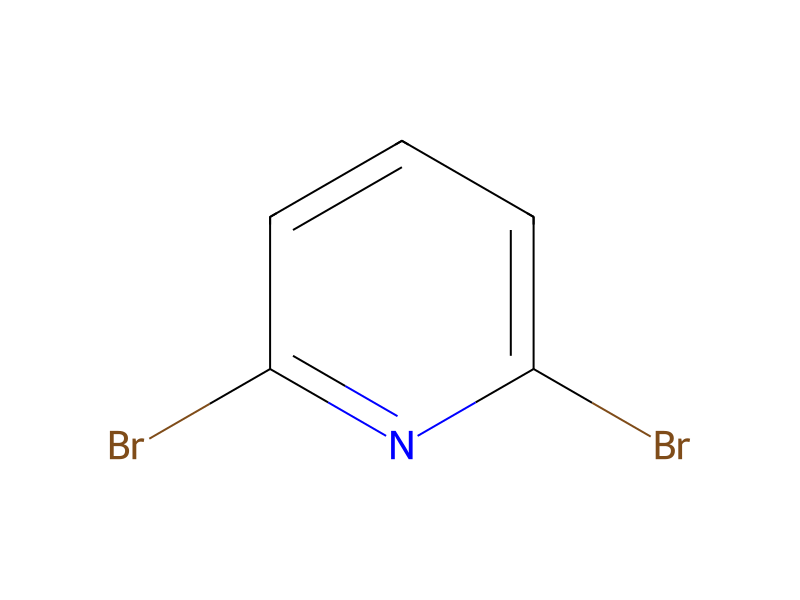


Product 1

Reagents, catalysts & solvents 1

Procedure
A solution of 4 g (16.88 mmol) of 2,6-dibromopyridine, 3.14 g (16.88 mmol) of tert.butyl piperazine-1-carboxylate and 5.89 ml (33.77 mmol) of N,N-diisopropylethylamine in 30 ml of n-butanol is refluxed for eight hours. The solvent is then distilled off. Purification is by column chromatography on silica gel (eluant: cyclohexane/ethyl acetate=2:1).
Workup
- distillationThe solvent is then distilled off
- customPurification
Sources & evidence
- ORD record
- ord-473ca581afe840cabcbaa3f57ff2a5a6
- Source dataset
- uspto-grants-2004_11
- Patent number
- US06818644B1
Reaction notes
Loading…