Piperazine → 2-(Piperazin-1-yl)-1,3-benzoxazole
Reaction equation

Cl[C:2]1[O:3][C:4]2[CH:10]=[CH:9][CH:8]=[CH:7][C:5]=2[N:6]=1.[NH:11]1[CH2:16][CH2:15][NH:14][CH2:13][CH2:12]1.C(N(CC)CC)C>ClCCl>[N:11]1([C:2]2[O:3][C:4]3[CH:10]=[CH:9][CH:8]=[CH:7][C:5]=3[N:6]=2)[CH2:16][CH2:15][NH:14][CH2:13][CH2:12]1Participants
5
Reactant 3


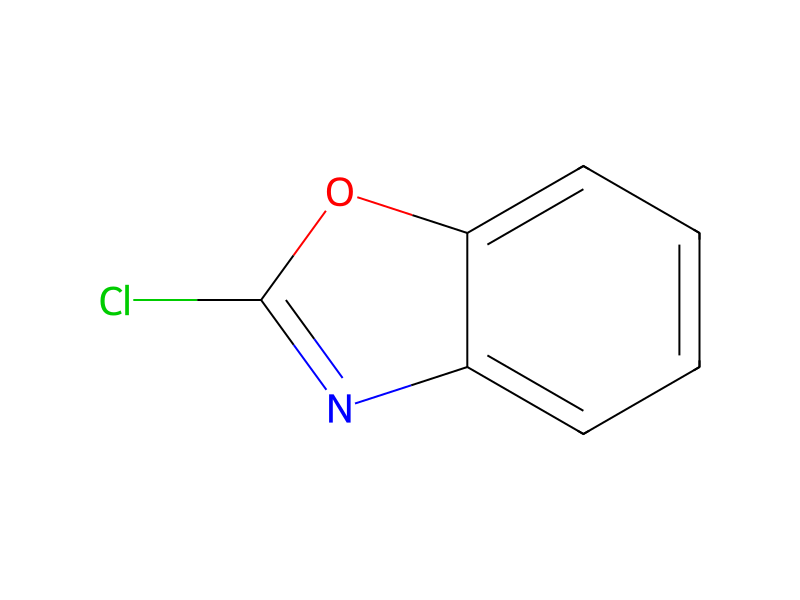
Product 1

Reagents, catalysts & solvents 1

Procedure
A solution of 1.5 g (0.01 mol) of chlorobenzoxazole in 20 ml of dichloromethane is added dropwise at 0° C. to a solution of 1 g (0.012 mol) of piperazine and 7 ml (0.05 mol) of triethylamine in 10 ml of dichloromethane and the mixture is stirred for one hour at this temperature. Then it is extracted with water. The organic phase is dried over sodium sulphate, the drying agent is filtered off and the filtrate is concentrated by evaporation. The residue is washed with acetone.
Workup
- extractionThen it is extracted with water
- dry with materialThe organic phase is dried over sodium sulphate
- filtrationthe drying agent is filtered off
- concentrationthe filtrate is concentrated by evaporation
- washThe residue is washed with acetone
Sources & evidence
- ORD record
- ord-f2dcdf587287482183872732b039090e
- Source dataset
- uspto-grants-2004_11
- Patent number
- US06821967B2
Reaction notes
Loading…