Hydrochloric Acid → 3-Tert-butyl-4-methoxyphenylboronic acid
Reaction equation

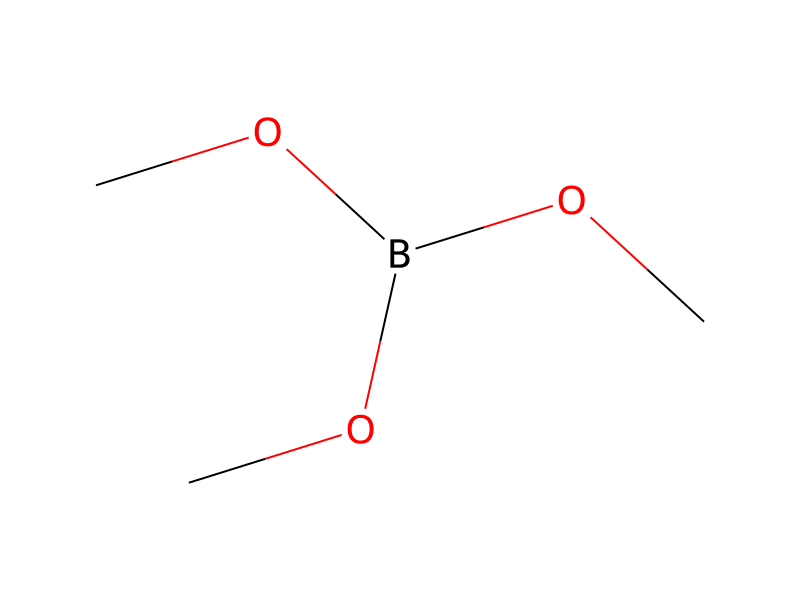
[C:1]([C:5]1[CH:6]=[C:7](Br)[CH:8]=[CH:9][C:10]=1[O:11][CH3:12])([CH3:4])([CH3:3])[CH3:2].C([Li])CCC.[B:19](OC)([O:22]C)[O:20]C.Cl>C1COCC1>[C:1]([C:5]1[CH:6]=[C:7]([B:19]([OH:22])[OH:20])[CH:8]=[CH:9][C:10]=1[O:11][CH3:12])([CH3:4])([CH3:3])[CH3:2]Participants
Reactant 4



Product 1

Reagents, catalysts & solvents 1

Procedure
4 g (16.5 mmol) of 3-tert-butyl-4-methoxybromobenzene and 50 ml of THF are introduced into a three-necked flask under a stream of nitrogen. 7.9 ml (19.8 mmol) of n-butyllithium (2.5 M in hexane) are added dropwise at −78° C., the mixture is stirred for 15 minutes at this temperature, 5.6 ml (49.5 mmol) of trimethyl borate are added and the mixture is stirred for 2 hours. 20 ml of hydrochloric acid (1 N) are added at −50° C. and the mixture is allowed to return to room temperature. The reaction medium is extracted with ethyl ether and the organic phase is separated out after settling has taken place, dried over magnesium sulphate and evaporated. 3.79 g (100%) of the expected boronic acid are collected, which is used in its present state for the rest of the synthesis.
Workup
- additionare added
- customto return to room temperature
- extractionThe reaction medium is extracted with ethyl ether
- customthe organic phase is separated out after settling
- dry with materialdried over magnesium sulphate
- customevaporated
- custom3.79 g (100%) of the expected boronic acid are collected
- customwhich is used in its present state for the rest of the synthesis
Sources & evidence
- ORD record
- ord-b3f83c729cbb4148acff94b0f04d49d9
- Source dataset
- uspto-grants-2004_11
- Patent number
- US06825360B1
Reaction notes
Loading…