Chloride → HCID 86739636, compound
Reaction equation

[F:1][C:2]([F:16])([F:15])[C:3]1[CH:4]=[C:5]([C:9]2[CH2:10][CH2:11][NH:12][CH2:13][CH:14]=2)[CH:6]=[CH:7][CH:8]=1.C(N([CH2:22][CH3:23])CC)C.[Cl-].C1([C:28](O)=[O:29])CC1.[CH2:31](Cl)Cl>C(OCC)C>[F:16][C:2]([F:1])([F:15])[C:3]1[CH:4]=[C:5]([C:9]2[CH2:14][C:13](=[C:28]=[O:29])[N:12]([CH:23]3[CH2:22][CH2:31]3)[CH2:11][CH:10]=2)[CH:6]=[CH:7][CH:8]=1Participants



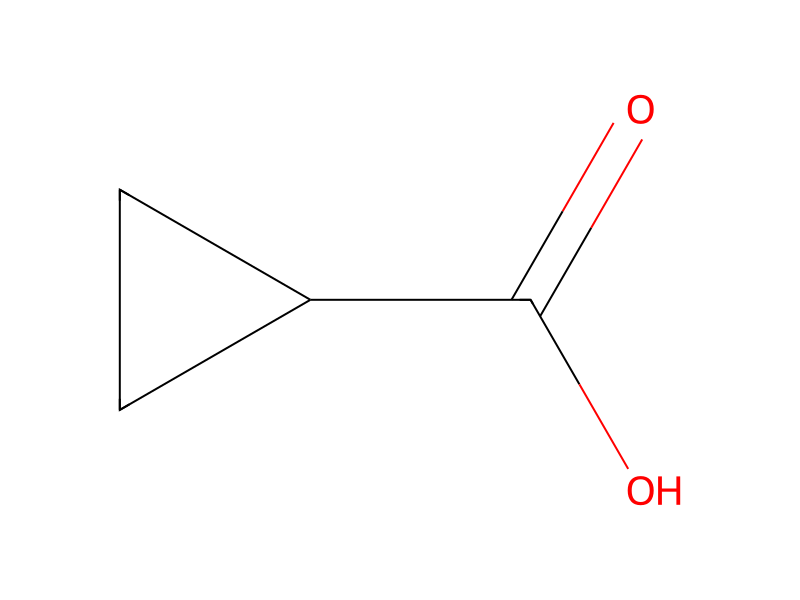



Procedure
To a solution of 9.1 g of 4-(3-trifluoromethylphenyl)-1,2,3,6-tetrahydropyridine and of 4.04 g of triethylamine in 40 ml of methylene chloride cooled to 0° C., a solution of 4.2 g of chloride of cyclopropanecarboxylic acid in 20 ml of methylene chloride is added dropwise, whilst ensuring that the temperature does not exceed 5° C. The reaction mixture is left for 30 minutes at 0°-5° C., then for one hour at room temperature. 200 ml of diethyl ether are added, the mixture is filtered, the organic phase is washed three times with water, dried and evaporated to dryness under reduced pressure. Thus, 11.5 g of 4-(3-trifluoromethylphenyl)-1-cyclopropyl-carbonyl-1,2,3,6-tetrahydropyridine are obtained: yellow/brown oil containing traces of impurities.
Workup
- customdoes not exceed 5° C
- waitfor one hour at room temperature
- filtrationthe mixture is filtered
- washthe organic phase is washed three times with water
- customdried
- customevaporated to dryness under reduced pressure
Sources & evidence
- ORD record
- ord-6a3e135ba6d8416fbb753c4f162cbf9a
- Source dataset
- uspto-grants-1984_09
- Patent number
- US04472408
Reaction notes
Loading…