Hydrochloric Acid → HCID 22804689, compound
Reaction equation

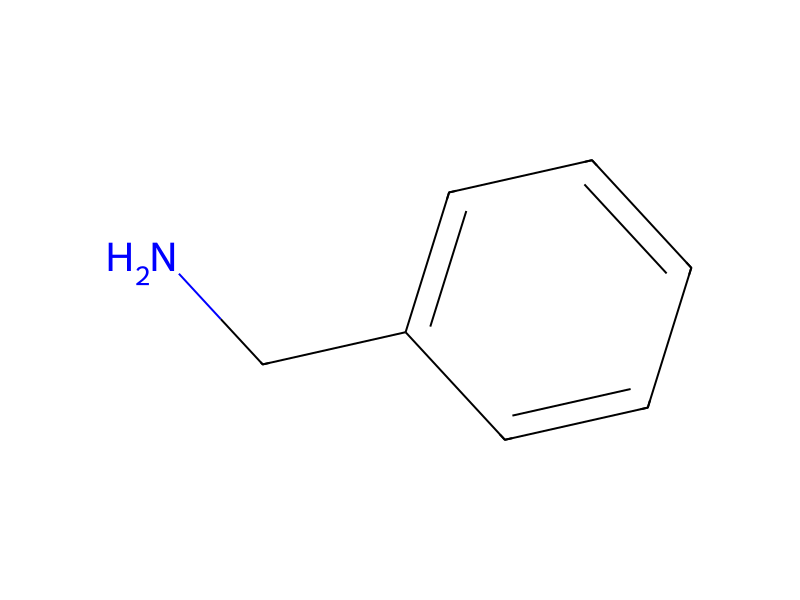
C([NH2:8])C1C=CC=CC=1.Cl.O=[CH:11][CH2:12][C@@H:13]([C@@H:15]([CH2:17][OH:18])[OH:16])[OH:14].C([BH3-])#N.[Na+].[OH-].[Na+]>O>[NH2:8][CH2:11][CH2:12][C@H:13]([OH:14])[C@@H:15]([OH:16])[CH2:17][OH:18]Participants
Reactant 5




Product 1

Reagents, catalysts & solvents 1

Procedure
A solution of benzylamine (4.8 g., 48 mmole) in water (40 ml.) was acidified to pH 5 with 5N hydrochloric acid. 2-Deoxy-D-ribose (3.0 g., 27.5 mmole) and sodium cyanoborohydride (1.35 g., 21.5 mmole) were added and the solution was stirred and allowed to stand overnight at room temperature. The solution was basified to pH 10 with sodium hydroxide, washed several times with ethyl acetate to remove excess benzylamine, and acidified to pH 4 with hydrochloric acid. Methanol (60 ml.) was added and the crude mixture was hydrogenated at 50° C. and 50 p.s.i. in the presence of 10% palladium-on-charcoal catalyst, fresh catalyst being added after 24 hours. After a further 4 days, the solution was filtered and evaporated, the product being chromatographed on Amberlite CG 50 ion exchange resin (NH4+ form) eluting with 0.1N ammonium hydroxide to give 5-amino-1,2(S),3(S)-trihydroxy-pentane (1.6 g., 53%. m/e 135. C5H10NO3 requires m/e 135.
Workup
- washwashed several times with ethyl acetate
- customto remove excess benzylamine
- additionMethanol (60 ml.) was added
- customwas hydrogenated at 50° C.
- additionin the presence of 10% palladium-on-charcoal catalyst, fresh catalyst being added after 24 hours
- waitAfter a further 4 days
- filtrationthe solution was filtered
- customevaporated
- customthe product being chromatographed on Amberlite CG 50 ion exchange resin (NH4+ form)
- washeluting with 0.1N ammonium hydroxide
Sources & evidence
- ORD record
- ord-c54bc5166a584f5db751ab0428346c5b
- Source dataset
- uspto-grants-1978_08
- Patent number
- US04107435
Reaction notes
Loading…