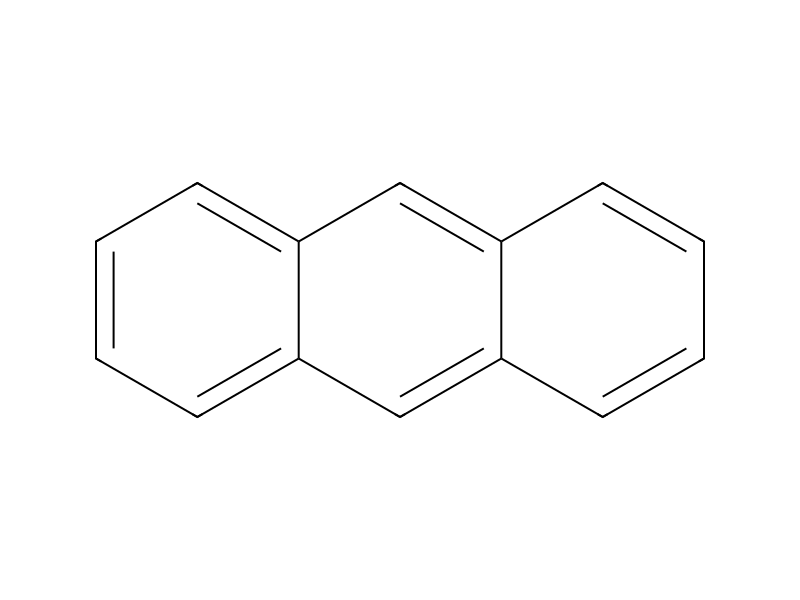
Anthracene → HCID 20312748, compound
Reaction equation

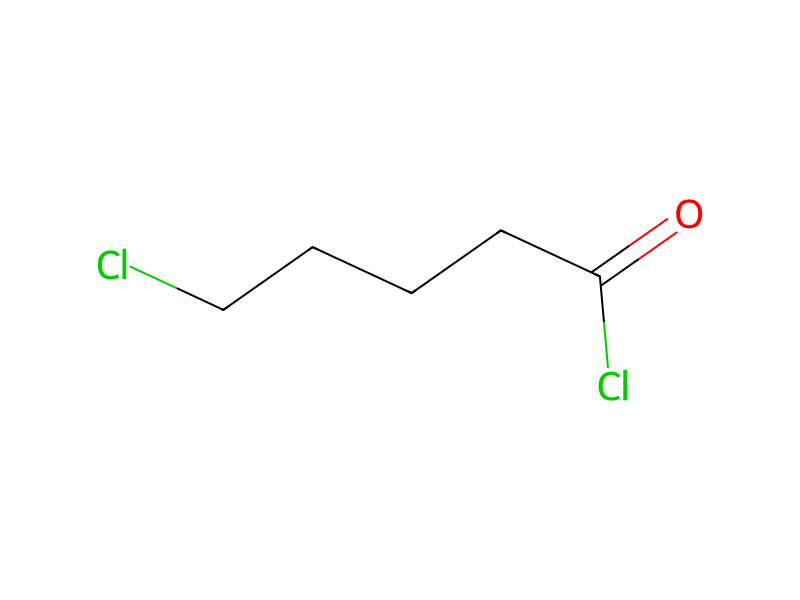
[Cl-:1].[Al+3].[Cl-].[Cl-].[Cl:5][CH2:6][CH2:7][CH2:8][CH2:9][C:10](Cl)=[O:11].[CH:13]1[C:26]2[C:17](=[CH:18][C:19]3[C:24]([CH:25]=2)=[CH:23][CH:22]=[CH:21][CH:20]=3)[CH:16]=[CH:15][CH:14]=1>C(Cl)Cl>[Cl:5][CH2:6][CH2:7][CH2:8][CH2:9][C:10]([C:16]1[C:17]2[C:26](=[CH:25][C:24]3[C:19]([CH:18]=2)=[CH:20][CH:21]=[CH:22][C:23]=3[C:10](=[O:11])[CH2:9][CH2:8][CH2:7][CH2:6][Cl:1])[CH:13]=[CH:14][CH:15]=1)=[O:11]Participants
Reactant 3

Product 1

Reagents, catalysts & solvents 1

Procedure
To a mixture of 226 g of aluminum chloride (0.17 mole), 280 g of 5-chlorovaleryl chloride (1.18 mole), and 5 liters of methylene chloride is added 100 g (0.56 mole) of anthracene contained in 1 liter of methylene chloride. The mixture is stirred for 1.5 hours and added to 2 liters of an ice-water mixture. The organic layer is separated and stirred with 2 liters of a saturated aqueous sodium bicarbonate solution for 16 hours. The organic phase is separated, dried and evaporated in vacuo to give a residue, which when crystallized from benzene yields 69 g of the desired product, 1,5-bis(5-chlorovaleryl)anthracene. Recrystallization from ethyl cellosolve and again from benzene results in a product having bright yellow needles and having a m.p. of 146°-8° C.
Workup
- customThe organic layer is separated
- stirringstirred with 2 liters of a saturated aqueous sodium bicarbonate solution for 16 hours
- customThe organic phase is separated
- customdried
- customevaporated in vacuo
- customto give a residue, which when
- customcrystallized from benzene
Sources & evidence
- ORD record
- ord-5e6a5af2a2fa4fc0ba09e6f5196b9d08
- Source dataset
- uspto-grants-1978_08
- Patent number
- US04108896
Reaction notes
Loading…