4-Nitrophenol → 4-(2-(Pyrrolidin-1-yl)ethoxy)aniline
Reaction equation

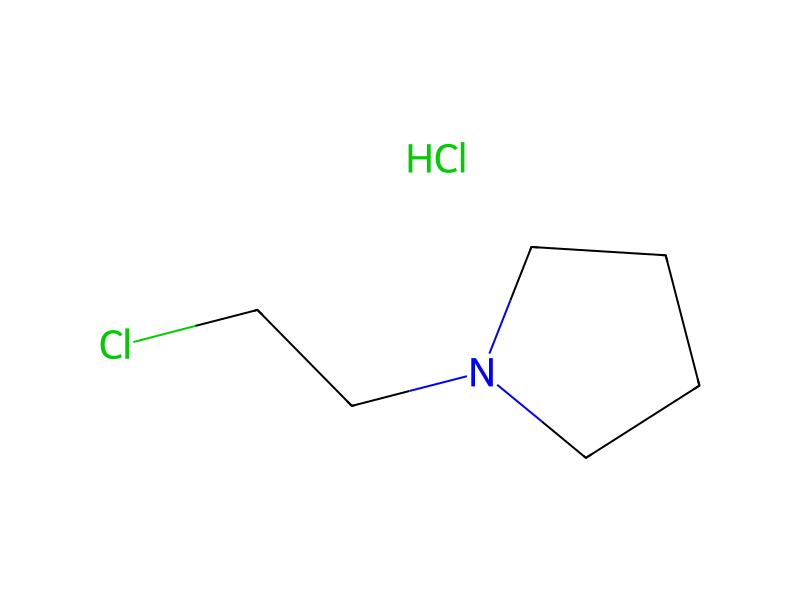
CN(C=O)C.[N+:6]([C:9]1[CH:14]=[CH:13][C:12]([OH:15])=[CH:11][CH:10]=1)([O-])=O.Cl.Cl[CH2:18][CH2:19][N:20]1[CH2:24][CH2:23][CH2:22][CH2:21]1.C([O-])([O-])=O.[K+].[K+]>O>[N:20]1([CH2:19][CH2:18][O:15][C:12]2[CH:13]=[CH:14][C:9]([NH2:6])=[CH:10][CH:11]=2)[CH2:24][CH2:23][CH2:22][CH2:21]1Participants
Reactant 4



Product 1

Reagents, catalysts & solvents 1

Procedure
A stirred DMF suspension (5 mL) of 4-nitrophenol (0.5 g, 3.6 mmol), 1-(2-chloroethyl)pyrrolidine hydrochloride (0.92 (5.4 mmol) and K2CO3 (1.24 g, 9 mmol) was heated at 80° for 3 hr. After cooling to RT, the reaction was diluted with H2O and extracted 3× with EtOAc. The combined EtOAc layers were washed 2× with H2O and dried over MgSO4. After concentration under vacuum, the resulting residue was chromatographed on silica gel, Gradient elution CH2Cl2 to 10% MeOH/CH2Cl2 eluted the 1-(2-(4-nitrophenoxy)ethyl)pyrrolidine (560 mg) as an orange oil. Further purification employing reverse phase chromatography (MeOH/H2O/0.1% TFA) yielded 413 mg of a yellow oil. Subsequent conversion of the aryl nitro substituent to the title aryl amine was accomplished following the procedure described in Example 6 step C. MS (ESI) 207 (M+H)+.
Workup
- extractionextracted 3× with EtOAc
- washThe combined EtOAc layers were washed 2× with H2O
- dry with materialdried over MgSO4
- concentrationAfter concentration under vacuum
- customthe resulting residue was chromatographed on silica gel, Gradient elution CH2Cl2 to 10% MeOH/CH2Cl2
- washeluted the 1-(2-(4-nitrophenoxy)ethyl)pyrrolidine (560 mg) as an orange oil
- customFurther purification
Sources & evidence
- ORD record
- ord-b3b8c91cf0594a9eb84e2b111decf4b3
- Source dataset
- uspto-grants-2011_06
- Patent number
- US07956049B2
Reaction notes
Loading…