Nitromethane → 2-Methyl-4-(2-nitrovinyl)phenol
Reaction equation

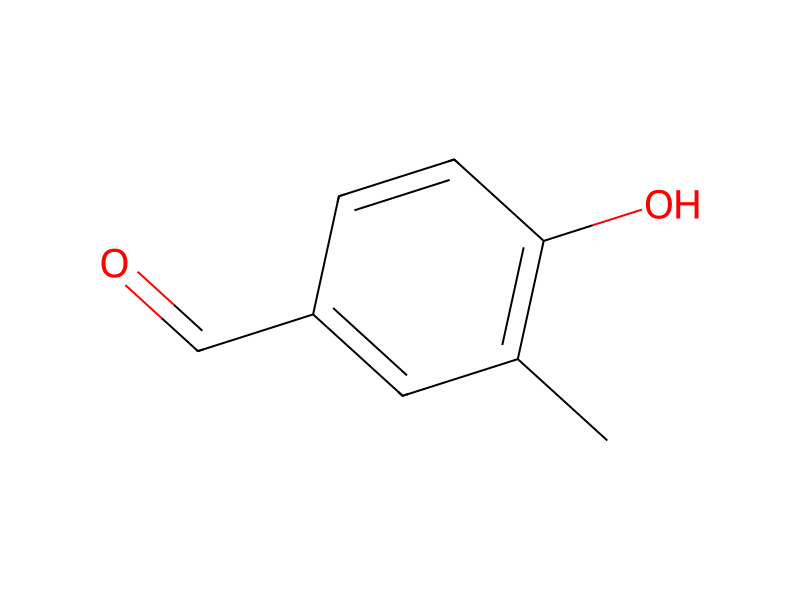
[CH3:1][C:2]1[CH:3]=[C:4]([CH:7]=[CH:8][C:9]=1[OH:10])[CH:5]=O.C([O-])(=O)C.[NH4+].[N+:16]([CH3:19])([O-:18])=[O:17]>>[CH3:1][C:2]1[CH:3]=[C:4]([CH:5]=[CH:19][N+:16]([O-:18])=[O:17])[CH:7]=[CH:8][C:9]=1[OH:10]Participants



Conditions
- Temperature
- 45 °C
Procedure
Commercially available 3-methyl-4-hydroxybenzaldehyde (1.00 g, 7.34 mmol), ammonium acetate (850 mg, 11.0 mmol), and nitromethane (7.00 mL) were mixed, and the mixture was stirred at 45° C. for 5 hours. Then, the reaction mixture was filtered through Celite, and the filtrate was concentrated under reduced pressure to give 2-methyl-4-(2-nitrovinyl)phenol (1.05 g, yield 80%). This compound (1.05 g, 5.86 mmol) was dissolved in THF (30.0 mL), then lithium aluminum hydride (642 mg, 16.9 mmol) was added thereto, followed by stirring at room temperature for 30 minutes. Subsequently, sodium sulfate decahydrate (5.45 g, 16.9 mmol) was added to the reaction mixture, and the resulting mixture was stirred at room temperature for 30 minutes. The resulting precipitate was filtered out, and the filtrate was concentrated under reduced pressure. A hydrogen chloride-ethyl acetate solution (4.00 mol/L, 10.0 mL, 40.0 mmol) was added thereto, and precipitated crystals were collected by filtration to give 2-methyl-4-(2-aminoethyl)phenol hydrochloride (188 mg, yield 17%).
Workup
- filtrationThen, the reaction mixture was filtered through Celite
- concentrationthe filtrate was concentrated under reduced pressure
Sources & evidence
- ORD record
- ord-f761eb5fa0ab44398886a5c37e151922
- Source dataset
- uspto-grants-2011_06
- Patent number
- US07956060B2
Reaction notes
Loading…