4-Hydroxybenzoic Acid → Poly(4-hydroxybenzoic acid-co-6-hydroxy-2-naphthoic acid)
Reaction equation

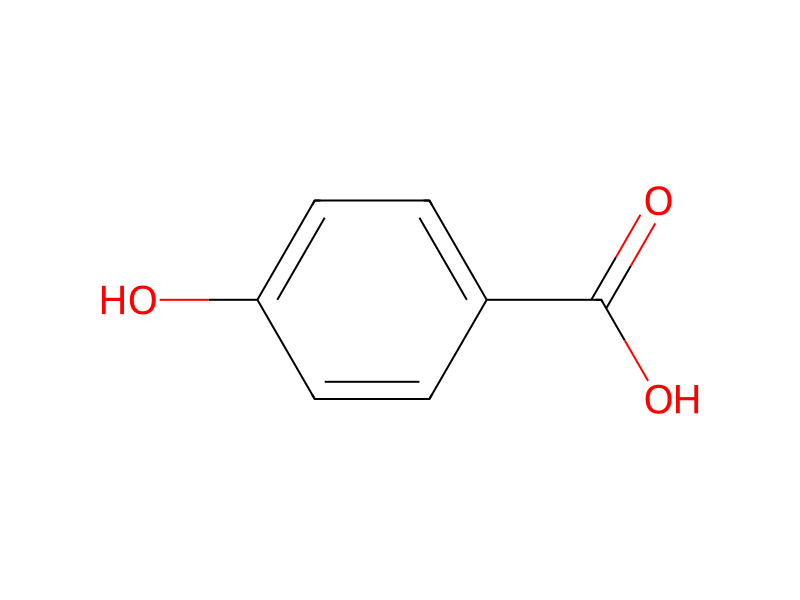
[OH:1][C:2]1[CH:10]=[CH:9][C:5]([C:6]([OH:8])=[O:7])=[CH:4][CH:3]=1.[OH:11][C:12]1[CH:13]=[C:14]2[C:19](=[CH:20][CH:21]=1)[CH:18]=[C:17]([C:22]([OH:24])=[O:23])[CH:16]=[CH:15]2.O=[Sb]O[Sb]=O>>[OH:11][C:12]1[CH:13]=[C:14]2[C:19](=[CH:20][CH:21]=1)[CH:18]=[C:17]([C:22]([OH:24])=[O:23])[CH:16]=[CH:15]2.[OH:1][C:2]1[CH:10]=[CH:9][C:5]([C:6]([OH:8])=[O:7])=[CH:4][CH:3]=1Participants
4


Procedure
Charging was conducted at a ratio of 0.6 mol of parahydroxybenzoic acid (PHBA) per mol of 6-hydroxy-2-naphthoic acid (HNCA), 110 ppm of a catalyst in the form of antimony trioxide was added based on the number of mols of HNCA, and the mixture was reacted for 4 hours at 300° C. under reduced pressure. Strands of molten polymer were extruded from the outlet, cooled, and cut to obtain HNCA+PHBA pellets.
Workup
- additionwas added
- customthe mixture was reacted for 4 hours at 300° C. under reduced pressure
- temperaturecooled
Sources & evidence
- ORD record
- ord-2ca7eb495a314852970b194175f3b74b
- Source dataset
- uspto-grants-2011_06
- Patent number
- US07960045B2
Reaction notes
Loading…