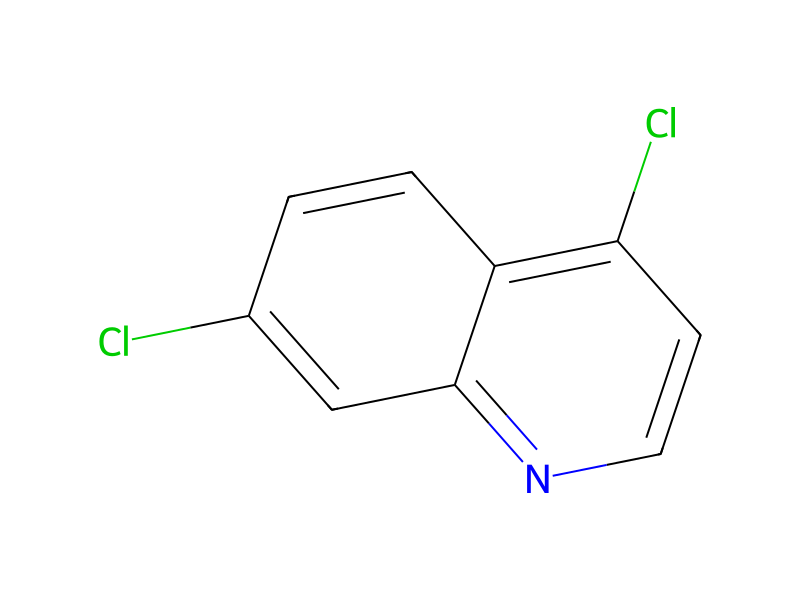
4,7-Dichloroquinoline → 7-Chloro-4-phenylquinoline
Reaction equation

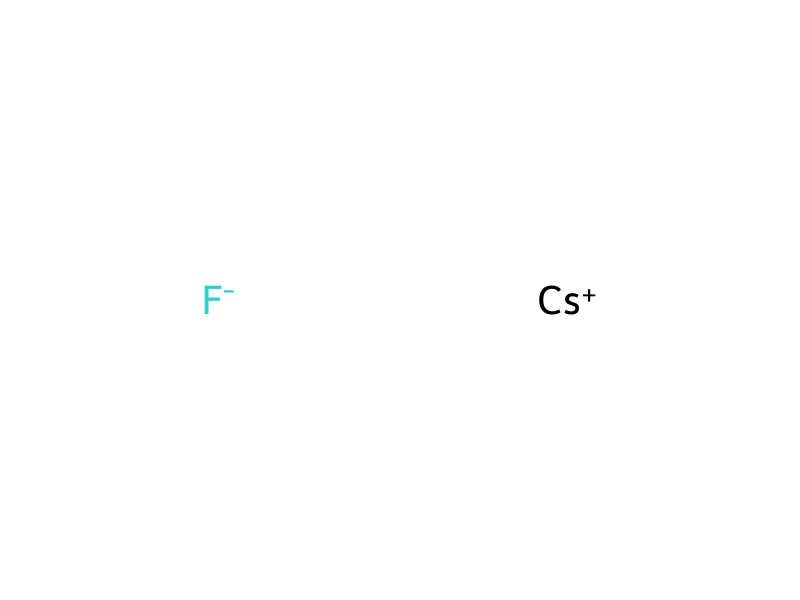
Cl[C:2]1[C:11]2[C:6](=[CH:7][C:8]([Cl:12])=[CH:9][CH:10]=2)[N:5]=[CH:4][CH:3]=1.[C:13]1(B(O)O)[CH:18]=[CH:17][CH:16]=[CH:15][CH:14]=1.[F-].[Cs+]>COCCOC.[Pd].C1(P(C2C=CC=CC=2)C2C=CC=CC=2)C=CC=CC=1.C1(P(C2C=CC=CC=2)C2C=CC=CC=2)C=CC=CC=1.C1(P(C2C=CC=CC=2)C2C=CC=CC=2)C=CC=CC=1.C1(P(C2C=CC=CC=2)C2C=CC=CC=2)C=CC=CC=1>[Cl:12][C:8]1[CH:7]=[C:6]2[C:11]([C:2]([C:13]3[CH:18]=[CH:17][CH:16]=[CH:15][CH:14]=3)=[CH:3][CH:4]=[N:5]2)=[CH:10][CH:9]=1Participants
6




Procedure
A mixture of 4,7-dichloroquinoline (12.5 g, 63.1 mmol), phenylboronic acid (9.63 g, 79 mmol) and cesium fluoride (24 g, 158 mmol) in 1,2-dimethoxyethane (300 mL) was degassed and purged three times with nitrogen gas before the addition of the tetrakis(triphenylphosphine) palladium(0) (3.64 g, 3.15 mmol). The resultant mixture was then stirred at reflux overnight. After cooling, the reaction was filtered over celite and washed with dichloromethane. After evaporation under reduced pressure, the residue was purified by column chromatography (eluting with hexane/EtOAc, 95:5) to yield the title compound. 1H NMR (400 MHz, acetone-d6): δ 9.0 (d, 1H), 8.15 (d, 1H), 7.95 (d, 1H), 7.65-7.55 (m, 6H), 7.5 (d, 1H).
Workup
- customwas degassed
- custompurged three times with nitrogen gas
- temperatureat reflux overnight
- temperatureAfter cooling
- filtrationthe reaction was filtered over celite
- washwashed with dichloromethane
- customAfter evaporation under reduced pressure
- customthe residue was purified by column chromatography (eluting with hexane/EtOAc, 95:5)
Sources & evidence
- ORD record
- ord-23fcca500ed046d58dd2d030b6f7b89b
- Source dataset
- uspto-grants-2011_06
- Patent number
- US07960409B2
Reaction notes
Loading…