Cesium carbonate → 1-(3-chloro-4-pyridinyl)-1H-pyrrole-2-carbaldehyde
Reaction equation

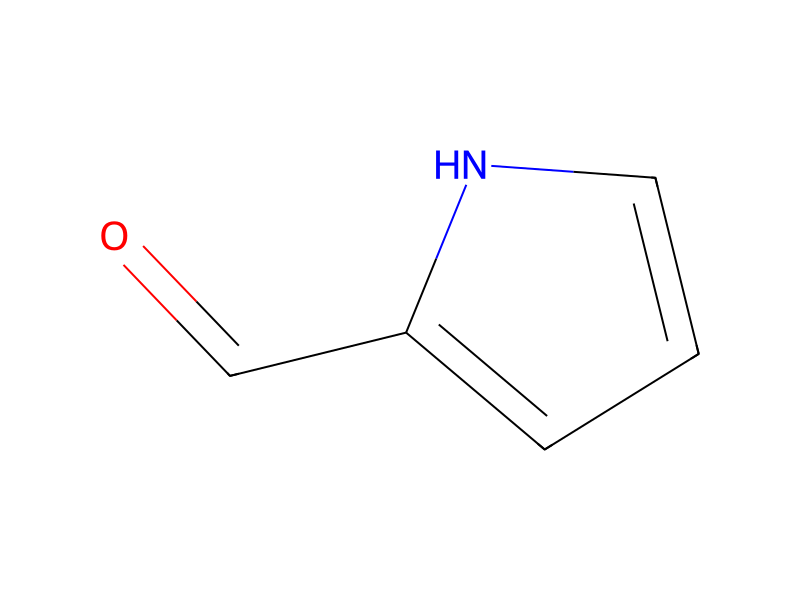
[NH:1]1[CH:5]=[CH:4][CH:3]=[C:2]1[CH:6]=[O:7].[Cl:8][C:9]1[CH:10]=[N:11][CH:12]=[CH:13][C:14]=1Cl.C(=O)([O-])[O-].[Cs+].[Cs+].CN1CCCC1=O>O>[Cl:8][C:9]1[CH:10]=[N:11][CH:12]=[CH:13][C:14]=1[N:1]1[CH:5]=[CH:4][CH:3]=[C:2]1[CH:6]=[O:7]Participants
6





Conditions
- Temperature
- 120 °C
Procedure
A mixture of 2.0 g of 2-pyrrole carbaldehyde, 3.0 g of 3,4-dichloropyridine, 8.0 g of cesium carbonate and 30 ml of N-methylpyrrolidone was stirred at 120° C. for 25 hours. The reaction mixture was allowed to cool room temperature, and water was poured into the mixture. The mixture was extracted with ethyl acetate two times. The organic layers were combined, washed successively with water and an aqueous saturated sodium chloride solution, dried over anhydrous sodium sulfate, and concentrated under reduced pressure. The resulting residue was subjected to silica gel chromatography to obtain 2.95 g of 1-(3-chloro-4-pyridinyl)-1H-pyrrole-2-carbaldehyde of the formula:
Workup
- temperatureto cool room temperature
- extractionThe mixture was extracted with ethyl acetate two times
- washwashed successively with water
- dry with materialan aqueous saturated sodium chloride solution, dried over anhydrous sodium sulfate
- concentrationconcentrated under reduced pressure
Sources & evidence
- ORD record
- ord-56ed71a40c15490f870009396196d2a3
- Source dataset
- uspto-grants-2011_06
- Patent number
- US07968573B2
Reaction notes
Loading…