Water → HCID 19765021, compound
Reaction equation

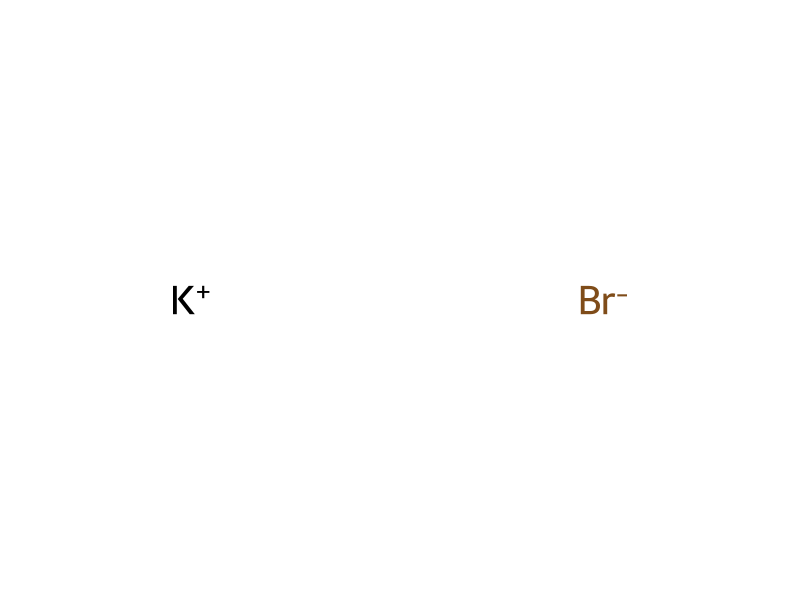
C[O:2][C:3]1[CH:19]=[CH:18][C:6]2[NH:7][C:8]3[CH:15]=[CH:14][C:13]([O:16]C)=[CH:12][C:9]=3[CH2:10][CH2:11][C:5]=2[CH:4]=1.B(Br)(Br)Br.O.[K+].[Br-]>CN(C)C=O>[OH:2][C:3]1[CH:19]=[CH:18][C:6]2[N:7]=[C:8]3[CH:15]=[CH:14][C:13](=[O:16])[CH:12]=[C:9]3[CH2:10][CH2:11][C:5]=2[CH:4]=1Participants
Reactant 4



Product 1

Reagents, catalysts & solvents 1

Conditions
- Temperature
- 0 °C
Procedure
A solution of 2,8-dimethoxy-10,11-dihydro-5H-dibenz[b,f]azepine (7) (1.0 g; 3.9 mmol) in CH2Cl2 (23.5 mL; dried over molecular sieve 4A), maintained under a CaSO4 drying tube, was cooled to 0° C. and treated with BBr3 (1.85 mL; 19.6 mmol; 5 eq). After 5 minutes the reaction was warmed and allowed to stir at ambient temperature for 3.75 hours. The mixture was carefully blended into H2O (350 mL) and this was then extracted four times with EtOAc (100 mL each). The combined EtOAc layers were washed with brine (50 mL) then transferred to a 3-neck round bottom flask equipped with a mechanical stirrer and rapidly stirred for 15 minutes with a solution of NaIO4 (3.0 g) in H2O (200 mL). The phases were separated and the aqueous layer was washed with EtOAc (25 mL). The combined EtOAc layers were washed four times with H2O (100 mL each) then the combined H2O washes were backwashed with EtOAc (50 mL). The combined EtOAc layers were then washed with brine (100 mL), dried over Na2SO4 and evaporated to dryness under reduced pressure. The residue was taken up in hot EtOAc (ca. 150 mL), concentrated by boiling to ca. 50 mL and diluted with hexane (20 mL). Upon cooling the title compound (2) separated as a red powder that was isolated by filtration and vacuum dried overnight at 60° C. The yield after two crops was 0.80 g (90%); the first crop was analytically pure and decomposed at temperatures above 200° C., the exact decomposition point dependant upon the rate of heating: IR (KBr) cm-1 1630, 1612, 1556, 1480, 1463, 1295, 1222, 1207, 1107, 888, 827; 1H NMR (DMSO-d° ) δ2.77 (br. s, 4H), 6.2-6.9 (v. br. m, 4H), 7.1-7.5 (v. br. m, 2H), 10.43 (br. s, lH); 13C NMR (DMSO-d6) ppm 186.9, 160.6, 160.4, 151.5, 146.4, 144.9, 138.4, 137.6, 129.4, 128.2, 116.0, 114.9, 33.1, 31.2; mass spectrum, m/e 225 (base), 196. 167; λmax =478 nm (19,760) (pH=4.5; 0.1 M acetate) λmax=602 nm (65,000) (pH=10.61; 0.1 M glycine), pKa =6.95.
Workup
- temperatureAfter 5 minutes the reaction was warmed
- extractionthis was then extracted four times with EtOAc (100 mL each)
- washThe combined EtOAc layers were washed with brine (50 mL)
- customthen transferred to a 3-neck round bottom flask
- customequipped with a mechanical stirrer
- stirringrapidly stirred for 15 minutes with a solution of NaIO4 (3.0 g) in H2O (200 mL)
- customThe phases were separated
- washthe aqueous layer was washed with EtOAc (25 mL)
- washThe combined EtOAc layers were washed four times with H2O (100 mL each)
- washThe combined EtOAc layers were then washed with brine (100 mL)
- dry with materialdried over Na2SO4
- customevaporated to dryness under reduced pressure
- concentrationconcentrated
- additiondiluted with hexane (20 mL)
- temperatureUpon cooling the title compound (2)
- customseparated as a red powder that
- customwas isolated by filtration and vacuum
- customdried overnight at 60° C
- customThe yield after two crops
- customwas analytically pure and decomposed at temperatures above 200° C.
- temperaturethe exact decomposition point dependant upon the rate of heating
Sources & evidence
- ORD record
- ord-15e577927d5a465a9cafdcb49071b2b4
- Source dataset
- uspto-grants-1993_05
- Patent number
- US05208326
Reaction notes
Loading…