Hydrochloric Acid → 5-Chloro-2-cyclopropyl-1,6-dihydro-6-oxo-4-pyrimidinecarboxylic acid
Reaction equation

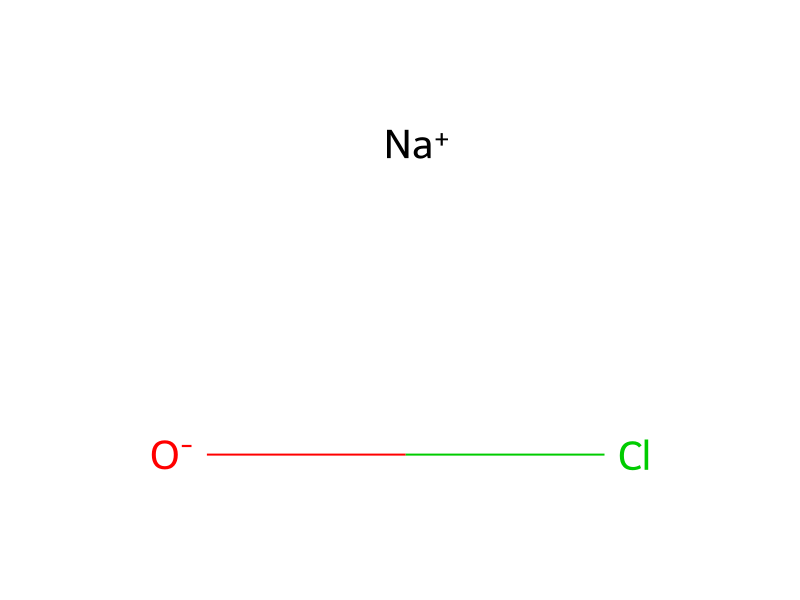
[CH:1]1([C:4]2[NH:5][C:6](=[O:13])[CH:7]=[C:8]([C:10]([OH:12])=[O:11])[N:9]=2)[CH2:3][CH2:2]1.[ClH:14].Cl[O-].[Na+].S(=O)(O)[O-].[Na+].[OH-].[Na+]>O>[Cl:14][C:7]1[C:6](=[O:13])[NH:5][C:4]([CH:1]2[CH2:2][CH2:3]2)=[N:9][C:8]=1[C:10]([OH:12])=[O:11]Participants
Reactant 5




Product 1

Reagents, catalysts & solvents 1

Conditions
- Temperature
- 17.5 °C
Procedure
To a mixture of 2-cyclopropyl-1,6-dihydro-6-oxo-4-pyrimidinecarboxylic acid (i.e. the product of Step A1 or A2) (9.2 g, 52 mmol) in water (30 mL) and concentrated hydrochloric acid (22 g, 220 mmol) at 15° C. was added dropwise aqueous sodium hypochlorite solution (11%, 40 g, 59 mmol) over 15 minutes so that with cooling the reaction mixture was maintained at 15-20° C. The mixture was then held at 20-25° C. for 1 h. Solid sodium bisulfite (ca. 2 g) was added, and then aqueous sodium hydroxide solution (50%, 8 g, 0.10 mol) was added dropwise so that with cooling the reaction mixture was maintained at about 25° C. The mixture was cooled to 10° C., and the suspended product was isolated by filtration and washed with a minimum amount of cold water. The product was then dried to constant weight in vacuum-oven at 50° C. to afford the title compound (7.5 g).
Workup
- temperaturewith cooling the reaction mixture
- temperaturewith cooling the reaction mixture
- temperaturewas maintained at about 25° C
- temperatureThe mixture was cooled to 10° C.
- customthe suspended product was isolated by filtration
- washwashed with a minimum amount of cold water
- customThe product was then dried to constant weight in vacuum-oven at 50° C.
Sources & evidence
- ORD record
- ord-b26b40f06b57483e988876106e79f61f
- Source dataset
- uspto-grants-2011_01
- Patent number
- US07863220B2
Reaction notes
Loading…