Hydrogen Peroxide → Acrylic acid hydroxyethyl acrylate
Reaction equation

OO.[C:3]([OH:7])(=[O:6])[CH:4]=[CH2:5].[C:8]([O:12][CH2:13][CH2:14][OH:15])(=[O:11])[CH:9]=[CH2:10].SCCO.C(O)[C@@H](O)[C@H]1OC(=O)C(O)=C1O.C(OO)(C)(C)C>O>[C:3]([OH:7])(=[O:6])[CH:4]=[CH2:5].[C:8]([O:12][CH2:13][CH2:14][OH:15])(=[O:11])[CH:9]=[CH2:10]Participants






Conditions
- Temperature
- 70 °C
Procedure
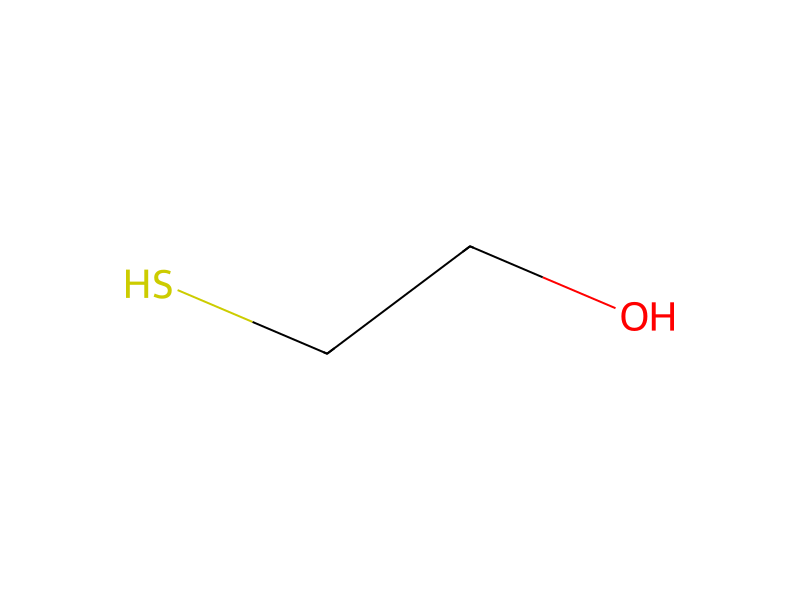
An aqueous solution polymer of 70/30 glacial acrylic acid/2-hydroxyethyl acrylate (HEA/AA) was prepared by charging 481.4 g water, 5.6 g 50% hydrogen peroxide, and 0.097 g DISSOLVINE 4.5% H—Fe (Akzo Nobel Chem. Inc., Lima, Ohio) to a reaction vessel. A monomer feed of 363.6 g glacial acrylic acid, 155.8 g 2-hydroxyethyl acrylate, and 2.11 g 2-mercaptoethanol was then fed into the reaction vessel. Additional mixtures of 58.7 g water and 5.36 g 50% hydrogen peroxide, and a mixture of 60 g water and 4.07 g erythorbic acid were then fed into the reaction vessel. A first mixture of 5.8 g water, 0.70 g tertbutylhydrogen peroxide, 5.8 g water, and 0.48 g erythorbic acid was then added to the reaction vessel, which was maintained at 70° C. A second mixture of 5.8 g water, 0.70 g tertbutylhydrogen peroxide, 5.8 g water, and 0.48 g erythorbic acid was then added to the reaction vessel, which was maintained at 72° C.
Workup
- additionwas then added to the reaction vessel, which
- additionwas then added to the reaction vessel, which
- temperaturewas maintained at 72° C.
Sources & evidence
- ORD record
- ord-ad54da8780d84329b7d0d76216bc0902
- Source dataset
- uspto-grants-2011_01
- Patent number
- US07863373B1
Reaction notes
Loading…