Guanidine Hydrochloride → HCID 57327898, compound
Reaction equation

[C:1]1(=O)[CH2:8][CH2:7][CH2:6][CH2:5][CH2:4][CH2:3][CH2:2]1.C(O[CH:15]([N:19]([CH3:21])C)[N:16](C)C)(C)(C)C.Cl.[NH2:23]C(N)=N.[Na]>>[N:23]1[C:2]2[CH2:3][CH2:4][CH2:5][CH2:6][CH2:7][CH2:8][C:1]=2[CH:21]=[N:19][C:15]=1[NH2:16]Participants



Procedure
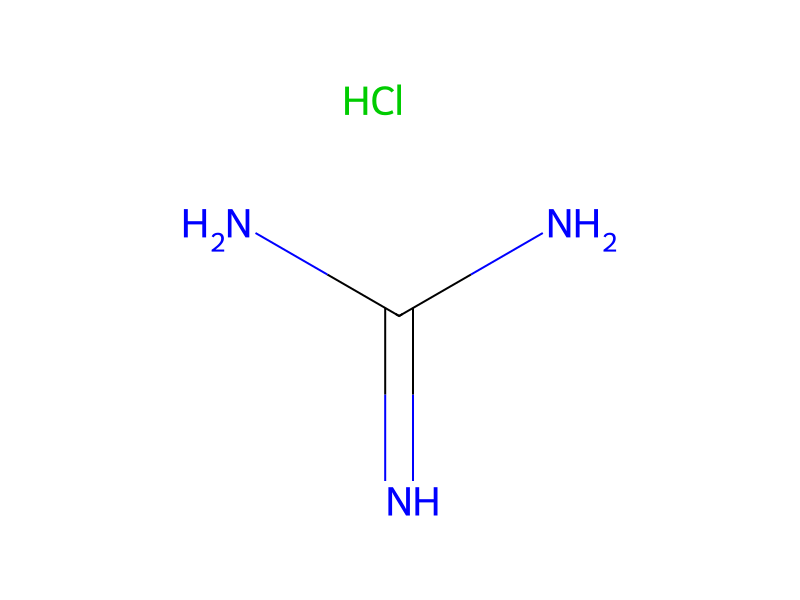
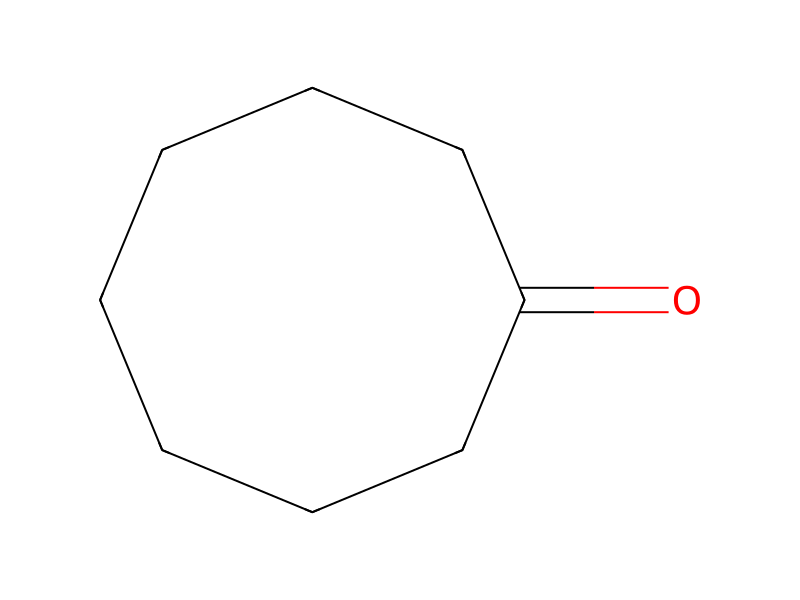
Cyclooctanone (5.0 g, 39.7 mmol) and t-butoxy bis(dimethylamino)methane (6.9 g, 39.7 mmol) were heated at 100° C. for 18 h. The solvent was removed under vacuum. The crude residue was taken up in anhydrous ethanol (80 mL). Guanidine hydrochloride (7.6 g, 0.08 Mol, 2 eq.) and sodium metal (1.84 g, 0.08 Mol) were added. After the sodium dissolved, the mixture was heated to reflux for 41 h. After cooling to ambient temperature, sodium metal (0.47 g) and guanidine hydrochloride (1.5 g) were added and heating was resumed for another 23 h. The reaction mixture was concentrated under vacuum and then partitioned between chloroform and water. The aqueous layer was extracted once with chloroform. The combined organic layers were washed with saturated aqueous sodium chloride solution, dried over anhydrous sodium sulfate and concentrated under vacuum to give 5,6,7,8,9,10-hexahydrocycloocta[d]pyrimidin-2-amine as a pale yellow solid, 5.51 g; 1H NMR (CDCl3, 300 MHz) 7.92 (s, 1H), 5.19 (br s, 2H), 2.67 (m, 2H), 2.57 (m, 2H), 1.74 (m, 2H), 1.59 (m, 2H), 1.25-1.50 (m, 4H) ppm; 13C NMR (CDCl3, 75 MHz) 170.41, 162.09, 157.55, 123.62, 34.19, 32.60, 30.14, 28.64, 26.30, 26.05; MS (ES) 178 (M+H). The aniline, 5,6,7,8,9,10-hexahydrocycloocta[d]pyrimidin-2-amine, can be used to make the corresponding hydrazine as outlined below, or alternatively, can be used as an aniline (B) as outlined in Reaction Scheme 1 above.
Workup
- customThe solvent was removed under vacuum
- temperaturethe mixture was heated
- temperatureto reflux for 41 h
- temperatureheating
- concentrationThe reaction mixture was concentrated under vacuum
- custompartitioned between chloroform and water
- extractionThe aqueous layer was extracted once with chloroform
- washThe combined organic layers were washed with saturated aqueous sodium chloride solution
- dry with materialdried over anhydrous sodium sulfate
- concentrationconcentrated under vacuum
Sources & evidence
- ORD record
- ord-37566d3f8cc042be90835a2bf30ef352
- Source dataset
- uspto-grants-2011_01
- Patent number
- US07872000B2
Reaction notes
Loading…