1,4-Dibromobenzene → 4'-Bromo[1,1'-biphenyl]-3-amine
Reaction equation

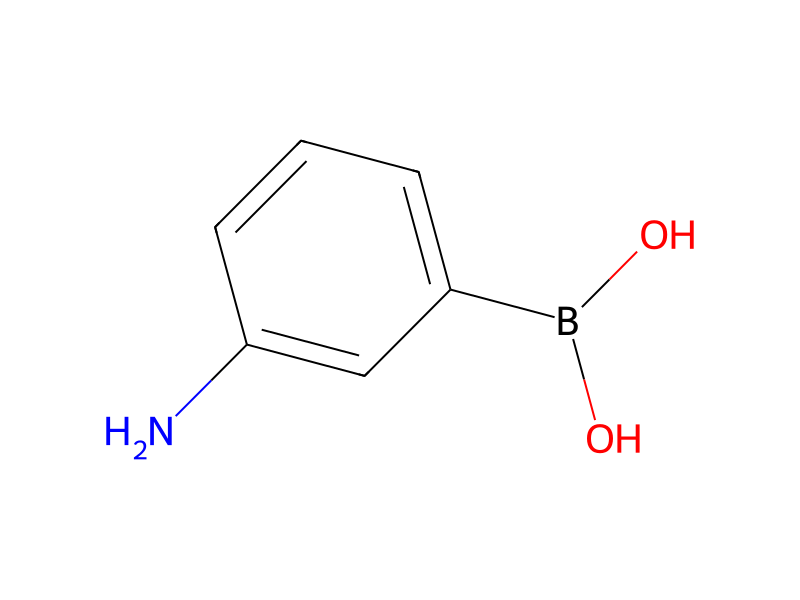
Br[C:2]1[CH:7]=[CH:6][C:5]([Br:8])=[CH:4][CH:3]=1.[NH2:9][C:10]1[CH:11]=[C:12](B(O)O)[CH:13]=[CH:14][CH:15]=1.C(=O)([O-])[O-].[Na+].[Na+].C(OCC)(=O)C>CN(C)C=O.O>[Br:8][C:5]1[CH:6]=[CH:7][C:2]([C:14]2[CH:13]=[CH:12][CH:11]=[C:10]([NH2:9])[CH:15]=2)=[CH:3][CH:4]=1Participants






Conditions
- Temperature
- 80 °C
Procedure
1,4-Dibromobenzene (311 mg, 1.3 mmol) and 201 mg (1.3 mmol) of 3-aminophenylboronic acid were dissolved in 17 ml of N,N-dimethylformamide and 4.2 ml of water. Tetrakistriphenylphosphine palladium (154 mg, 0.13 mmol) and 211 mg (2.0 mmol) of sodium carbonate were added to the solution, and the mixture was stirred at 80° C. for 3 hr. Ethyl acetate (60 ml) and 8.5 ml of water were added to the reaction solution, and the mixture was filtered through Celite. The organic layer as the filtrate was washed five times with 30 ml of water. The organic layer was dried over anhydrous sodium sulfate and was filtered. The solvent was then removed by distillation. The residue was purified by column chromatography on silica gel (n-hexane:ethyl acetate=5:1) to give 182 mg (yield 57%) of the title compound.
Workup
- filtrationthe mixture was filtered through Celite
- washThe organic layer as the filtrate was washed five times with 30 ml of water
- dry with materialThe organic layer was dried over anhydrous sodium sulfate
- filtrationwas filtered
- customThe solvent was then removed by distillation
- customThe residue was purified by column chromatography on silica gel (n-hexane:ethyl acetate=5:1)
Sources & evidence
- ORD record
- ord-6edd673a2769430eb84b816708ba0fdf
- Source dataset
- uspto-grants-2011_01
- Patent number
- US07871982B2
Reaction notes
Loading…