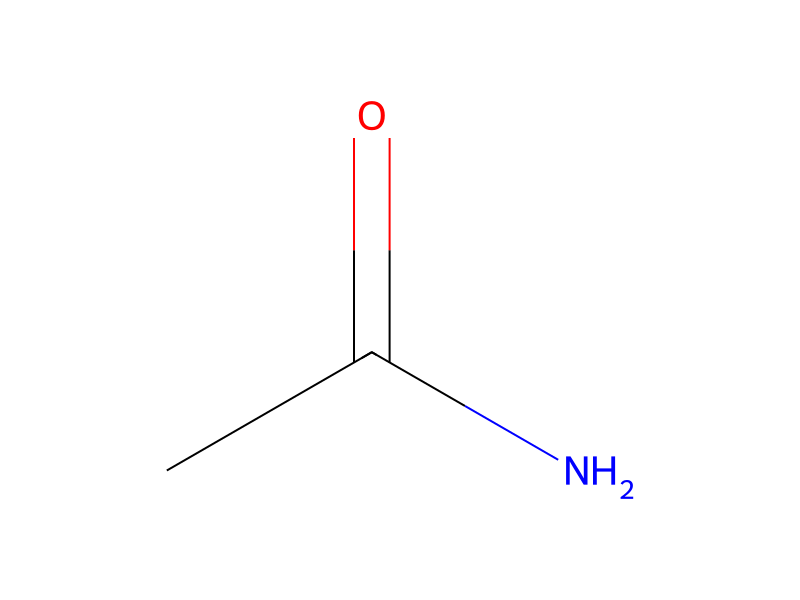
Acetamide → N-(3-bromo-5-fluorophenyl)acetamide
Reaction equation

[C:1]([NH2:4])(=[O:3])[CH3:2].C(=O)([O-])[O-].[Cs+].[Cs+].[Br:11][C:12]1[CH:17]=[C:16]([F:18])[CH:15]=[C:14](Br)[CH:13]=1>C([O-])(=O)C.[Pd+2].C([O-])(=O)C.CC1(C)C2C(=C(P(C3C=CC=CC=3)C3C=CC=CC=3)C=CC=2)OC2C(P(C3C=CC=CC=3)C3C=CC=CC=3)=CC=CC1=2.ClCCl>[Br:11][C:12]1[CH:13]=[C:14]([NH:4][C:1](=[O:3])[CH3:2])[CH:15]=[C:16]([F:18])[CH:17]=1Participants
7
Reactant 3


Product 1

Reagents, catalysts & solvents 3



Conditions
- Temperature
- 105 °C
Procedure
A mixture of acetamide (2.8 g, 47.2 mmol), palladium acetate (0.50 g, 0.80 mmol), XANTPHOS (0.68 g, 1.2 mmol) and cesium carbonate (18 g, 55.2 mmol) was degassed and purged with nitrogen twice. Dry dioxane (50 mL) was added followed by 1,3-dibromo-5-fluorobenzene (10 g, 39.4 mmol). The reaction was heated to 105° C. overnight and then allowed to cool to room temperature. Dichloromethane was added and the mixture was stirred vigorously for 1 hr. The mixture was filtered. The filtrate was concentrated to dryness. Chromatography on silica gel with 25% ethyl acetate in hexanes gave 4.0 g (44%) of the product as a colorless solid.
Workup
- customwas degassed
- custompurged with nitrogen twice
- additionDry dioxane (50 mL) was added
- temperatureto cool to room temperature
- filtrationThe mixture was filtered
- concentrationThe filtrate was concentrated to dryness
Sources & evidence
- ORD record
- ord-287e818319a443658a9c9e6defe68ec8
- Source dataset
- uspto-grants-2011_01
- Patent number
- US07875715B2
Reaction notes
Loading…