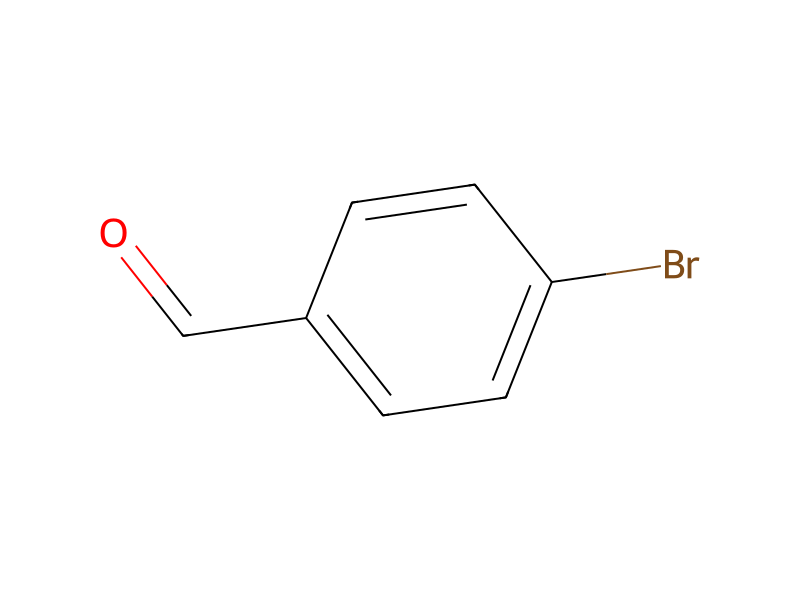
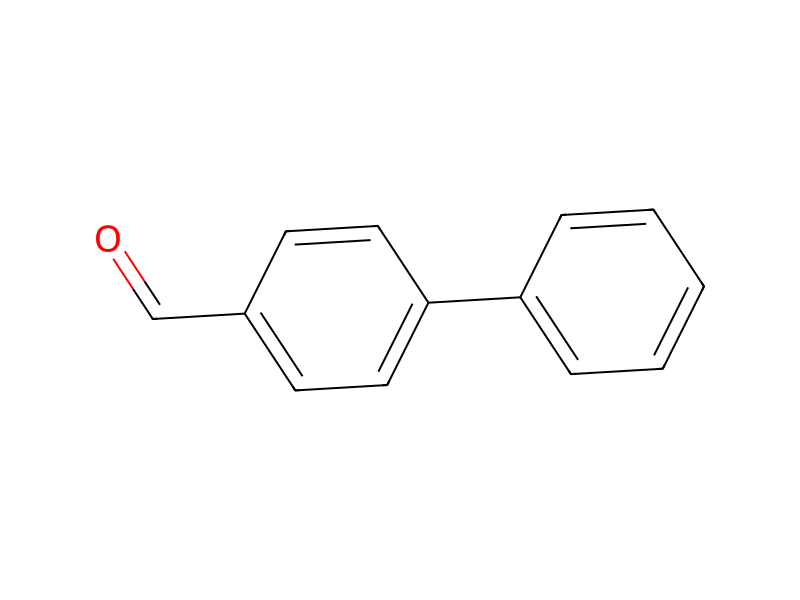
4-Bromobenzaldehyde → (1,1'-Biphenyl)-4-carboxaldehyde
Reaction equation

C([C:3]1[C:4]([C:21]2[CH:26]=[CH:25][CH:24]=[CH:23][CH:22]=2)=[C:5]2[C:10](=[CH:11][CH:12]=1)OC(C1C=CC=CC=1)=C(O)C2=O)=C.BrC1C=CC([CH:32]=[O:33])=CC=1>>[C:21]1([C:4]2[CH:3]=[CH:12][CH:11]=[CH:10][CH:5]=2)[CH:22]=[CH:23][C:24]([CH:32]=[O:33])=[CH:25][CH:26]=1Participants
3

Procedure
Alternatively, a vinyl phenyl hydroxyflavone may be prepared by synthesizing 4-styrene trimethyltin and combining it with 4-bromobenzaldehyde to produce 4'-vinyl, 4-biphenyl aldehyde. This intermediate compound is then reacted with 2-hydroxyacetophenone to produce the vinyl phenyl hydroxyflavone. This reaction scheme proceeds as follows: ##STR10##
Sources & evidence
- ORD record
- ord-70214b2bf1e148998e277066dfce9c61
- Source dataset
- uspto-grants-1993_11
- Patent number
- US05258478
Reaction notes
Loading…