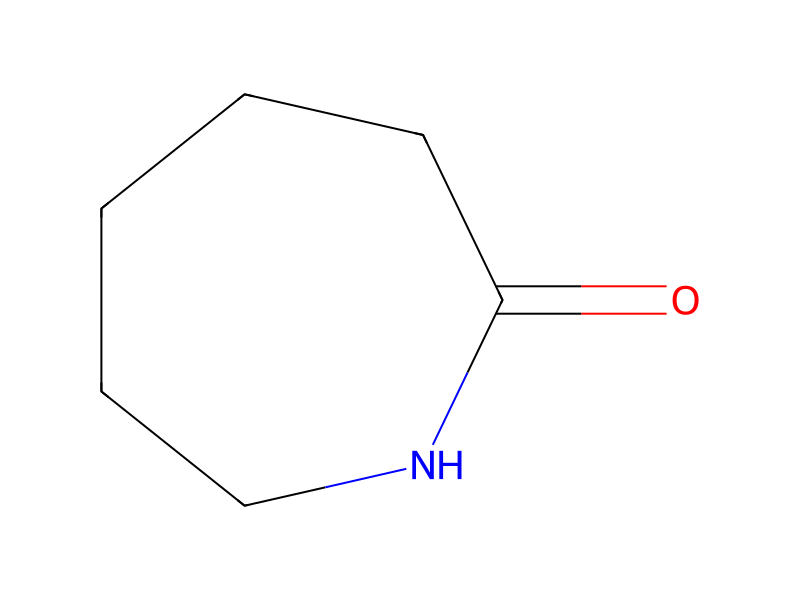
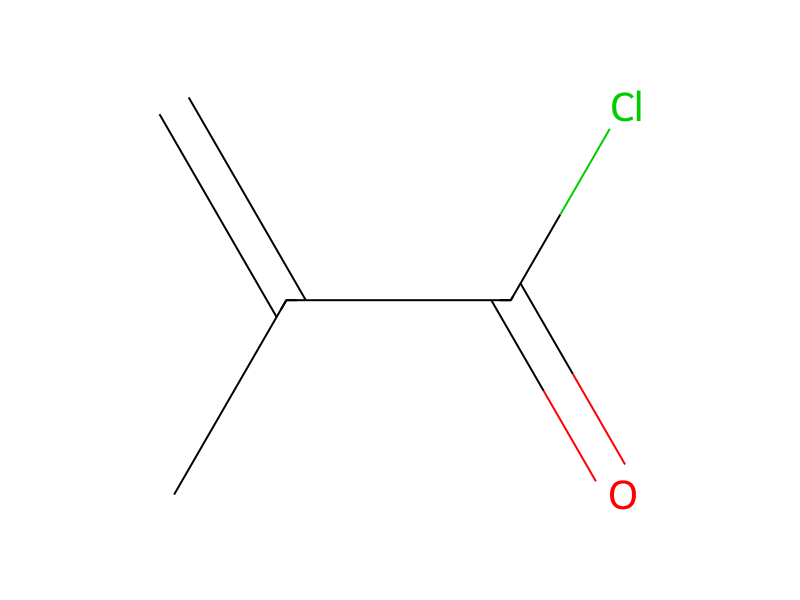
Caprolactam → 1-(2-Methylacryloyl)azepan-2-one
Reaction equation

[C:1]1(=[O:8])[NH:7][CH2:6][CH2:5][CH2:4][CH2:3][CH2:2]1.[Na].[C:10](Cl)(=[O:14])[C:11]([CH3:13])=[CH2:12]>C1(C)C=CC=CC=1.C1C=CC=CC=1>[C:10]([N:7]1[CH2:6][CH2:5][CH2:4][CH2:3][CH2:2][C:1]1=[O:8])(=[O:14])[C:11]([CH3:13])=[CH2:12]Participants
6
Reactant 3

Product 1

Reagents, catalysts & solvents 2


Procedure
74 g of ε-caprolactam in 700 ml dry toluene is heated with 9.5 g of sodium at 90°-95° C. When all of the sodium metal has reacted, 43 ml of methacryloyl chloride in 50 ml dry benzene is added dropwise into the voluminous caprolactam salts at 4°-6° C. The mixture is then poured into a separatory funnel, washed with 200 ml water, 200 ml of sodium dicarbonate solution, and again with 20 ml water. The organic compounds are extracted with ether from the water phase, and the ether solution and benzene solution are dried over CaCl2 and the solvent evaporated under reduced pressure. The product, N-methacryloylcaprolactam, comes off at 90° C./2 mm hg. The yield is 32.3 g (42.8% based on sodium).
Workup
- additionThe mixture is then poured into a separatory funnel
- washwashed with 200 ml water, 200 ml of sodium dicarbonate solution
- extractionThe organic compounds are extracted with ether from the water phase
- dry with materialthe ether solution and benzene solution are dried over CaCl2
- customthe solvent evaporated under reduced pressure
- customcomes off at 90° C.
Sources & evidence
- ORD record
- ord-b6eed6d57842473bba9297d866dea750
- Source dataset
- uspto-grants-1993_11
- Patent number
- US05264491
Reaction notes
Loading…