Hydrogen Bromide → 3-Hydroxy-3'-methoxy-2,2'-biquinoline
Reaction equation

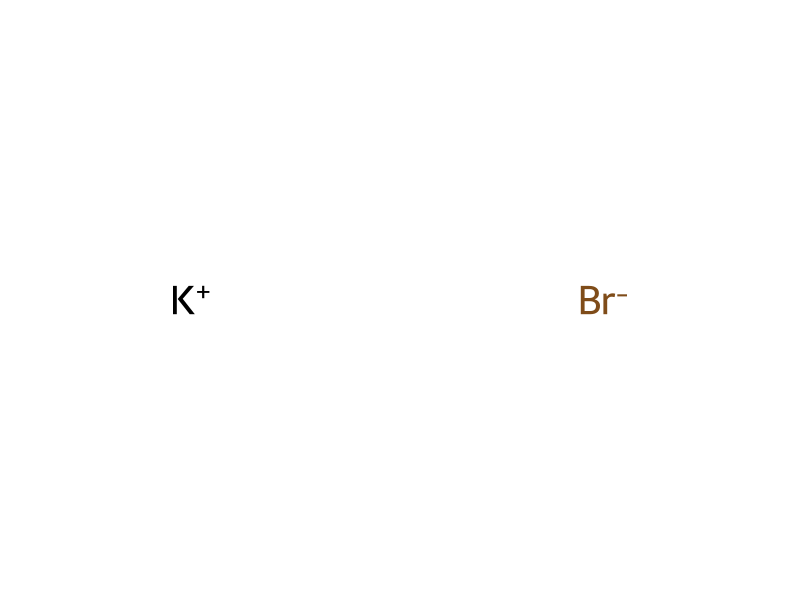
C[O:2][C:3]1[C:4]([C:13]2[C:22]([O:23][CH3:24])=[CH:21][C:20]3[C:15](=[CH:16][CH:17]=[CH:18][CH:19]=3)[N:14]=2)=[N:5][C:6]2[C:11]([CH:12]=1)=[CH:10][CH:9]=[CH:8][CH:7]=2.Br.[K+].[Br-].OC1C2C(=CC=CC=2)C=NC=1C1N=CC2C(C=1O)=CC=CC=2>C(O)(=O)C.O.C(Cl)(Cl)Cl>[OH:2][C:3]1[C:4]([C:13]2[C:22]([O:23][CH3:24])=[CH:21][C:20]3[C:15](=[CH:16][CH:17]=[CH:18][CH:19]=3)[N:14]=2)=[N:5][C:6]2[C:11]([CH:12]=1)=[CH:10][CH:9]=[CH:8][CH:7]=2Participants
Reactant 4



Product 1

Reagents, catalysts & solvents 3



Procedure
240 mg (0.75 mmol) of 3,3'-dimethoxy-2,2'-biquinoline are suspended in 15 ml of 30 percent strength HBr in glacial acetic acid. In the course of heating, the educt soon dissolves. After as little as about 1 hour, the first crystals of the hydrobromide precipitate. The reaction solution is constantly refluxed. After 8 hours, another 5 ml of 30 percent strength HBr in glacial acetic acid are added. The reaction is stopped after 24 hours. The reaction mixture is diluted to 100 ml with water. This dissolves the precipitate formed. The aqueous phase is brought to a pH of 11 with solid sodium hydroxy [sic] pellets and extracted with 50 ml of chloroform. The aqueous phase is then brought to a pH of 6 with concentrated hydrochloric acid and extracted with 250 ml of chloroform (5×50 ml). The chloroform phase is dried over CaCl2 and evaporated on a rotary evaporator (beige crude product). The crude product is purified on a column (silica gel/chloroform). Finally, the product is recrystallized from 10 ml of toluene, giving colorless crystals of pure substance. Yield 0.19 g (86.4%)--melting point 255° C. dec.--RF (silica gel/toluene:glacial acetic acid=4:1)=0.26.--IR (KBr):ν=3422 cm-1 (m), 3066 (m), 2938 (m), 2842 (m), 3010-2280 (m, OH), 1576 (m), 1501 (m), 1465 (m), 1424 (w), 1375 (w), 1332 (m), 1309 (s), 1279 (s), 1241 (m), 1214 (w, C--O), 1200 (w), 1161 (w, C--O), 1143 (s), 1061 (w), 995 (w), 758 (s).--UV (chloroform): λmax (ε)=335 nm (8326), 327 (8062), 298 (6134).--1H-NMR ((D6 ) DMSO/TMS): δ=3.90 (s, 3H, OCH3), 7.00-7.70 (m, 6H, 5-H, 5'-H, 6-H, 6'-H, 7-H, 7'-H), 8.18 (d. J8,7 =J8',7' =8.0 Hz, 2H, 8-H, 8'-H), 8.90 (s, 1H, 4'-H) 9.03 (s, 1H, 4-H).--MS (70 eV): m/z (5)=303 (18) M+ +1, 302 (100) M+, 301 (9), 288 (8), 287 (46) M+CH3, 286 (6), 271 (4), 259 (11), 258 (5), 242 (5), 241 (5), 231 (13), 230 (5), 229 (4), 204 (7), 203 (10), 177 (4), 176 (10), 88 (5), 57 (5), 43 (5), 41 (6).
Workup
- temperatureIn the course of heating
- dissolutionthe educt soon dissolves
- waitAfter as little as about 1 hour
- temperatureThe reaction solution is constantly refluxed
- waitThe reaction is stopped after 24 hours
- dissolutionThis dissolves the precipitate
- customformed
- extractionextracted with 50 ml of chloroform
- extractionextracted with 250 ml of chloroform (5×50 ml)
- dry with materialThe chloroform phase is dried over CaCl2
- customevaporated on a rotary evaporator (beige crude product)
- customThe crude product is purified on a column (silica gel/chloroform)
- customFinally, the product is recrystallized from 10 ml of toluene
- customgiving colorless crystals of pure substance
Sources & evidence
- ORD record
- ord-38eed49dbb4041b696ecaae270f1aedd
- Source dataset
- uspto-grants-1993_11
- Patent number
- US05266700
Reaction notes
Loading…