CID 406 → Dimethyl-2-oxo-3-phenylpropyl phosphonate
Reaction equation

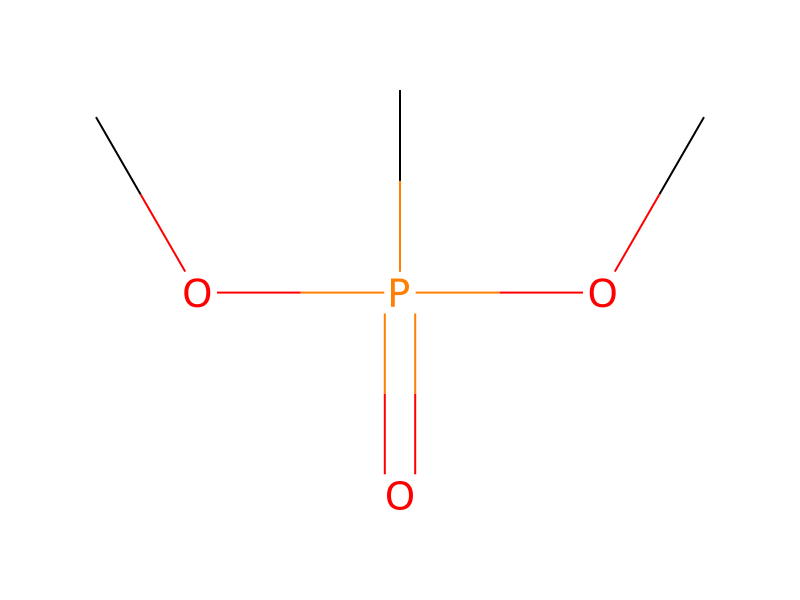
[CH3:1][P:2](=[O:7])([O:5][CH3:6])[O:3][CH3:4].P(=O)([O-])[O-].C([Li])CCC.[C:17]1([CH2:23][C:24](OC)=[O:25])[CH:22]=[CH:21][CH:20]=[CH:19][CH:18]=1>O1CCCC1.CCCCCC.C(O)(=O)C>[O:25]=[C:24]([CH2:23][C:17]1[CH:22]=[CH:21][CH:20]=[CH:19][CH:18]=1)[CH2:1][P:2](=[O:7])([O:5][CH3:6])[O:3][CH3:4]Participants







Procedure
A solution of 6.2 g (50 mmoles) dimethyl methylphosphonate (Aldrich) in 125 ml dry tetrahydrofuran was cooled to -78° in a dry nitrogen atmosphere. To the stirred phosphonate solution was added 21 ml of 2.37 M n-butyllithium in hexane solution (Alfa Inorganics, Inc.) dropwise over a period of 18 minutes at such a rate that the reduction temperature never rose above -65°. After an additional 5 minutes stirring at -78°, 7.5 g (50.0 mmole) methyl phenylacetate was added dropwise at a rate that kept the reaction temperature less than -70° (20 minutes). After 3.5 hours at -78°, the reaction mixture was allowed to warm to ambient temperature, neutralized with 6 ml acetic acid and rotary evaporated (water aspirator) to a white gel. The gelatinous material was taken up in 75 ml water, the aqueous phase extracted with 100 ml portions of chloroform (3×), the combined organic extracts were backwashed (50 cc H2O), dried (MgSO4), and concentrated (water aspirator) to a crude residue and distilled, b.p. 134°-5° (<0.1 mm) to give 3.5 g (29% dimethyl 2-oxo-3-phenylpropylphosphonate (2a).
Workup
- customthe reaction temperature less than -70° (20 minutes)
- waitAfter 3.5 hours at -78°
- customrotary evaporated (water aspirator) to a white gel
- extractionthe aqueous phase extracted with 100 ml portions of chloroform (3×)
- dry with materialdried (MgSO4)
- concentrationconcentrated (water aspirator) to a crude residue
- distillationdistilled
Sources & evidence
- ORD record
- ord-48ba695405b545ce9c2820731bd026e9
- Source dataset
- uspto-grants-1977_07
- Patent number
- US04036832
Reaction notes
Loading…