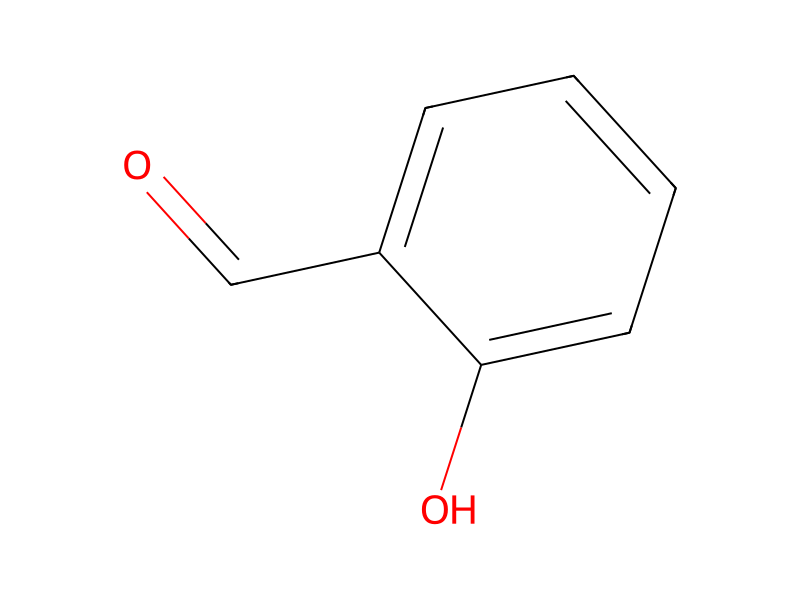
Salicylaldehyde → HCID 21325023, compound
Reaction equation

N1CC[CH2:4][CH2:3][CH2:2]1.[OH:7][C:8]1[CH:9]=[C:10]([CH:15]=[CH:16][C:17]=1[C:18](=[O:20])[CH3:19])[C:11]([O:13]C)=[O:12].[CH:21](=O)[C:22]1[C:23](=[CH:25][CH:26]=[CH:27][CH:28]=1)[OH:24]>C(O)C.O>[C:11]([C:10]1[CH:9]=[C:8]2[C:17]([C:18](=[O:20])[CH:19]=[C:21]([C:22]3[CH:28]=[CH:27][CH:26]=[CH:25][C:23]=3[O:24][CH:3]([CH3:4])[CH3:2])[O:7]2)=[CH:16][CH:15]=1)([OH:13])=[O:12]Participants
Reactant 3


Product 1

Reagents, catalysts & solvents 2


Procedure
Piperidine (200 m) was added to a solution consisting of methyl 3-hydroxy-4-acetyl-benzoate (15 g) and salicylaldehyde (15 g) in absolute ethanol (400 ml); the mixture was kept at reflux temperature for 40 hours. After cooling, acidification with hydrochloric acid and extraction with ethylacetate, the organic phase was washed with K2CO 3 5%, and with water, then evaporated to dryness. The residue, so obtained (11 g), was dissolved in n-amylic alcohol (200 ml) by adding SeO2 (11 g) and the solution was kept at reflux temperature for 18 hours. After cooling, the residue was filtered off and the amylic alcohol was distilled in a steam current: the residue of the distillation was recovered by extraction with chloroform, to give, after crystallisation from ethanol, 7-carbomethoxy-2'-hydroxy-flavone (6.3 g), which was reacted in dimethylformamide (30 ml) with 2-bromo-propane (3.5 g) and anhydrous potassium carbonate (4 g) at 70° C. for 18 hours. After cooling, the mixture was diluted with water (200 ml), and then filtered, so obtaining 7-carbomethoxy-2'-isopropoxy-flavone (7.9 g) which was subsequently hydroylsed by treatment with the stoichiometric quantity of a solution of potassium hydroxide 1% in ethanol 95% at reflux temperature for 30 minutes. After cooling, acidification with acetic acid, dilution with water, filtration, and subsequent crystallisation from ethanol, 7-carboxy-2'-isopropoxy-flavone (5.7 g) was obtained.
Workup
- temperatureat reflux temperature for 40 hours
- temperatureAfter cooling
- extractionacidification with hydrochloric acid and extraction with ethylacetate
- washthe organic phase was washed with K2CO 3 5%
- customwith water, then evaporated to dryness
- customThe residue, so obtained (11 g)
- temperatureat reflux temperature for 18 hours
- temperatureAfter cooling
- filtrationthe residue was filtered off
- distillationthe amylic alcohol was distilled in a steam current
- distillationthe residue of the distillation
- customwas recovered by extraction with chloroform
- customto give
- customafter crystallisation from ethanol, 7-carbomethoxy-2'-hydroxy-flavone (6.3 g), which
- customwas reacted in dimethylformamide (30 ml) with 2-bromo-propane (3.5 g) and anhydrous potassium carbonate (4 g) at 70° C. for 18 hours
- temperatureAfter cooling
- filtrationfiltered
- temperatureat reflux temperature for 30 minutes
- temperatureAfter cooling
- filtrationacidification with acetic acid, dilution with water, filtration, and subsequent crystallisation from ethanol
Sources & evidence
- ORD record
- ord-c82d5e99686e4b2399ad1c093c1633cb
- Source dataset
- uspto-grants-1979_04
- Patent number
- US04148900
Reaction notes
Loading…