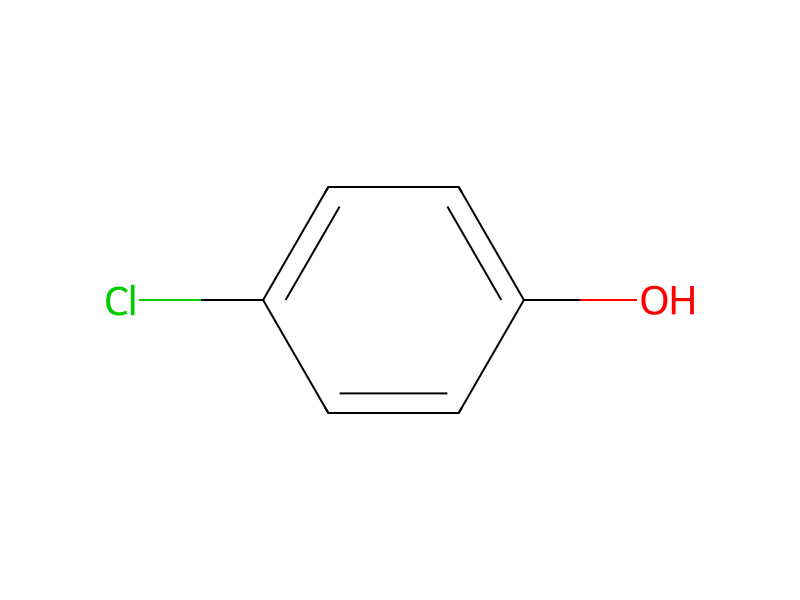
4-Chlorophenol → HCID 23350027, compound
Reaction equation

[C:1]([O:4][CH2:5][C:6]([CH3:12])([CH3:11])[C:7](=[O:10])[CH2:8]Br)(=[O:3])[CH3:2].[Cl:13][C:14]1[CH:19]=[CH:18][C:17]([OH:20])=[CH:16][CH:15]=1.C(=O)([O-])[O-].[K+].[K+]>CC(C)=O>[C:1]([O:4][CH2:5][C:6]([CH3:12])([CH3:11])[C:7](=[O:10])[CH2:8][O:20][C:17]1[CH:18]=[CH:19][C:14]([Cl:13])=[CH:15][CH:16]=1)(=[O:3])[CH3:2]Participants
Reactant 3


Product 1

Reagents, catalysts & solvents 1

Procedure
170 g (0.72 mol) of 4-acetoxy-1-bromo-3,3-dimethylbutan-2-one in 200 ml of acetone were added dropwise, over the course of 100 minutes, to a suspension of 92.1 g (0.72 mol) of 4-chlorophenol and 108 g (0.72 mol) of potassium carbonate in 1,000 ml of acetone. After heating for 15 hours whilst stirring under reflux, the mixture was filtered and the filtrate was concentrated by distilling off the solvent in vacuo. The residue was taken up in 200 ml of methylene chloride and the solution was washed three times with 50 ml of water at a time, dried over sodium sulphate and concentrated. The oily residue was distilled. 153 g (72% of theory) of 4-acetoxy-1-(4-chlorophenoxy)-3,3-dimethyl-butan-2-one of boiling point 140°-145° C./0.2 mm Hg was obtained.
Workup
- temperatureAfter heating for 15 hours
- temperatureunder reflux
- filtrationthe mixture was filtered
- concentrationthe filtrate was concentrated
- distillationby distilling off the solvent in vacuo
- washthe solution was washed three times with 50 ml of water at a time
- dry with materialdried over sodium sulphate
- concentrationconcentrated
- distillationThe oily residue was distilled
Sources & evidence
- ORD record
- ord-0fde3cc70403453f8c05507f1ebe1c67
- Source dataset
- uspto-grants-1979_05
- Patent number
- US04154842
Reaction notes
Loading…